
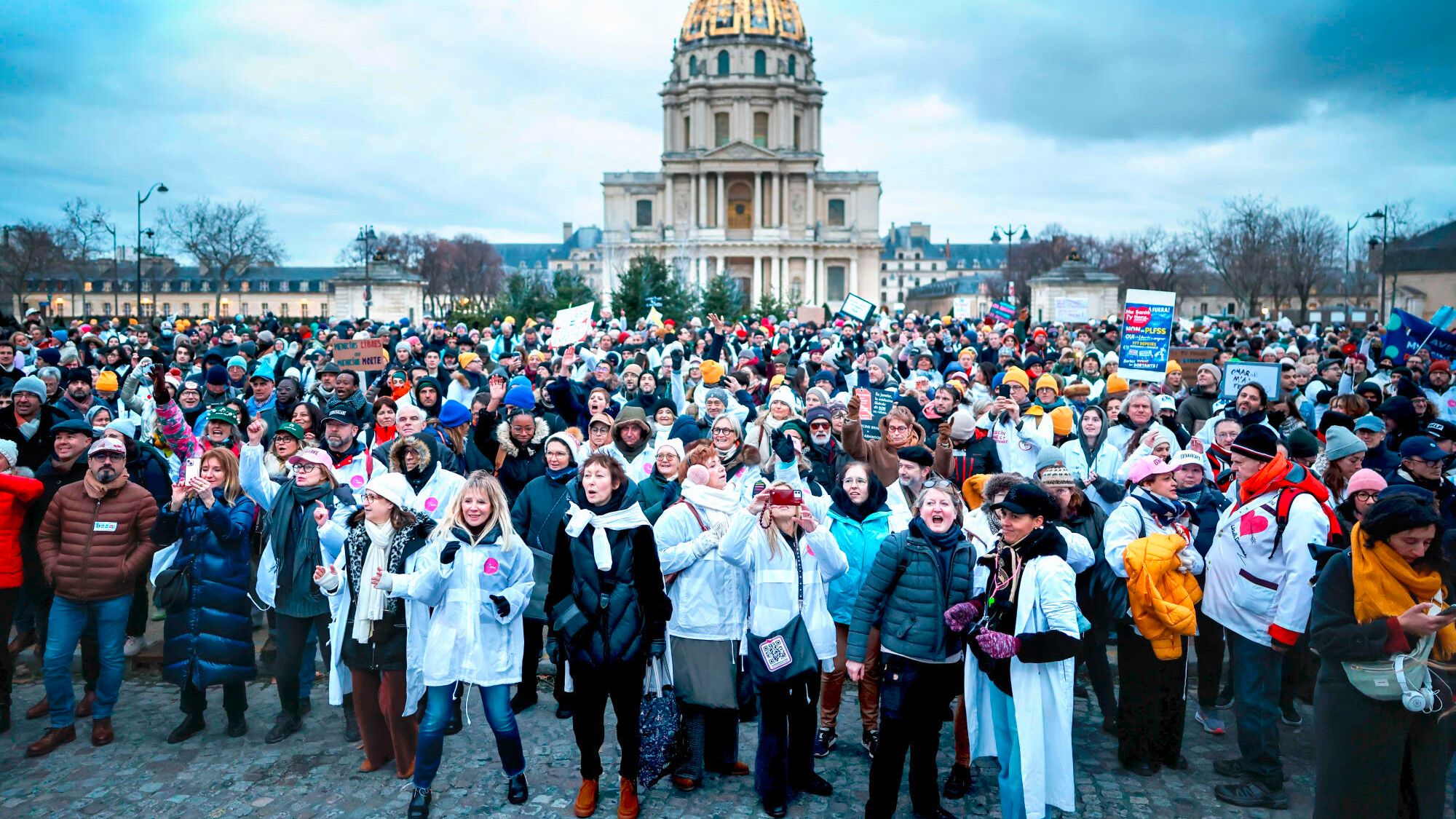
Closed offices and canceled appointments
Liberal medicine is heartbroken, once again. Office closures, appointment cancellations, symbolic “exile” to Brussels, demonstrations… great anger is felt by the approximately 100,000 doctors who practice privately (1), i.e. the majority of general practitioners and certain specialists with specific access (dermatologists, cardiologists, pediatricians, gynecologists, etc.). A mobilization of which many patients, forced to give up a medical appointment this week and last week, have measured the effects.
Between tensions and strikes
The year 2025 had started well, however, with the entry into force of the increase in consultation to 30 euros for general practitioners. But the climate gradually worsened between the State and the liberal doctors: in June, the vote by the deputies of a bill against the freedom of installation triggered a first strike; then a campaign to control work stoppages provoked the ire of the unions; in the summer, the postponement of fee increases for seven specialties, scheduled for July 2025, was experienced as a “punishment” by the profession.
In December, the vote on the Social Security financing bill (PLFSS) crystallized the grievances of professional unions, who denounce provisions which “trample on them and disregard their commitment”.
“We are fighting to keep our freedom to care”
Liberal professionals denounce, for example, the possibility given to health insurance to lower the prices of certain procedures outside of the agreement signed between the State and doctors. “We want to stifle liberal medicine with restrictive and repressive measures,” summarizes Dr Raphaël Dachicourt, general practitioner in Croix (North) and national delegate of the MG-France union. This is the heart of doctors’ anger: this set of measures would constitute a profound attack on their freedoms. “We are forced to ask Social Security for authorization to prescribe certain medications, they want to prevent us from freely choosing the duration of work stoppages…”, lists Dr Dachicourt, who concludes: “We are fighting to keep our freedom to treat.”
Because doctors have this value anchored in their professional body: freedom of installation, prescription, exercise… This is a fundamental principle of the healthcare system. “The construction of the French health system on the foundation of medical freedoms has enabled the development of quality medicine,” underlines the vice-president of the Council of State Didier-Roland Tabuteau (2). But over the decades, the state has introduced restrictive legislation. Budgetary regulation mechanisms have been put in place to curb the dizzying growth in health spending. In focus: compliance with the national health insurance spending objective (Ondam), set each year by Parliament. At the same time, the State is requiring more commitments from doctors on access to care. The “liberal” model is therefore today at the heart of a profound change.
Especially since the profession is in full evolution: if the activities of doctors are still predominantly liberal (57% of activities), mixed practice, combining liberal and salaried activities, is attracting more and more professionals, all ages combined (3). Developments like so many potions that are difficult to swallow.
1) Social Security, 2024.
2) In “Title VII”, n° 11, Health and bioethics October 2023.
3) Drees, July 2025.


