
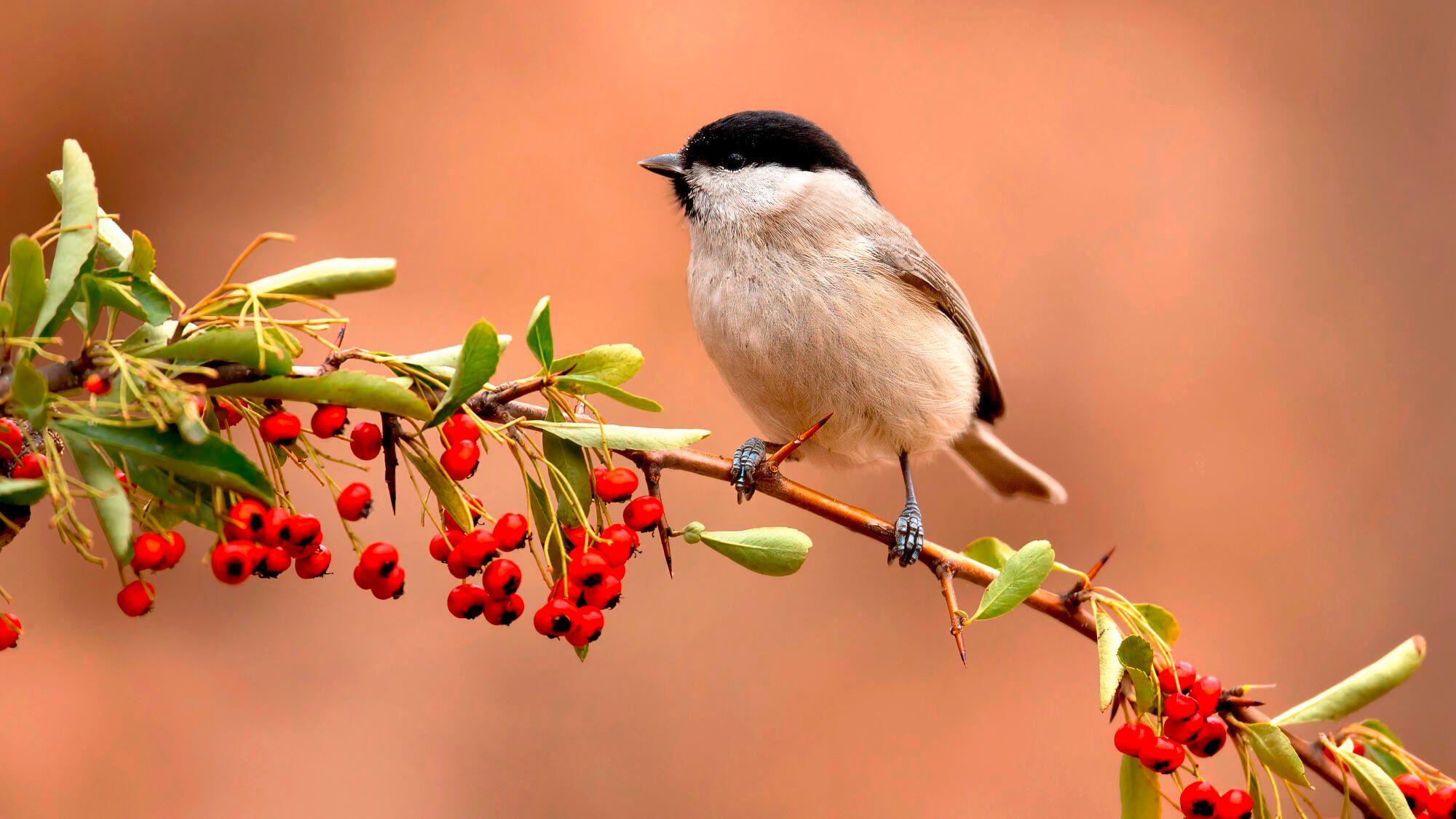
How does the barnacle tit defend its nest and its chicks?
The black cap which covers its head up to around the eyes gives a severe appearance to this sparrow, which is nevertheless lively and curious, often acrobatic in its movements. Appreciating large deciduous forests, this titmouse can also be observed in parks and orchards, but rarely in overly urbanized areas.
The trees provide it with food – ah, the seeds of the ash and maple! – but also sufficient cavities, even uncomfortable ones, for nesting. Because the matter is serious: in this species, the couples are stable throughout the year. If the male’s song which begins in January facilitates the meeting of young couples, it continues to mark its territory.
Very protected broods
And if necessary, the male lifts his beak to reveal a black bib on his neck, the size of which must impress the unwelcome passerby. As soon as spring arrives, the nest, roughly made up with its mattress of moss and lichens, can accommodate 7 to 10 white eggs, spotted with brown and red. A single brood per year, carefully protected.
The female incubates for two weeks then, after hatching, Mr. Nonnette resumes her role, providing a large part of the feeding of the chicks and then the juveniles for several weeks.
Efficient work: almost four-fifths of the young in a brood take flight. Hats off!
Why do sparrows group together in rounds to look for food?
A recent North American study investigated the phenomenon of passerine rounds. In autumn and winter, it is not uncommon to observe these groupings of several species of birds, including tits, looking for food together. A way, undoubtedly, to also protect yourself against predators.


