
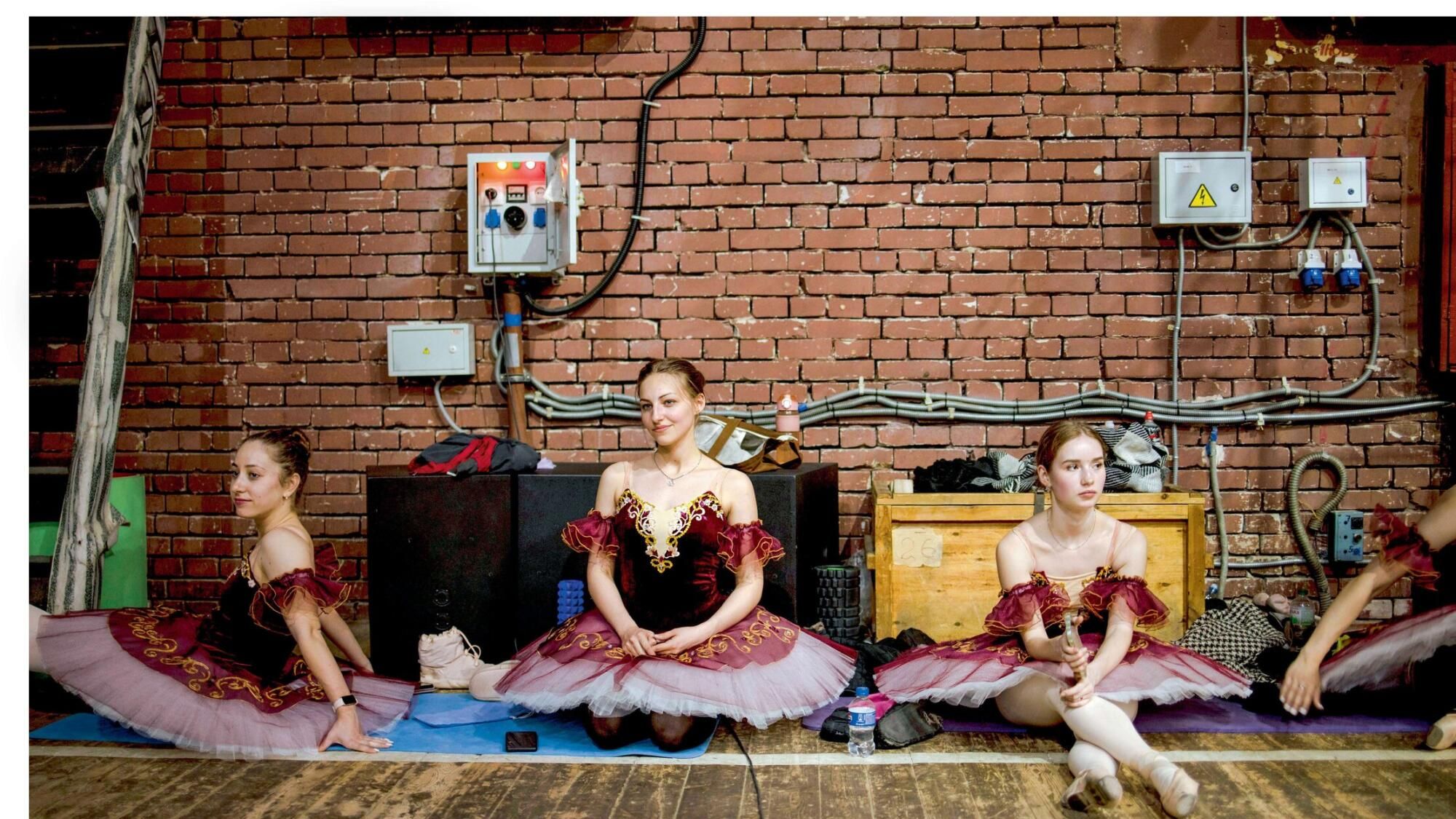
How the Lyssenko theater in Kharkiv defends culture under bombs
Behind diplomatic efforts, always war. On August 18, while Donald Trump received Volodymyr Zelensky and European leaders in Washington to speak guarantees of security and ceasefire in Ukraine, Kharkiv, 32 km from the eastern border of the country, continued to live under Russian fire.
The day before, a drone attack had struck the city center, killing seven civilians – including a one -year -old and a teenager – and injuring twenty -four people. A cruel contrast between the salons of diplomacy and the reality of war.
Reopening of the national theater since 2024
But the city is good. Its 1.3 million inhabitants continue their lives despite three years of daily bombing. At the heart of the city, the Academic National Theater of Opera and Ballet Lyssenko embodies this cultural resistance. Inaugurated in 1991 after twenty-five years of work, covered with volcanic stone of Armenia, it is one of the largest in the country.
In 2022, Russian missiles had hit its roof and destroyed 2500 m2 of stained glass. The troop was then exiled for almost two years in Europe. Since 2024, the theater has reopened, with 500 employees instead of 800. Ten of them have joined the front, including a technician, killed in combat.
A resistance citadel
Today, representations are played out on closed counters. Igor Tuluzov, its director, made the “Artist Fortress” project a rallying point, inviting troops of other Ukrainian cities to perform here. Because, in parallel with the 318 Russian attacks identified in 2024 – which left nearly 100 dead and more than 1000 injured -, Kharkiv continues to protect himself in his underground shelters. The theater, cultural and sometimes physical refuge, has become a citadel of resistance.