how the Tombée du Nid association supports exhausted parents
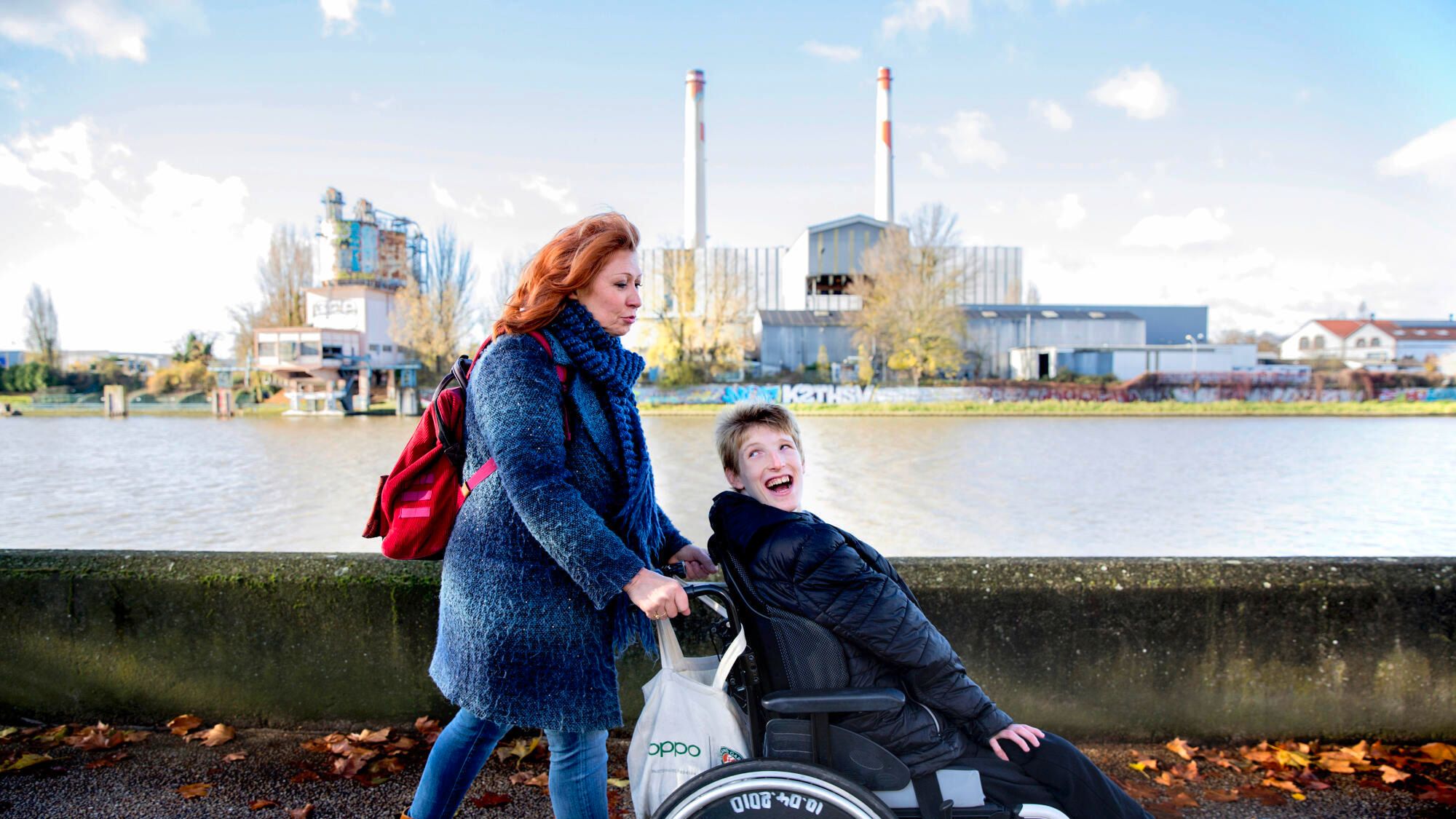
In the entrance to a pavilion in Alfortville (Val-de-Marne), we prepare for a unique walk. Caroline delicately closes the straps of Ulysse’s, her eldest son’s, sneakers. “He can’t wait,” remarks Sandrine, helping him sit in an armchair with nicely decorated wheels. “We’ll be back in an hour,” she adds, pushing the chair. At 15, the teenager has Angelman syndrome, a neurodevelopmental disorder of genetic origin, which makes him very dependent. Ulysses needs help to walk, feed himself, wash himself, and cannot express himself. “But he knows how to make himself understood very well,” smiles Sandrine. Halfway through our walk, he will clearly show that he does not want to go back!”
For almost three years, this former medical secretary has been going to Ulysse’s house every Saturday to take him for a walk, and to offer Jean and Caroline, his parents, some time to rest. “When my son was born, who also had a disability, I stopped all professional activity. We lived in a rural area and suffered from being very isolated. I want to spare other families from this,” explains Sandrine. Until then, Jean and Caroline had to constantly take turns watching over their eldest. From now on, his mother, a teacher, can prepare her class, while his father takes care of the last two, Basile, 8 years old, and Gabin, 11 years old. Sandrine and Ulysse nevertheless remain close to the house in case of problems.
Allow yourself to breathe a little
It was while reading Clotilde Noël’s book Fallen from the nest *, in which the author recounts her journey of adopting a little girl with Down syndrome, that Sandrine discovered the association of the same name and its mobile application “Le coeur du nid”. This system allows families with children with disabilities to discuss, ask questions, request administrative help and, above all, concrete support.
Many of them are single parents and suffer from isolation. So, for Sandrine, this application is “a genius idea”. She decided to become a volunteer “when she saw two mothers of disabled children in the supermarket where (she did her) shopping, alone, with no one to help them carry their bags.” After filling out a form, she met the director of the structure who ensured her motivations and seriousness. Some time later, a notification arrived on her phone: Caroline, living about fifteen minutes from home, was asking for help. “It’s thanks to the IME (medical-educational institute, editor’s note) from Ulysses that I learned about this association, testifies the mother. We would have needed such help from the start. When I started the membership process, we were really exhausted.”
A network set to expand
Launched in 2022, the application brings together more than a thousand families and as many volunteers, across a large part of France. In each of the eight regions where the association is located, the network of families and volunteers is supervised by a representative.
Volunteers benefit from training and support throughout their commitment. “Each of them gives the time they want and can, the investment is very free. Moreover, some parents only ask for a one-off relay, time to take a nap,” explains Delphine Piffard, director of the association, who specifies that 70% of requests concern daily help, and 30% administrative support or know-how. The network also allows for the sharing of experiences: while they were thinking about enrolling Ulysses in a specialized boarding school, Caroline and Jean were able to question other families via the application and make an informed decision.
“For parents, it takes a long time to accept and identify needs. Some people feel they have to do it alone. Asking for help is a real process of humility, explains Delphine Piffard. Most of the families who contact us are on the verge of exhaustion. We would like to be able to intervene earlier, well before they find themselves in such a state.” The network is expanding: in November, a new branch opened in New Aquitaine, and the association hopes to be able to cover Brittany very soon.
* Ed. Pocket, 184 p. ; €7.70.
Recipes for success
- A free service:The association lives mainly on donations. Membership and the services offered are free, for families and volunteers.
- A tailor-made commitment : each volunteer gives the time they want. Punctual support, regular presence, answers to legal matters.
- Long-term monitoring: the association supports families and volunteers over the long term: it offers monitoring of activities, training for volunteers and regular meetings between members.