
In Clermont-Ferrand, a tango class puts fragile bodies back on their feet
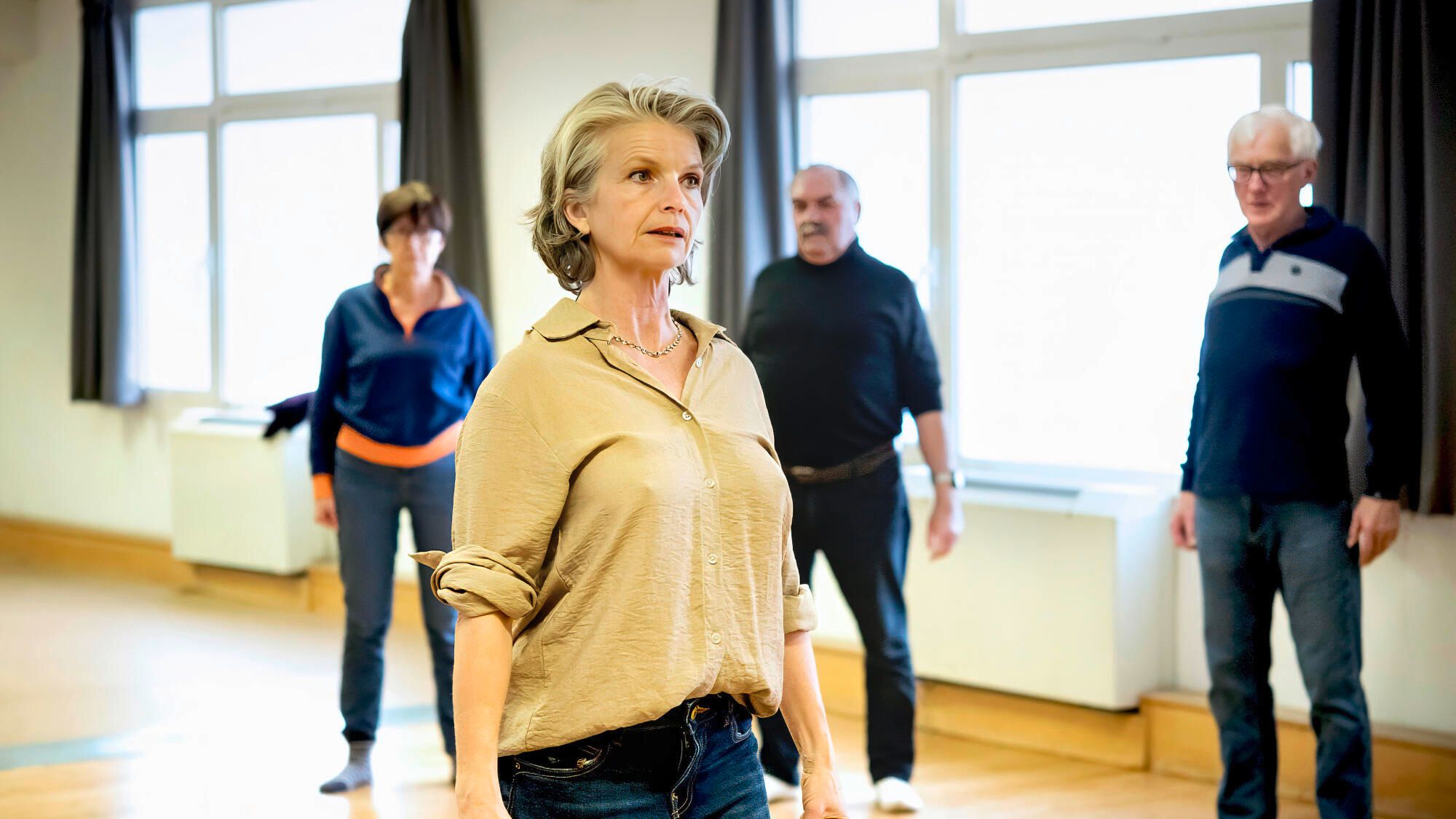
Stomachs pulled in, chest forward, shoulders straightened, the students of the Vivo Tango association walk in duets to the rhythm of languorous music. This Monday afternoon, at the Georges-Brassens cultural center in Clermont-Ferrand (Puy-de-Dôme), the group learns the basics of the most captivating dance in the world. Tango, this elegant game of intertwining the legs, requires an attentive dialogue between the two partners. “You’ll see, tango songs always tell the same story,” laughs Natacha Darmant, the dance teacher: a man is mad with grief since a woman left him! » Natacha Darmant is not a teacher like the others.
For ten years, Clermontoise has been developing health tango, a therapeutic dance adapted to the elderly, sick or disabled. This physical therapy helps improve balance, relax limbs and soothe pain. The session begins with a warm-up with movements inspired by tai chi, the Chinese martial art. The idea was born in Buenos Aires, Argentina, the birthplace of tango. Since the 1980s, this ballroom dance has not only captivated tourists, but also neurologists. Doctors have tested its effects on the health of patients who participate in this type of workshop. And they are amazing.
Calming movements
“As I get older, I have chronic back pain,” confides Catherine, 77 years old. I had a fall three weeks ago and I’m still suffering from it, but when I leave class, I don’t feel sore all evening! » Philippe, 71, has regained all the vitality in his legs. However, he suffers from paresthesia, a sensation of numbness and tingling, the origin of which he cannot determine. That afternoon, all the participants stood up straight, solid on their supports, despite age and illness.
Grace operates: tango offers many advantages. He first forces the dancers to open their upper bodies – chest forward, shoulders open. “We spend a lot of time working on this posture,” continues Philippe. I chose this course because my back was too stiff when I learned in a traditional course. We were looking for performance, beautiful figures, sometimes to the detriment of posture. » In the room, the voice broken by grief of an Argentinian singer is heard. Time for couple dancing.
The duos walk in slow motion using the basic step. A movement that promotes balance, because you have to find points of support by playing with your feet and the weight of your body. The rhythm of Argentinian dance being very close to that of the heart, the effort adapts to the tempo of the measure. The icing on the cake is that tango improves cognitive functions, because you have to walk in a specific direction and perceive the step that your partner indicates.
Confirmed benefits
Some health establishments have taken up this new discipline and now offer sessions to Alzheimer’s and Parkinson’s patients or heart patients. In France, nearly forty of them have adopted health tango*.
The practice remains marginal and without official training for teachers. A pioneer, Professor Natacha Darmant completed a degree in adapted physical activity and a master’s degree in dance anthropology to develop her own therapy. Then she worked for five years with the Clermont-Ferrand University Hospital. “I wanted science to be with me,” she says. Today, I work in nursing homes and neurology departments. »
Guy, 71, retired physiotherapist, participates in the sessions and confirms the benefits. “In my profession, I never learned to treat pain this way,” he admits. Tango requires extreme attention to your partner’s movements to remain in sync. Through practice, Natacha has learned to sense blockages and tensions. She feels the pain from the inside! » And our apprentice dancers resume their slow walk, eager to understand the subtleties of the human body to honor the beauty of tango.
* Source Inserm, 2024 figures.
Recipes for success
- A gentle treatment: health tango offers a complement to taking medication to calm pain.
- Adapted learning: sessions adjust to the pace of the participants, in a caring climate.
- A free activity: some mutual insurance companies partially or fully reimburse sessions upon presentation of a sports prescription.


