Leo XIV in Türkiye and Lebanon to meet Christians
On this sunny Sunday in November, a small congregation gathered for mass in the Church of Saint Peter and Saint Paul in Istanbul, a few steps from the medieval Galata Tower. As worshipers recite the Creed, the back door opens to admit a group of local tourists. Headphones on, the twenty or so arrivals settle down, paying attention to their guide’s explanations. About ten minutes later, the little troop leaves, as if they had come to take a look at a very curious practice.
Frequent, according to the celebrant, Dominican Father Claudio Monge, the scene reflects the paradoxical reality of Christianity in Türkiye. On the one hand, it is the “Holy Land of the New Testament”, as Mgr Sabri Anar, archbishop of the local Chaldean Catholic community, explains: Saint Paul is from what is now Turkey, the Virgin Mary is said to have lived the end of her life there with Saint John, and the seven Churches of the Apocalypse are located there. Above all, the first seven ecumenical councils took place there between 325 and 787, attesting to the importance of this territory of Asia Minor in the first centuries of Christianity.
On the other hand, the Christian presence there today is tiny: around a hundred thousand people out of 85 million inhabitants in 2024. However, it is this tiny community that Leo (read the box at the end of the article).
Descendants of Europeans
Among these Christians, only a few tens of thousands are Catholic, the majority being Armenian Christians. With a full mustache, tanned complexion and immaculate white hair, Casimir seems to be an allegory of the Mediterranean man of a certain age. “I could be Omar Sharif’s twin!” he laughs with sparkling eyes, in reference to the late Egyptian actor, undisputed icon of Middle Eastern cinema.
However, “my father was of Lithuanian origin, my mother of Russian origin”. Met a few steps from the Bosphorus, Casimir is a Levantine: a descendant of Europeans who came to settle in Turkey – then the Ottoman Empire – between the end of the 18th and the beginning of the 20th century. Coming mainly from Italy, but also from France and other countries, they brought the Latin rite to this land where Catholicism was then mainly of the Armenian, Chaldean or Syriac rite.
“With this plurality, Catholicism experienced real growth between 1850 and the First World War,” explains Father Lucian Abalintoaiei, secretary of the Conference of Bishops of Turkey (CET). But the bloody Turkization of the population at the turn of the war and the renewed economic prospects in the countries of origin pushed large sections of the Levantine community to leave.
The situation has become even more pronounced in recent decades with the possibility of studying abroad. “The Levantines constituted a parallel world with its neighborhoods, its schools, its churches,” notes Father Monge. But this universe is disappearing. » Likewise, the Orthodox attached to the prestigious ecumenical patriarchate of Constantinople are only a handful, while the Armenian Christians number in a few tens of thousands.
To understand this virtual disappearance, we must go back a century to what remains “absolutely taboo”: the violent persecutions that occurred between 1915 and 1923, including the genocide of the Armenians recognized by the French state. On this subject, no one dares to speak openly. At best we talk about “events”. “There are people who say that things happened in 1915… I don’t know,” says one. “Rather than thinking about the tragedies of history, it is better to look to the future,” suggests another.
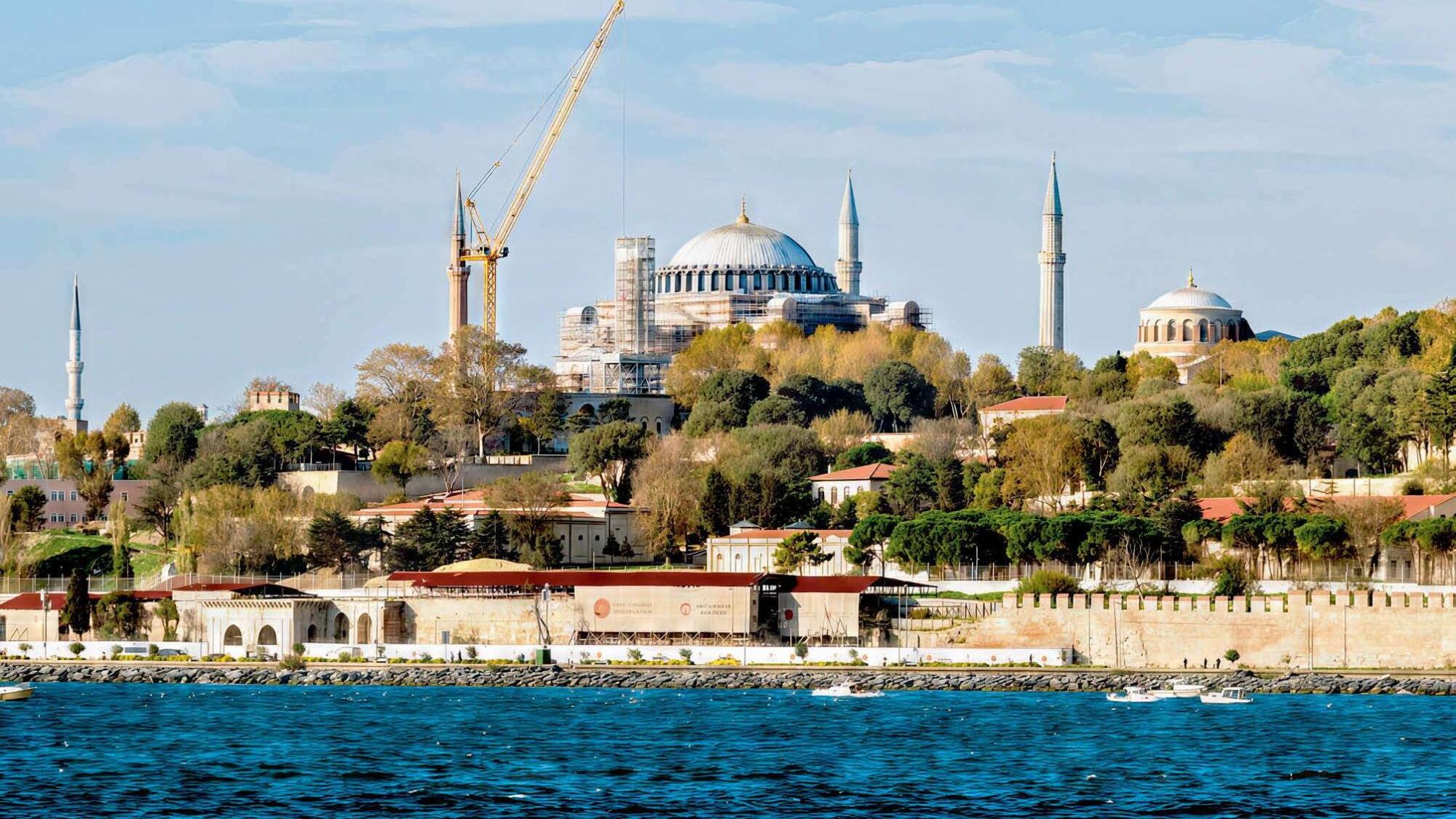
This silence also applies to recent poorly received measures, such as the decision of the President of the Republic, Recep Tayyip Erdogan, to once again attribute Hagia Sophia to Muslim worship. It was a museum until 2020. “You ask difficult questions!” we avoid out of hand.
Among the Christians interviewed, only one agreed to confide at greater length. “Because of events, previous generations did not talk about the past. Deep down, we always remain on the defensive and prefer discretion.” Does our impeccable French interlocutor believe that such massacres could happen again? “Turkey has changed so much in ten years… nothing is predictable! That said, we are now so few in number that we represent only one of the rare nuances in a very homogeneous country.
But remains in people’s minds the attack claimed by Daesh (or Islamic State) which occurred in January 2024 in an Istanbul Catholic church, leaving one dead and since leading to a police presence near Christian places of worship.
The rise of conversions
Paradoxically, Catholicism is attractive to Türkiye. “It is difficult to give figures, but there are catechumens in all the churches in Istanbul,” says Father Abalintoaiei. Along with Lebanon and Israel, Turkey is one of the few countries in the region where changing religion is legally possible. “It is undeniable that God speaks and attracts here,” continues the CET secretary.
Hooded sweatshirt, ear rings and trendy glasses, Jean is one of those Turks of Muslim origin who converted to Catholicism. “I entered a church by chance and I could not refuse the message of love of the Gospel,” says the forty-year-old. Originally from Izmir, a coastal city considered the most European and liberal in the country, he began this trajectory as a teenager, at a time when conversions were rare. “My parents guessed that something was going on when they saw that I was slipping away on Sunday mornings!” laughs the man who does not want to speak under his birth name. But I am lucky to come from a secularized family, which allowed me to follow this path.”
This parental agreement is all the more important because although conversion is possible, proselytism is on the other hand combatted. “We welcome people who knock on our door, but we do not go looking for them,” summarizes a priest who follows around fifteen catechumens. We make them sign a release certifying that they came of their own accord and without compensation.” Especially since family realities can be complex: a priest cites the case of a young girl whose brother flew into a rage upon learning of her baptism, destroying her room and threatening her.
Multiple aspirations
Why this attraction to the Christian faith? It is difficult to obtain an answer, the catechumens adopting the reflexes of distrust of “historical” Christians. “There is often a sincere spiritual search among them,” explains the Dominican Claudio Monge. Those who approach us have generally already made a great journey within Islam.”
“They can discover us through friendships or marriages,” adds Mgr Sabri Anar. Furthermore, tempers a priest, “it is sometimes about people who do not feel at home in their family or in Turkish society: we are then the “field hospital” that Pope Francis spoke of. But is it really faith in Jesus Christ that attracts them?
In any case, the bishops of Türkiye are supporting this new component of the Catholic Church and are engaged in a vast project of complete translation of the missal into Turkish. “We need to evangelize the language,” laughs someone close to the file, who highlights the difficulty of choosing words.
“For me, some words in Turkish do not have the same spiritual or theological meaning. I prefer mass in French or Italian,” confides Giovanna, a Levantine, as her first name attests. But she adds: “Now that there are many converts, this translation is necessary. We have to do it so that people can understand.”
Translating the liturgy is also a way of claiming a full place for Catholicism within Turkish society. For this, Casimir is counting on the support of Leo XIV and his historic visit. “The Pope comes to encourage us, he wants to believe. He comes to tell us: “You are not alone, don’t hide!”
Trip of Pope Leo XIV: the program
Türkiye:
- November 27. arrival in Ankara and official ceremonies.
- November 28-29. ecumenical and interreligious meetings in Iznik and Istanbul.
- November 30. public mass in Istanbul.
Lebanon:
- November 30. arrival in Beirut. Official meetings and with the Catholic community.
- December 1st. prayer at the tomb of Saint Charbel Makhlouf in Annaya. Meeting with young people in Bkerké.
- December 2. visit to the Catholic hospital of La Croix (read p. 19 ). Silent prayer at the site of the Beirut port explosion. Closing mass at the port of Beirut.
Strong ecumenical issues
Planned during the lifetime of Pope Francis, Leo By choosing to make this trip at the end of November 2025, Pope Leo XIV will be able to celebrate the feast of Saint Andrew, patron of the Orthodox Patriarchate of Constantinople, alongside Bartholomew I.
Marking good ecumenical relations, this trip should not, however, lead to an agreement on a common date for Catholics and Orthodox for the celebration of Easter. While Pope Francis had an excellent relationship with the patriarch, but sometimes perceived as too “exclusive”, his successor seems to want to integrate other Christian denominations more into the discussion.
Bartholomew must deal with internal divisions within orthodoxy.