Quality of bathing water in France: a disappointing reality
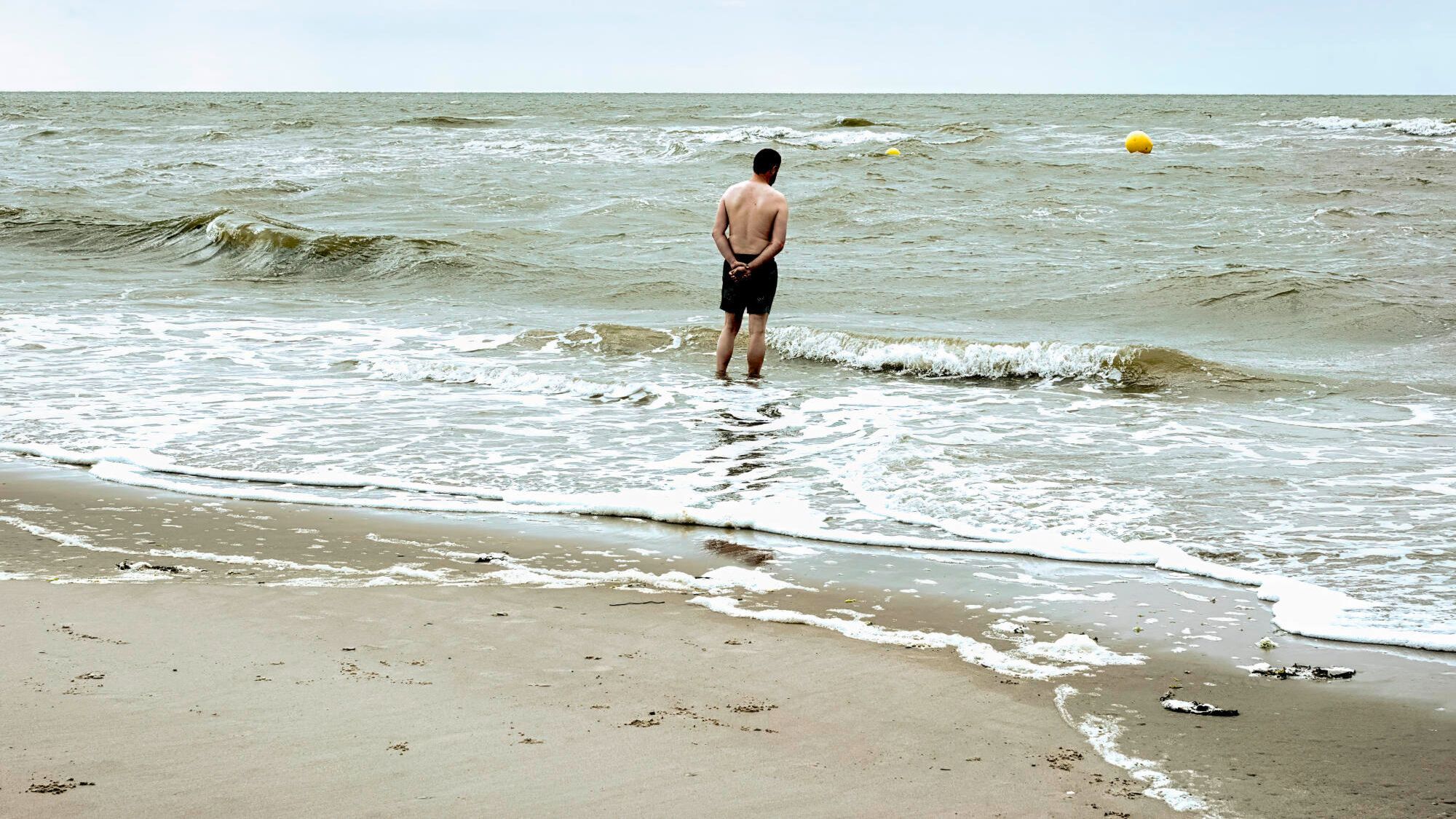
Under the greyness, some bathers brave the gusts of wind in Stella-Plage, in Canche Bay (Pas-de-Calais). On the sand, Carole Vandamme remains away from a blockhouse, a vestige of the Atlantic Wall. The swimming prohibitions that hit the neighboring beaches at the end of July? The mother doesn’t think about it: “Water is excellent here, right? The flag is green, ”she comments, an eye on her son in the middle of kitesurfing.
No one, here, has heard of doubts surrounding the quality of the water on this rib about twenty kilometers, which became a trend in the heyday. “I am quite surprised,” reacts Alexandre Bodart who has been walking these beaches for years. The kitesurfing instructor has however undergone swimming prohibitions in recent weeks, but he has taken them back. Deprived of access to the sea in Sainte-Cécile-Plage, it simply continued its course less than a kilometer away, in Hardelot-Plage, which remained open to swimming. “And I was not sick, so good …”
The quality of a site is measured in the quantity present in the waters of bacteria Escherichia coli And enterococci, revealing fecal contamination. According to checks carried out by regional health agencies (ARS) in 2024, as part of a European directive, only 3.4 % of the sites are classified “insufficient”.
On the other hand, according to the independent water association and rivers in Brittany (ERB), founded in 1969, the 2025 classification lists 24.11 % “advised” bathing sites, or even “to avoid”; Less than 32 % are “recommended”.
The organization has established an alternative classification – “the beautiful beach” – from the same analysis results taken into account by the ARS but with a higher level of requirement. Thus, beaches very well rated by these agencies are found in red on the association of the association. “Some classified” excellent “are closed during the summer because of their sanitary quality!” Observe Christophe Le Face, project manager La Belle Plage.
For the association, when less than 70 % of the samples are “good”, it is better to swim elsewhere. Especially since, according to other studies, even concentrations of bacteria E. coli Lower than the thresholds retained for the “sufficient” level in European rankings could contaminate healthy adults (1).
A worse situation for children, the elderly or immunocompromised. Gastroenteritis, otitis, dermatitis and respiratory disorders may appear in the days following the bath.
Improved sanitation
The mayors of the seaside resorts pointed in red by ERB would have gone well from this advertisement. In Touquet-Paris-Plage, the mayor denounces a “media sanction”. As for Gaston Callewaert, mayor of Camiers on which Sainte-Cécile-Plage depends, he says he is amazed. “Our brand image is affected. The efforts made for years are denigrated. »»
As a wounded man, the councilor hits the measures taken to improve sanitation, a regular cause of the degradation of bathing water. Since 2014, 6.5 million euros have been invested to improve the network, but despite these efforts, the quality of the water has recently deteriorated.
Because the municipalities are dependent on the regional context. Many demand a large investigation in order to trace these fecal bacteria. If they are of human origin, they would be due to sanitation. Animal, the agricultural track would hold the rope.
“Do we really want to know?” It can disturb, the agricultural lobby is powerful, ”dares Yannick Verez, deputy mayor of Camiers, in charge of the unified beaches in the Opal Coast, a connoisseur of the subject. “The state sets off on the brake,” believes Christophe the face. He prefers to designate communities to risk a conflict with farmers. »»
Polluting spreads
On the canche watershed, clusters of cars make their hill engine roar behind tractors. In the midst of a season of spreading, the harsh smell that floats confirms the statistics of 85 % agricultural occupation. By falling, the rain is launding the soils and drains the spread organic matter to the canche (slurry or manure in particular).
This runoff phenomenon has worsened in the area since 2010. Climate change, synonymous with resurgence of extreme rains, highlighted a change in the region. Victims of the economic crisis in their sector, many breeders have returned their meadows to cultivate them.
Between 2010 and 2020, the surface devoted to the production of potatoes almost doubled in Montreuillois, while the farm collapsed. However, the grass on which the animals graze has the advantage of slowing down these water flows and capturing the sediments. A spiral effect …
- WHO: “Guidelines on the quality of pleasure waters”, vol. 1 “Coastal waters and fresh waters”.