
Saint Francis of Assisi: A Historical Ostension
A historical first: the body of Saint Francis of Assisi will soon be exposed to the veneration of all the faithful. On the occasion of the eighth centenary of the death of Poverellohis bones will be presented at the sight of pilgrims for a month in early 2026. The Franciscans announced it during a press conference held this Saturday, October 4, the day of the Festival of the Saint.
Speaking of an “unprecedented event”, the religious explains that they have chosen this ostension as an “invitation to take a break to pray, to touch with the heart the tangible reality of a fully experienced Gospel of Christ.”
“It will be a very great opportunity to get closer to this magnificent person that was François d’Assise and who for 800 years speaks to all those who approach him,” explains Brother Giulio Cesareo, head of press relations for the Franciscans.
An exceptional exhibition for Lent
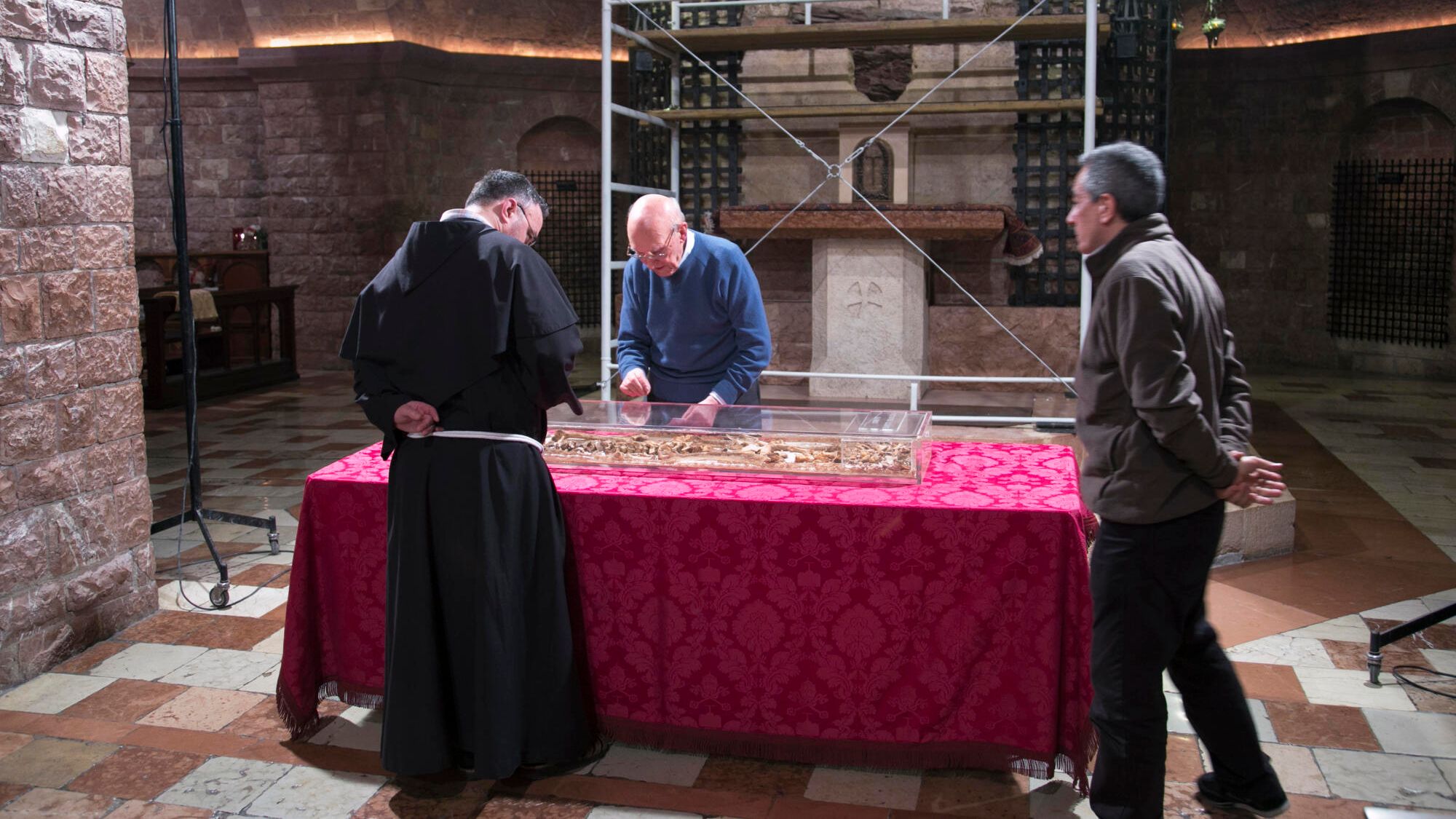
Concretely, the bones of the saint will be exhibited in a transparent shrine installed in front of the altar of the Saint-François basilica in Assisi. It will be possible to come and venerate from February 22 to March 22, from the 1st to 4th Sunday in Lent. “It is appropriate that the particularity of this time (…) inspires the act of veneration so that it is an expression of a sincere popular piety”, expresses Cardinal Pietro Parolin, secretary of state of the Holy See, in his missive authorizing this exhibition of relics.
In order to be able to complete this pilgrimage as close as possible to the remains of Saint Francis, an online prior registration will be essential. It is a question of being able to “guarantee everyone a moment of peace (…) to live together this moment of extraordinary grace”, argue the Franciscans, while specifying that courses will be offered in different languages in order to best support the prayer of each other.
Bones preserved over the centuries
If it is the first public exhibition of the bones of the Saint of Assisi, they have already been inspected on several occasions in recent decades. First of all, the remains of the saint were found in 1818 in a stone coffin, under the major altar of the basilica where he had been buried when he died in 1226. A few months after this discovery, the sarcophagus was opened, the remains examined and recognized before being transferred to a metal shrine.
In 1978, Pope Paul VI authorized a reopening of this new coffin. The bones are then counted and reinstalled to form the skeleton of the saint. This is then transferred to a plexiglass coffin, whose air is changed by gas nitrogen, in order to avoid a deterioration of the bones. These were again examined in 1994 and 2015, which makes it possible to see their “excellent state of conservation”, in the words of the Italian medical examiner at work during these inspections.