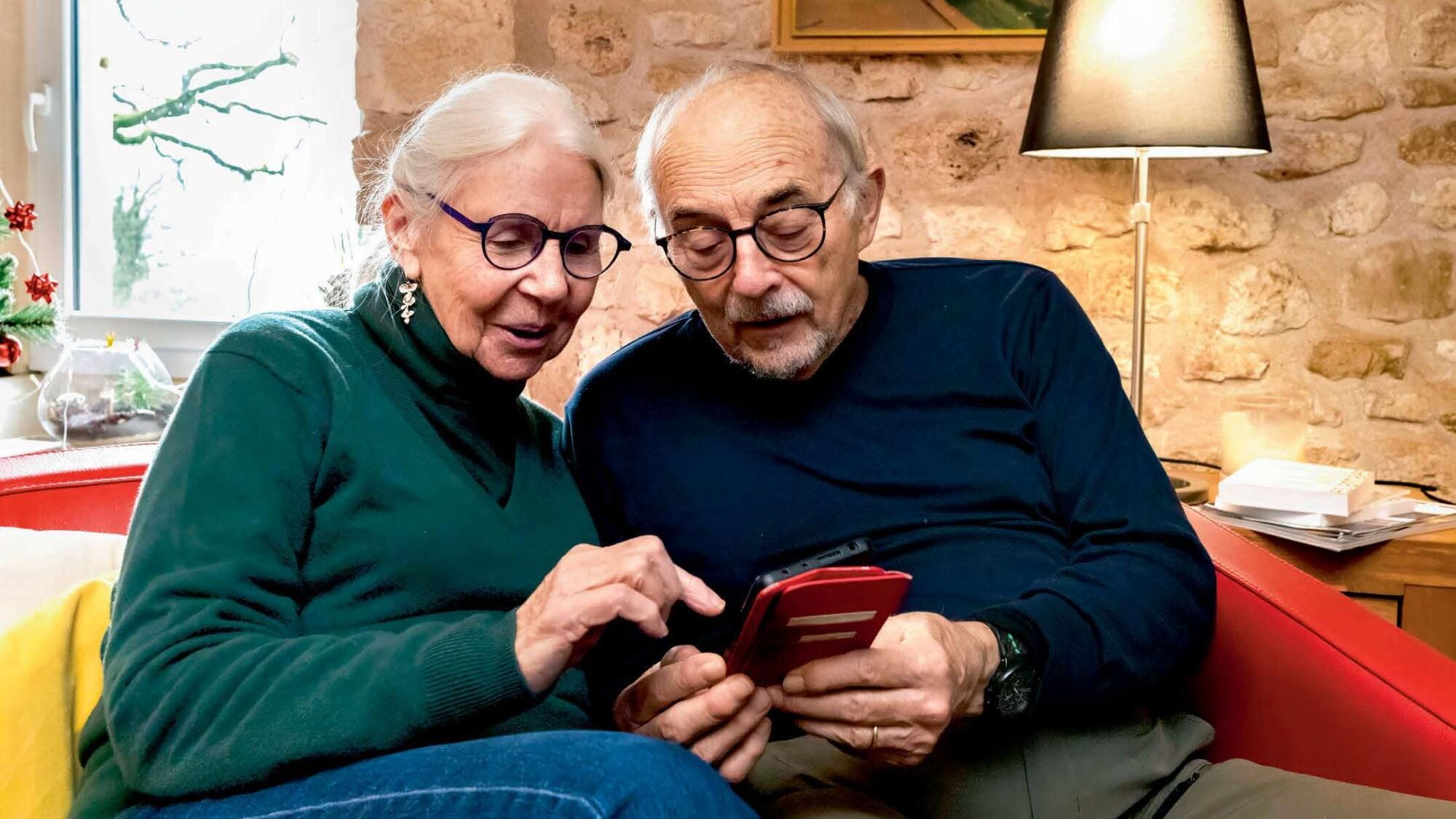
seniors are catching up with young people
The image of the grandparent overwhelmed by technology is fading. On smartphones, computers, tablets and connected televisions, over-65s click, share, play, order and chat online. Many see it as a way to stay informed, maintain social connections, gain autonomy and continue to feel involved.
The figures from recent studies by Crédoc and the Observatory on the proper use of screens speak for themselves. Today, while 94% of French people are Internet users, nearly 9 out of 10 seniors say they are comfortable online. 70% of those over 70 have a smartphone. A third of them use social networks daily or almost daily. On the television side, more than one in two people over 70 watch it for more than twenty-one hours a week.
These data confirm a now well-established reality: seniors are no longer lagging behind digital technology. Thus, Alain, 70 years old, has a smartphone, a computer and two televisions, one in the kitchen and the other in the living room. Connected for around fifteen years, he recognizes that the time spent in front of screens increased at the start of his retirement, seven years ago.
His Facebook account, opened five or six years ago, allows him to follow local life in the town where he lives, in Tarn. “I wanted to do like everyone else, to be up to date,” he confides. He is especially very fond of WhatsApp. “I like this tool because you can create family groups, groups of friends, etc. And with the exchanges that take place there, all participants are aware of all the useful information simultaneously,” he explains.
“My guilty pleasure is playing sudoku on my mobile phone. I spend a lot of time there,” he adds. With, in total, two and a half hours of smartphone use per day and as much television, he presents, by his own admission, “a moderate addiction”.
Users in denial
Octogenarians living in the countryside in the Lot since their retirement, Anne and François juggle between smartphones, computers, tablets and television for their administrative procedures, online purchases and family exchanges. He, a fan of word games, easily spends three hours a day in front of a screen; she limits herself to one hour to consult cooking recipes in particular, and occasionally uses the PC to manage household finances. Sometimes, François watches the news while playing, “especially when the news is not very inspiring,” he argues. On his mobile, he also regularly consults video tutorials on DIY and gardening, hobbies that he enjoys.
The turning point of Covid-19 and QR codes (1) has definitively anchored digital technology in their daily lives. Anne has taken a liking to it: “It’s not unpleasant to do a game or two of crosswords online while you’re waiting in the doctor’s waiting room,” she admits. On the social media side, she is on Facebook to follow her “friends” from afar and more recently opened an Instagram account to keep an eye on her grandchildren’s activities and hobbies. “But, swear, I never post anything on either of these two apps. I just consult these pages to see what mine are doing,” she defends herself…
Véronique, a dashing widow from Gironde, embodies, at 68 years old, the confident hyperconnected senior. His smartphone is the natural extension of his hand. She pays with it, even uses it as a mirror, films exhibitions and everyday moments, navigates the city, and digital alarms punctuate her schedule. During family meals, she looks for the right moment to show the youngest memes – these humorous images or videos on the web – seen on the social network TikTok. In addition, equipped with a video projector, it watches series on the big screen in cinema format. Going out without a phone? “Unthinkable. »
However, this all-out consumption of screens is not without danger. The first: a sedentary lifestyle and the procession of diseases that it promotes. A threat that the World Health Organization (WHO) ranks fourth among mortality risk factors in the world. Cardiovascular diseases, diabetes, obesity, cancers, anxiety disorders: the list goes on. Without forgetting visual fatigue, which has become almost commonplace.
Are hyperconnected seniors aware of the many harmful effects of too much screen time? Not sure, because denial remains common. Often, it is loved ones who sound the alarm. This is the case of Suzanne, residing in Seine-et-Marne, not far from Paris. This disabled worker who has been on sick leave for three years is equipped with a “state-of-the-art” telephone, an old device still in working order and a television that is almost always on.
Her two nieces, her only family, claim to have surprised her several times using all three screens simultaneously: playing Candy Crush – that game that involves popping multi-colored bubbles – while watching WhatsApp messages on the old smartphone and his favorite reality TV show on his TV.
Behind this visual gymnastics, is there not the Fomo syndrome (2), this irrational fear of missing information or an event which affects digital addicts? Her nieces think so, because Suzanne no longer hesitates to find the most fallacious pretexts to decline the cultural outings and walks they offer her, in order to be able to stay alone at home, her eyes glued to her screens…
Alain, for his part, was the victim of a hack a few months ago while ordering an item online that he ultimately never received. However, he brushes aside any idea of erasing the Internet: “That would be going back fifty years. »
Worried about the effects on others
On the other hand, he is worried about young people, too exposed to a virtual world that he considers distorted, and places the responsibility on parents and education. Anne and François share the same analysis: screens are partly responsible, among young people, for a lack of concentration, reasoning and politeness.
François points out the triptych: “Disinformation, vulgarity, brainlessness. » “We have time to look at all these images,” they justify. But young people have a life to build. » In addition, adds Alain, seniors have enough experience to sort things out, to restrain themselves, “not to swallow anything in the face of fake news, useless content and incessant requests”.
Suzanne, for her part, tells her nieces that “(her) zappings don’t hurt anyone”. Finally, Véronique swears that she has the situation under control. “As long as I don’t become a smom-bie…”, an expression formed from the terms zombie and smartphone, which refers to users who do not pay attention to the Highway Code because they consult their cell phones.
Irony of the times, those who, only a few years ago, were most alarmed by young people’s addiction to screens are today the same ones who no longer let go of their smartphone, tablet or remote control. Seniors want to ban children from screens, limit, control, regulate… but when it comes to turning off theirs, the finger hesitates, the hand trembles and the screen remains on. Proof that, to find a solution to this major problem for years to come, generations will have to, together, invent a more rational use of these connected toys.
- Barcode in machine-readable drawing form.
- Acronym for the English expression “Fear of Missing Out”.