
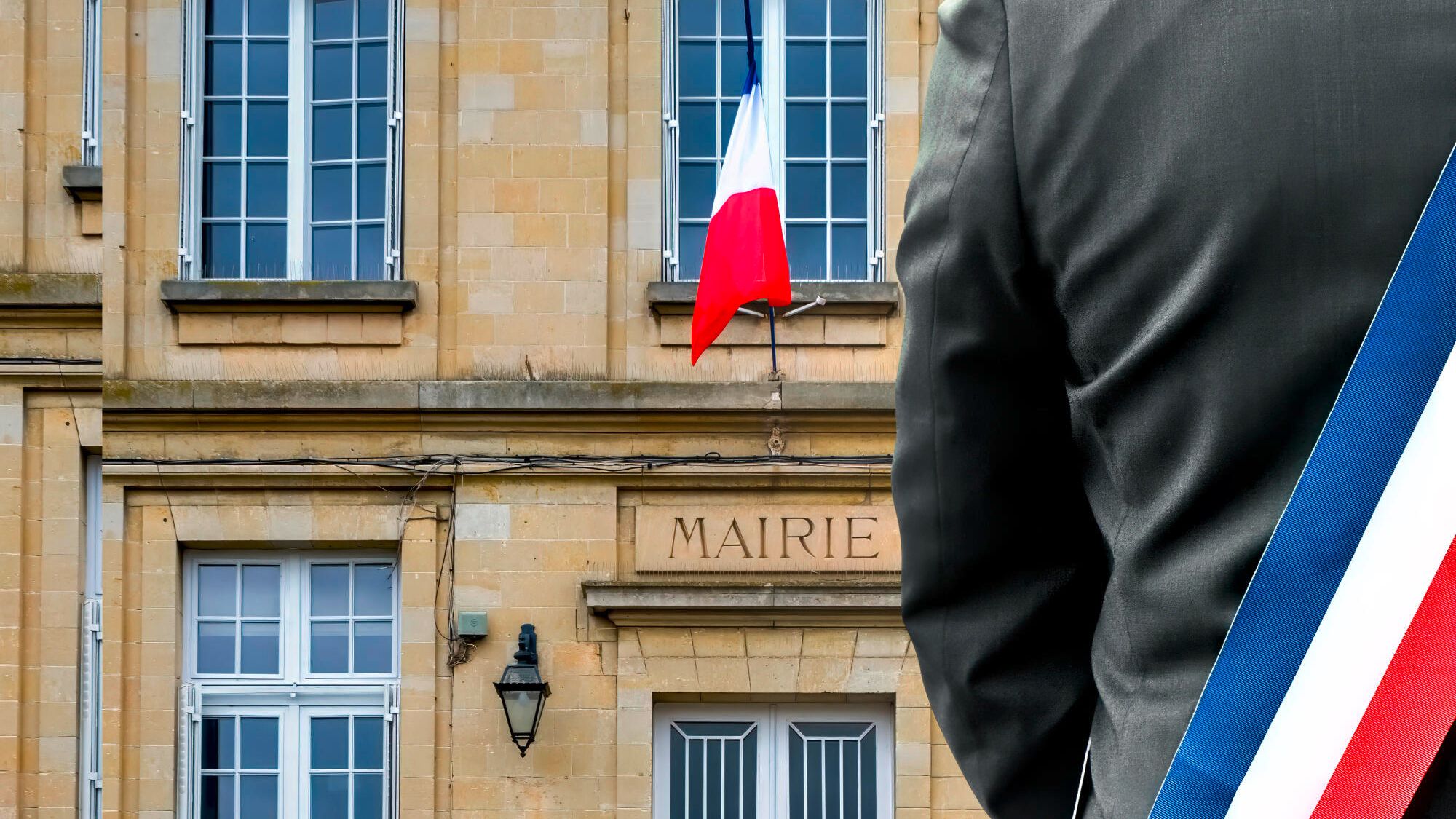
the French passion for the communes
He has not yet crossed the threshold of the canteen when the children are already jumping out of their chairs. “There’s Mr. Mayor!” they exclaim. Contagion of smiles from ear to ear. Francisque Vigouroux (Radical Party) grabs a tray, cutlery, a plate of shepherd’s pie and goes to sit at the end of a table.
Around him, his young people are between 6 and 11 years old. Questions arise: why is there work on my street? Is it possible to have an outdoor cinema? “Good idea! But no swimming pool, it costs too much,” says the elected official from Igny (Essonne), who will run for a third time on March 15, 2026, the day of the first round of the municipal elections.
The little citizens already seem very invested in the life of their municipality. “I want to vote for you! » exclaims a little girl. A popularity that would make their favorite cartoon characters pale in comparison… And not only that. With 84.11% of the votes obtained in the first round in 2020, Francisque Vigouroux was the thirteenth best-elected mayor in France in cities with more than 10,000 inhabitants on several lists.
This fervor, certainly youthful, is one example among many others of the special place that local democracy occupies in the hearts of the French. Thanks to its 34,875 municipalities, or more than a third of the 92,247 municipalities in the European Union, it is as close as possible to citizens.
This year, the municipal mandate attracted 900,000 candidates, out of 50,500 lists. And many French people impatiently watch for programs in their mailbox or local newspaper. So what are the roots of such craze?
A democratic refuge
It all starts from attachment to the councilor. The mayor can always boast of being the French people’s favorite elected official. In 2025, 69% of those surveyed by the Sciences Po Political Research Center (Cevipof) said they trusted him.
Between 2017 and 2022, the years of Emmanuel Macron’s first mandate, shaken by the yellow vests, pension reform and the pandemic, this rate jumped by five points, reaching 72%.
“The figure of the mayor is the one who has suffered the least from political disenchantment and distrust of elected officials,” says Laurent Le Gall, historian of politicization. When national politics is undermined by partisan divisions and governmental impotence, the commune becomes a democratic refuge. A fallback solution and an essential glue in a disoriented, anxious, tense society.
In the alleys of Igny, the presence of Francisque Vigouroux reassures, with his easy contact, far from the usual political jargon. Locals recognize him by his relaxed appearance.
In the market, he greets all the traders with an affectionate kiss, taking them in his arms, like long-time friends. Of course, we speak informally. Especially since the mayor has “kept his commitments and revitalized the town market”, believes Françoise, a market gardener for more than five decades.
The councilor had made it a priority: to breathe new life into his Ile-de-France town, threatened with becoming a dormitory town. Music and comic book festivals, running in the mud… In ten years, Igny has transformed. “He loves his city, it shows!” enthuses a young green spaces agent.
An old attachment
The French also love their commune. In 2025, 69% of respondents felt attached to it according to Cevipof. Since 1983, the year the State transferred numerous powers to municipalities, the participation rate in municipal elections has been well above other local and legislative elections*.
But this passion for the communes in France goes back much further. Already in the Middle Ages, the resistance of the aristocracy to royal power had preserved the autonomy of local territories.
“Little by little, the central administration nevertheless imposed itself. In compensation, she allowed the communes to exist before the Revolution,” explains Gilles Pinson, professor of political science. And when it decided to merge them, it never really succeeded, “despite a first important attempt during the Revolution”, specifies the historian Emmanuel Bellanger.
Even today, the municipality is much more than a provider of public services. It represents the citizens, almost in opposition to other powers. According to Cevipof, 87% of French people attach great importance to mayors defending the interests of residents vis-à-vis other local authorities and the State.
Which is not always incompatible with love of the nation: “In the school of the Third Republic, we learned that to love the big country, you had to love the small one, and that is still somewhat the case today,” explains Laurent Le Gall.
Little partisan logic
Municipalities also deny the prevailing discourse on the depoliticization of the population. While indicating, implicitly, what is repulsive in the other elections. First attraction of municipal elections: they are not always subject to partisan logic.
More than half of outgoing mayors are without a label. When they have one, they try to make it forget during the campaign. A sensible strategy: according to the Cevipof study, the party only comes in fourth position in the voting criteria, behind the program, the results of the last mandate and the personality of the candidates.
Human qualities thus remain decisive. “The main expectation that mayors feel from residents is availability,” notes David Guéranger, author of the sociological survey Mayors, what’s the point?
Second attraction of municipal elections: the obvious link between voting and experience. The ballot determines the construction of a football stadium or the reduction of local taxes. “I am thinking of a 90-year-old voter, who had always voted socialist. .. and who loved dogs. She was ready to vote for the right-wing list which promised the construction of a kennel,” says Laurent Le Gall.
If partisan ideas tend to fade away, that does not prevent municipal elections from sometimes being as “political” as the tumultuous national elections. “Everything is political,” recalls David Guéranger.
The simple width of the pipe in a water network, for example, will determine the quantity of housing that it will be possible to build and therefore the surface area of land that will be artificialized, which raises an ecological issue. “Telling mayors more often that they are involved in politics and are not just managers would give a little panache to their action and would do them a lot of good,” believes the sociologist.
This year, partisan debates often take up more space. Probably because of the proximity of the presidential elections of 2027. “Francisque is a very good mayor. But if there was a National Rally (RN) team opposite, I would have voted for it, like in the national elections,” concedes the customer of a tobacco bar in Igny, leaning on the bar.
Despite its absence in Igny, the RN made more efforts this year, presenting 16 more lists (405) than during the 2020 municipal elections (389). This political group is one of those which tends to nationalize the vote.
Just like the presidential party, Renaissance. He knows that his political survival will play a large part in these elections. “Today, we only have 500 local elected officials. This is absolutely not satisfactory for training like ours,” confides an executive.
On the importance of the opposition
Despite the affection of the French for their mayor, their municipality and local policies, some elected officials cannot help but fear a progressive detachment from public affairs.
The national participation rate of 42% in the second round of municipal elections in 2020 acted like a cold shower. Many hope it was just the “Covid effect.” In Igny, the left-wing organizations – Socialist Party, Communist Party and Les Écologists –, which had nominated Jean-Léonce Korchia in 2020, did not propose a candidate.
This year, no opposition list emerged against the outgoing mayor. “No one came to get me, I didn’t have the heart to represent myself and to exhaust myself to form a list,” comments, in a pessimistic tone, Jean-Léonce Korchia, 71 years old.
Unheard of for this former candidate from Ignis, who has seen city councilors pass by. He deplores this situation. For him, the opposition allows for a democratic debate by often daring to alert the elected official when a project seems risky.
“The French do not turn away from politics. But elected officials must interest them in it,” says Sylvain Fagot, the outgoing mayor of Andilly-les-Marais (Charente-Maritime). The only candidate, he is preparing to begin a third term.
He decided to broadcast the municipal councils by videoconference, which still recorded between 500 and 800 views out of 2,500 residents. There is no inevitability: interest in local democracy is learning.
In Igny, Francisque Vigouroux invites residents to follow him for half a day – from site visits to delicate budgetary meetings – to understand the reality of his daily life. It remains to be seen whether there will still be the same fervor for municipal elections when its little citizens move, in a few years, from the canteen to the polling station.
* Exceptions are the municipal elections of 2020, affected by Covid, and the legislative elections of 2024, which reached a record participation.
French people satisfied with their mayor
58% of them want their councilor to stand and be re-elected.
Source: Cevipof, 2025.


