the multiple challenges of his trip to Türkiye and Lebanon
Ecumenical dialogue
Dialogue and rapprochement between different Christian denominations are the primary reasons for Leo XIV’s trip. The year 2025 marks the 1700th anniversary of the Council of Nicaea, the first ecumenical council in history. A trip by the Pope to Iznik – now Nicaea, in Türkiye – had been planned for a long time, even before the death of Pope Francis.
In Iznik then in Istanbul, Leo XIV will meet the Patriarch of Constantinople, Bartholomew I, primus inter pares leaders of the Orthodox world. He will also meet representatives of other Christian denominations, including Protestantism and the Armenian Apostolic Church. While it was once envisaged that this trip would mark the outcome of an agreement between Catholics and Orthodox on a common date for the celebration of Easter, this should ultimately not be the case. If Francis had an “exclusive” relationship with Bartholomew I, Leo XIV would have a “more synodal” approach and would want to involve other Christian denominations as well, explains a source close to the matter.
In any case, this trip will be an opportunity for the first North American pope to recall that “what unites us is truly much greater than what divides us,” as he states in his apostolic letter ““In unitate fidei, just published ahead of this trip.
A message of peace in a world of conflict
The decision to add a passage through Lebanon to this first apostolic journey is a personal choice of the sovereign pontiff. In this country which still suffers almost daily and border bombings of the bloodied Holy Land, he comes as a “messenger of peace”, as Cardinal Pietro Parolin, Secretary of State of the Holy See, explained in an interview with the Vatican media. In Beirut, he should once again urge the world to “disarming and disarming peace”.
Lebanon is an all the more symbolic place for this message as the Holy See sees this country as an example of possible and equitable cohabitation between Christians, who represent approximately a third of the population, and Muslims, the other two thirds. A sentence from John Paul II in 1989 has remained famous in the Vatican’s image of the country: “Lebanon is more than a country: it is a message of freedom and an example of pluralism for the East as well as for the West! »
The issue of peace should not, however, be limited to Lebanon. If it was once envisaged that the pope would only make the round trip during the day to Iznik, it was finally decided to extend the Turkish stop by making a real state visit with a start in Ankara, the capital. While Turkey plays a growing role in world affairs, particularly in the Middle East but also in Ukraine, the Vatican is emphasizing its desire for a multipolar world and not dominated by one or two countries. This issue is all the more important since Leo XIV himself came from the United States.
Interreligious dialogue
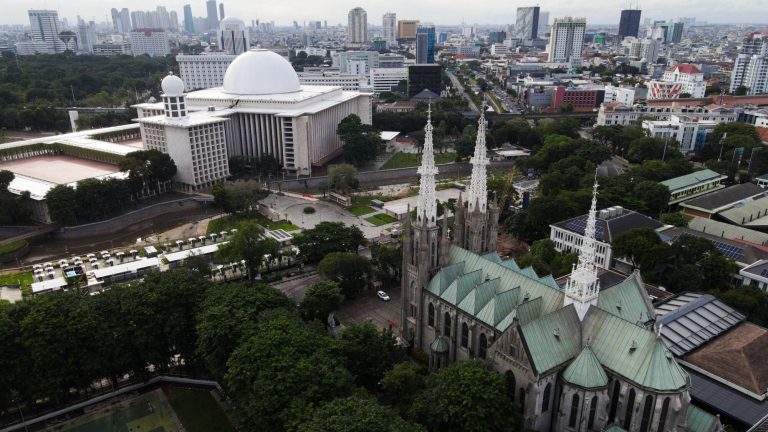
For his first trip outside the Italian peninsula, Leo XIV will visit two countries with a large Muslim majority. In Türkiye, this will be embodied by a visit to the famous Blue Mosque of Istanbul (or Sultan Ahmet Mosque). In Lebanon, through an ecumenical and interreligious meeting on the Place des Martyrs. However, the program does not include bilateral meetings with senior Muslim dignitaries and the visit to the Istanbul mosque will not give rise to a speech.
If this trip thus marks the pope’s desire to maintain good relations with other religions, it should not, however, allow us to know in depth his thoughts on interreligious dialogue. After the pontificate of Francis which went very far in this matter – notably with the signing of the Document on human fraternity for world peace and common coexistence, in 2019 – Leo XIV therefore seems to adopt a certain reserve for the moment.
Encourage local Christians
If Turkey and Lebanon have a Muslim majority, this automatically means that Christians are at least a minority there. In these two countries, the Bishop of Rome must therefore encourage them to remain faithful to their faith but also to maintain their presence in these countries, despite the difficulties.
In Türkiye, it should therefore encourage the handful of Christians – at most 100,000 people out of 84 million – to gain visibility. To do this, he will celebrate a mass in a large multipurpose hall in Istanbul. This will be the first time that a pope celebrates a mass outside a church in Türkiye. In Lebanon, he should do the same and urge Christians to stay in this territory, a piece of the Holy Land.
Make yourself better known to the world
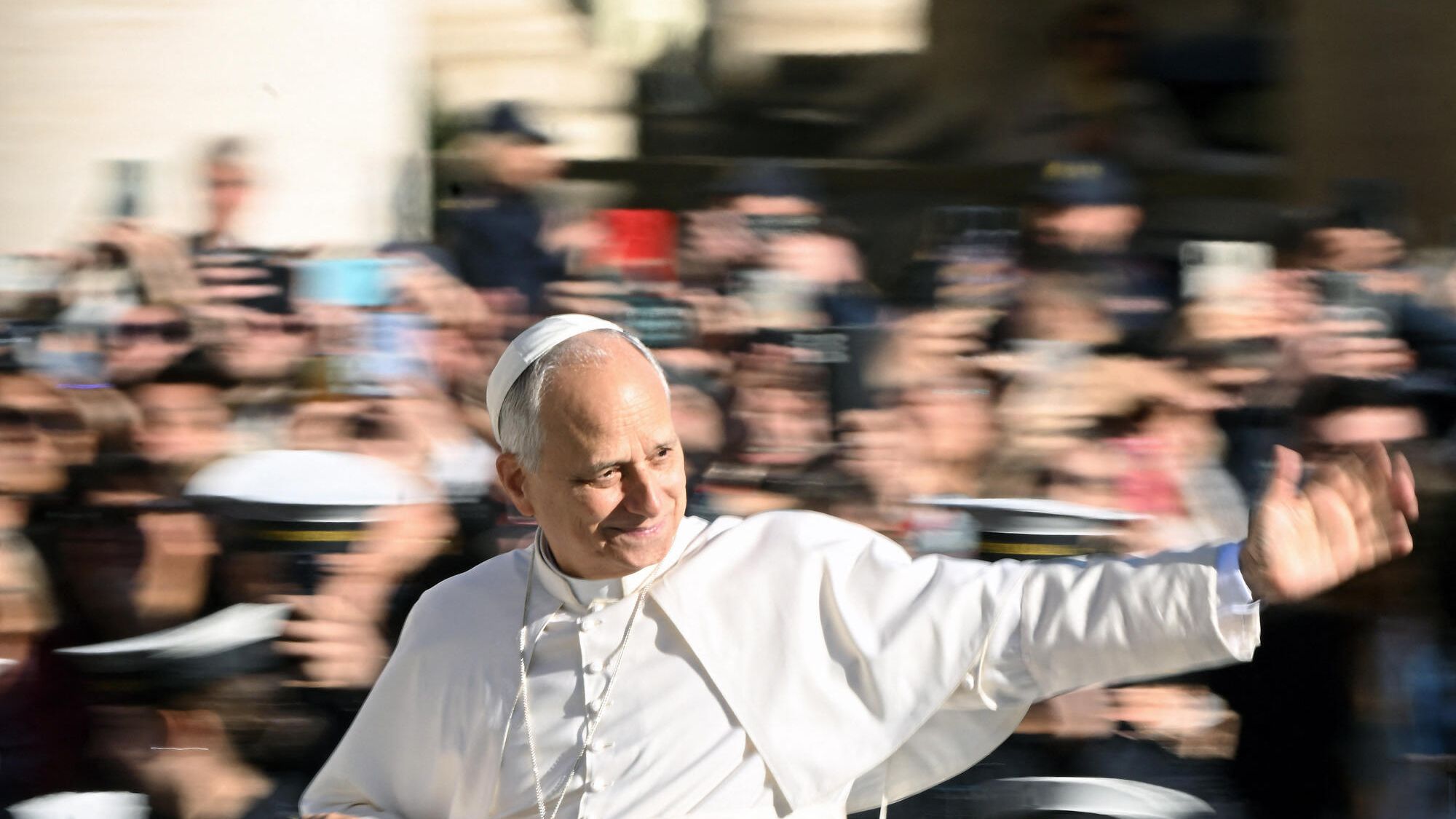
Another issue of this trip: as the first trip of the 267th pope, this apostolic visit will be closely scrutinized throughout the world. The cameras will watch each of Leo XIV’s gestures while his words will be dissected and analyzed. And if he has already spoken several times to journalists, this trip should be the occasion for the first real press conference of the current successor of Peter – if it is maintained as it existed until now.
These moments are always observed with attention, sometimes sparking global enthusiasm – as when Pope Francis said “Who am I to judge?” on the subject of homosexual people of faith – and sometimes a global controversy – as when Benedict XVI questioned the effectiveness of the condom alone in the fight against HIV.