these French people who open their doors to create connections
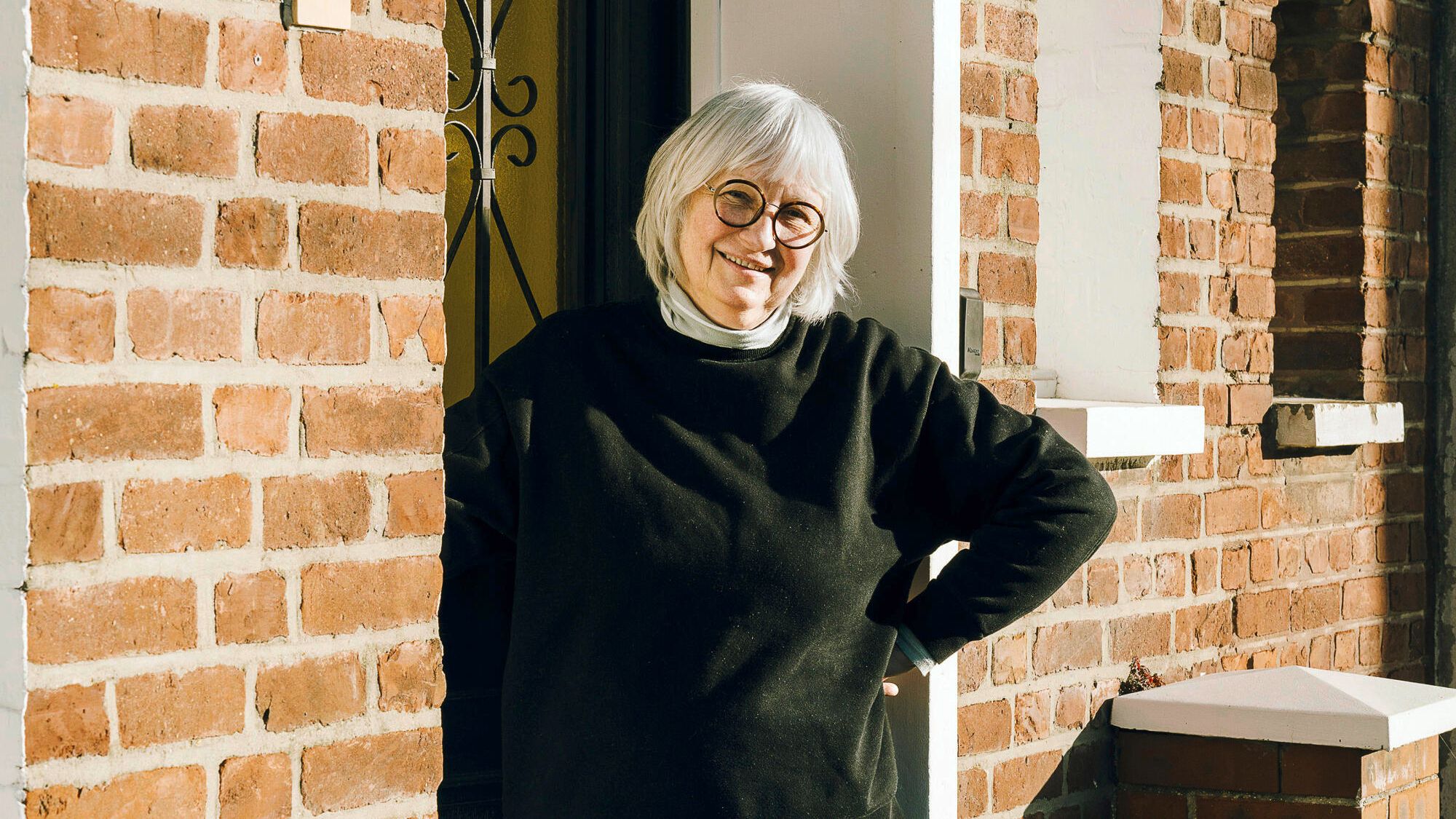
I remember a Brazilian, a little exuberant… While I was tinkering outside, on the street side, he opened the bedroom window and, shirtless, he shouted to me a loud “Hello Corinne!” I thought, “Oh, what will the neighbors think?” But it was funny! In fact, since 2022, Corinne’s neighbors have noticed that the pleasant retiree has changed her habits somewhat.
She rented a room upstairs in her house in Templemars, in the Lille suburbs (North). This allows her to meet “lots of people she wouldn’t otherwise meet”: a mother and her daughter, fans of Christophe Maé, who attended three of his concerts in a row, in Brussels, Lille and Paris; a couple of musicians who had played in the biggest operas… “I started to supplement my little retirement, but, if I hadn’t liked it, I would have stopped, because people come into my house. In the end, hospitality and exchange take precedence over money,” confides the woman who pockets 40 euros per night and spends a good two hours cleaning after each departure.
Fight against loneliness
Corinne rents her room via Airbnb. If the famous platform created in 2007 has not invented anything in the provision of a room in a local’s home, it has democratized direct rental for short stays. And the French have other tools: Roomlala, Co-accommodation or even the guest rooms of Gîtes de France are all possibilities, when Couchsurfing and NomadSister (reserved for women) even offer free beds.
Today, Airbnb is vilified for the imbalance it creates, with owners maximizing financial gains by renting empty apartments to tourists rather than locals. To restore its image, the company explains that its rentals benefit the regions – 81% of municipalities have at least one rental according to a study by the Terram institute – and argues that it also supports the restoration of heritage projects in rural areas.
Above all, the hosts are not limited to professional rental companies and key box enthusiasts. Expanding your network, practicing a foreign language, introducing people to your city, your neighborhood, even your accommodation, fighting against loneliness, “there are many reasons to offer a room at home. For some, like housewives who have not worked outside the home, this can represent a form of valorization,” indicates Félix Jelen, author of a thesis about commercial hospitality on Airbnb.
“It is easier to become friends through a chance meeting than to remain one in life”
Chinese proverb
Anne-Marie, 83, and her husband, Marcel, 78, are one of those guests for whom money was not the driving force. At 30 euros per night and 320 euros per month including breakfast, renting a room in their large house in Ytrac (Cantal) nevertheless allowed them to help their children.
“What we especially like is meeting students on internships, workers, workers in the process of moving in the morning at breakfast, in the evening in the shared kitchen,” confides Anne-Marie. Sometimes we meet around the table, each with their own meal. I taught a psychology student how to knit because she wanted to offer this activity to her patients. This gives us the opportunity to stay young and open to the world.”
Refuse to withdraw into oneself
A conviviality that sometimes goes beyond simple exchange. For two years, Corinne welcomed Élodie every two weeks, who came from Avignon (Vaucluse) for meetings at her company headquarters. “She ended up sitting on the sofa, we talked about our families… We continue to give each other news. »Friendships acclaimed by Axelle, who has made it a religion to reside with locals. “I got on well with my hostess on the banks of the Loire. As I am also opening my apartment in Saint-Denis (Seine-Saint-Denis), she came with her daughter and a friend to go to Disneyland. » And the Ile-de-France woman is surprised by the freedom of speech aroused by these one-night encounters: “I am sometimes entrusted with complicated life stories, of violence, in complete simplicity. There is a real spontaneity in the exchanges.”
Among these hosts, we almost find a militant approach, assumed or not. Sharing your accommodation can certainly meet an economic requirement, but given the low income from a room compared to the commitment (entertaining at home, cleaning), another motivation comes into play: showing that you can still open your door to strangers without fear, refusing to withdraw into yourself… “If this kind of exchange can bring a little human warmth in a world which is becoming so impersonal, so much the better! », asserts Josiane who welcomes tourists “for pleasure and to see people” to Lisle, a small town in Dordogne. With them, she discusses their region and their profession before extolling the merits of her territory, taking on the role of ambassador who sometimes motivates these hosts. “Hosts go so far as to act as guides to their microdistrict,” confirms Victor Piganiol, author of a thesis on the tourist and his host in Bordeaux. With these platforms, everyone can adapt their classified ad to those they wish to receive: tourists, workers, cyclists, etc.
Share a roof, create a bond
Because temporary hospitality also meets varied needs. Every night, thousands of people sleep away from home for work, an internship, work-study studies, a hospital appointment, etc. Ten minutes from the Nord hospital in Marseille (Bouches-du-Rhône), Bruno mainly welcomes patients or their loved ones: a mother whose son is going to have brain surgery, a person undergoing radiotherapy, etc. “When we renovated our house, we didn’t know what to do with an apartment on the ground floor. We liked the approach of Hôtel du Nord, a cooperative of residents. It consists of welcoming people into their homes to help them discover the northern districts, but also in a spirit of mutual aid. If I make a profit from it, I don’t do it for the money, I don’t have a price list. By removing the worry of accommodation for patients or their companions, I have the impression of applying a small bandage to an inner tube with holes everywhere…”
A similar social philosophy prevails in Brittany and Pays de la Loire. The temporary homestay accommodation system consists of welcoming young people aged 18 to 30 on internships or work-study programs for 15 euros per night. In Saint-Brieuc (Côtes-d’Armor), Camille, 22, benefits from a room with Marie-Christine, 66, for two weeks every three weeks. Everyone has their own life, but both women praise the exchanges between generations. “Marie-Christine is very open-minded, we can talk about everything,” says Camille. I sometimes ask him for advice. It’s interesting, because she’s not my family.” The cohabitation seems so successful that the young woman assures us: if, in the future, she has to travel for a professional context, she will first look for a room with a local.
Home Farmer, shared land
“For me, it is important to maintain the link between the rural world and the urban world. I like to know what people in the city think, how they live. In short, not to remain isolated in my corner. For Florent, who offers two guest rooms and a yurt on his land, exchange is essential. The farmer, based in Saône-et-Loire with Anne-Sophie, his partner, is part of the Accueil Paysan network.
The principle? No key box, the commitment to welcoming the guests – tourists but also social welcome – and above all to interacting with them. The forty-year-old shows the farm, where he produces dried fruit, raises sheep and cows, while explaining the region, the role of ponds, bats, hedges… 750 hosts are spread across France.
Some farms are stages of the Randos paysannes, which are so many itineraries punctuated by these possible encounters with passionate rural people.
accueil-paysan.com
I will go eat at your place
What if you went to dinner with a stranger, in the company of complete strangers? This is the principle of the Eatwith global platform. In France, 3,000 hosts offer snacks, aperitif dinners or dinner for a fee. Among them, Katryn.
Between the preparation of an Auvergne stew and Suzette pancakes, she highlights the desire to meet tourists, mostly Americans in her case, who thus discover French cuisine in another setting, seeking to know how we live, to discover places off the beaten track in Paris, etc.
“In December, two families who came to dinner at the same time got along so well that they spent New Year’s Eve together. It made me happy!” Claudine, who lives in Montmartre, has been welcoming guests for eleven years: “I love entertaining and I like it more and more,” confides the retired professor. Dinners with long-time friends are sometimes a bit boring, there are always new discussions.” Food as an excuse.
eatwith.com