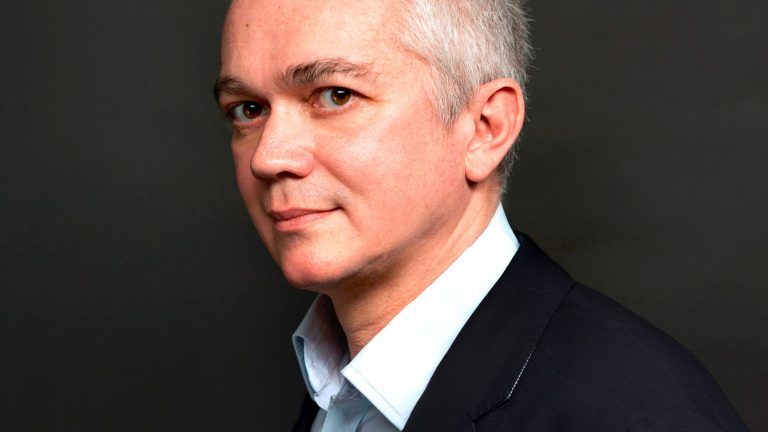

“These municipal elections will impose a narrative for 2027”
What assessment do you draw at the end of the first round of the municipal elections?
It is difficult to make general conclusions given the scattering of results and political offerings. In most cities with more than 10,000 inhabitants, Les Républicains (LR) and the Socialist Party (PS) maintain good results, even if there is some bad news – for example the difficulties in Nîmes for the former and in Lille or Brest for the latter. Overall, the former government parties remain in a dominant position.
However, the recomposition which was already taking place at the national level is now hitting these municipal elections head on with the National Rally (RN) and La France insoumise (LFI) making a forceful entry at the local level. Consequently, historic parties may have to accept Faustian pacts, as we are already seeing with the alliance between the PS and LFI in Toulouse.
Almost absent from the 2020 municipal elections, has LFI succeeded in its challenge of becoming essential on the left?
The party especially made its breakthrough in the big cities. That being said, even if there are important symbols such as the victory in Saint-Denis and the possible one in Roubaix or Toulouse, LFI is generally preceded by the union lists of the left led by the PS or the ecologists. Furthermore, even if it is always risky to compare ballots of different natures, Sofia Chikirou in Paris or Sébastien Delogu in Marseille did almost three times worse than Jean-Luc Mélenchon during the 2022 presidential election.
LFI can maintain itself in most of the forty largest cities in the country, the rebels are however in a position to hinder, prevent or be kingmaker for the left forces. In Toulouse, they will try to show that unity can be built around them for victory.
The RN is for its part reinforced in its standardization strategy…
The far-right party is confirming its establishment which began in 2014. Almost all of its incumbents were re-elected in the first round or are in a good position to be so next Sunday. They also have symbolically very strong results, as in Nice, and are making a breakthrough in small and medium-sized towns. The RN benefited from the “decompression airlock” between it and the classic right represented by the Union of Rights (UDR) of Éric Ciotti.
The first party in France is that of the abstainers
Frédéric Dabi
Can we already estimate the postponements of each for the second round?
Less than ever, parties do not own their votes and voting instructions are no longer expected or heard. In Paris, will there be LFI voters of Sophia Chikirou in the first round who will change to allow Rachida Dati to be beaten, in Marseille will voters of Sébastien Delogu favor the outgoing Benoît Payan to counter the RN Franck Allisio? On the left, we will undoubtedly see that despite the strong link of certain French people with LFI, voters remain free in their electoral choices. This caution also applies to the right, with questions about the attitude of Martine Vassal’s voters, in Marseille, who brought together the common base, ranging from the center to the right. Furthermore, the duel is becoming more and more the exception for the second round, with more and more triangulars, quadrangulars, even quinquangulars. There is therefore real uncertainty over the outcome of the vote.
Another marker of this election, the strong abstention…
The leading party in France is that of the abstainers. With the exception of 2020, an election held in the midst of the Covid pandemic, abstention has never been so strong for municipal elections. This is the consequence of a campaign which never really started and which was impacted by international news. There is a paradox between the premises acclaimed by the French as the place of transformation and the figure of the mayor as their preferred elected official, and an ever more impressive abstentionist cycle. The eclipse of politics on the national scale descends to the local scale.
Furthermore, there was also no logic of voting sanction or support for the government which could have worked in favor of participation. The presidential party is also particularly little visible in this election.
Does the end of mixing, this possibility in small municipalities of crossing out or adding names to a list, also explain this abstention?
A quarter of French people live in rural communities where there was often only one residual list. In this country where voting is a civic reflex, many voters had to question the meaning of going to the polls with no other option than to vote for this single list.
Has this election placed the political parties on the starting line for 2027?
Barring any surprises coming from a President of the Republic who knows how to be creative, this election was the last battle with the next presidential election. At the party level, a municipal election is a matter of symbolism and everyone will try to impose their reading of the vote to show themselves in a good position for 2027. LFI can rightly boast of entering the municipal councils and of having won some symbolically very strong cities.
For Édouard Philippe, a re-election in Le Havre will constitute a stepping stone towards 2027 while Jordan Bardella will want to benefit from the good results of the RN. All parties will seek to impose their narrative of the election on the French to trigger a dynamic.