
towards sharing French atomic weapons?
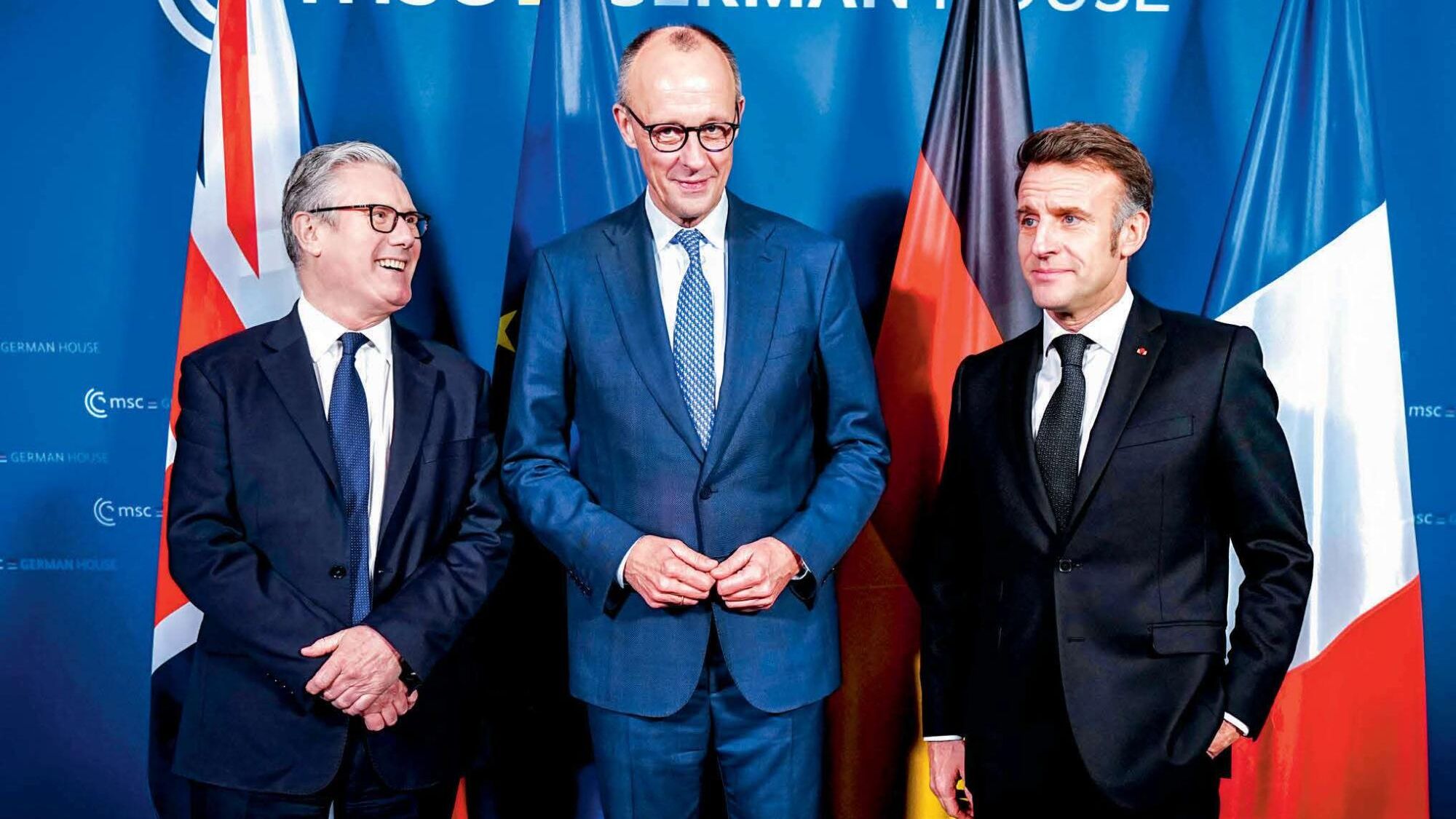
Does Germany want French atomic weapons? All it took was one sentence from Chancellor Friedrich Merz, at the Security Conference in Munich, on February 13, 2026, evoking discussions, notably with Emmanuel Macron, around “a joint European nuclear defense”, to revive conjectures on the extension of French deterrence to its European partners.
For four years, the Federal Republic has suffered two shocks that it had not anticipated: the return of war 800 km from Berlin with the Russian invasion of Ukraine, and the now accepted isolationist temptation of the American ally since the election of Donald Trump in 2024. Faced with this double uncertainty, which threatens its security, Germany, which, since 1945 has turned its back on its militarist past, sees the nuclear guarantee receding. American. French deterrence now enters the equation.
Acted by his social-democrat predecessor, Olaf Scholz, German conventional rearmament was confirmed by Friedrich Merz. Military credits are expected to amount to 500 billion euros between 2025 and 2029. Germany already spends more than France on its armies: 2.4% of its GDP in 2025 compared to 2.04% for France. But nuclear coverage remains the supreme guarantee.
However, for a year, other countries such as Sweden and Poland have now been discussing the possibility of acquiring nuclear weapons if the American umbrella were to close. All emphasize a desire for “cooperation” with the two European nuclear powers, France and the United Kingdom. Last year, for the first time, these last two states agreed to coordinate the use of the supreme weapon, if necessary.
The French president also says he is open to “discussions” with his neighbors. Like his predecessors, he underlined “the European dimension” of the notion of France’s vital interests. If they were in danger, French nuclear doctrine authorizes the possible use of strike force.
The vagueness of strategic concepts is voluntary and reinforces deterrence: it is because the enemy does not know precisely which red line it must not cross that it would, in theory, refrain from any major attack against Paris’s European partners.
Prerogative of the President
Nuclear “cooperation” does not mean sharing the decision-making to unleash atomic fire. This prerogative remains the prerogative of the French president, head of the armed forces. But other steps are possible, such as participation in military exercises, joint air support or even deployment of part of the national strike force on the soil of our European allies.
With regard to Germany, we are not there yet. Simply because a whole part of the German right cannot envisage a break with the United States. The day after Chancellor Merz’s statement, his Foreign Minister Johann Wadephul called for people to stop “casting doubt on the Atlantic alliance”, because without it “we are defenseless”.
At the beginning of March 2026, Emmanuel Macron must give a speech dedicated to the French nuclear doctrine. It will be up to him to reaffirm how Paris is ready to engage in deterrence.