
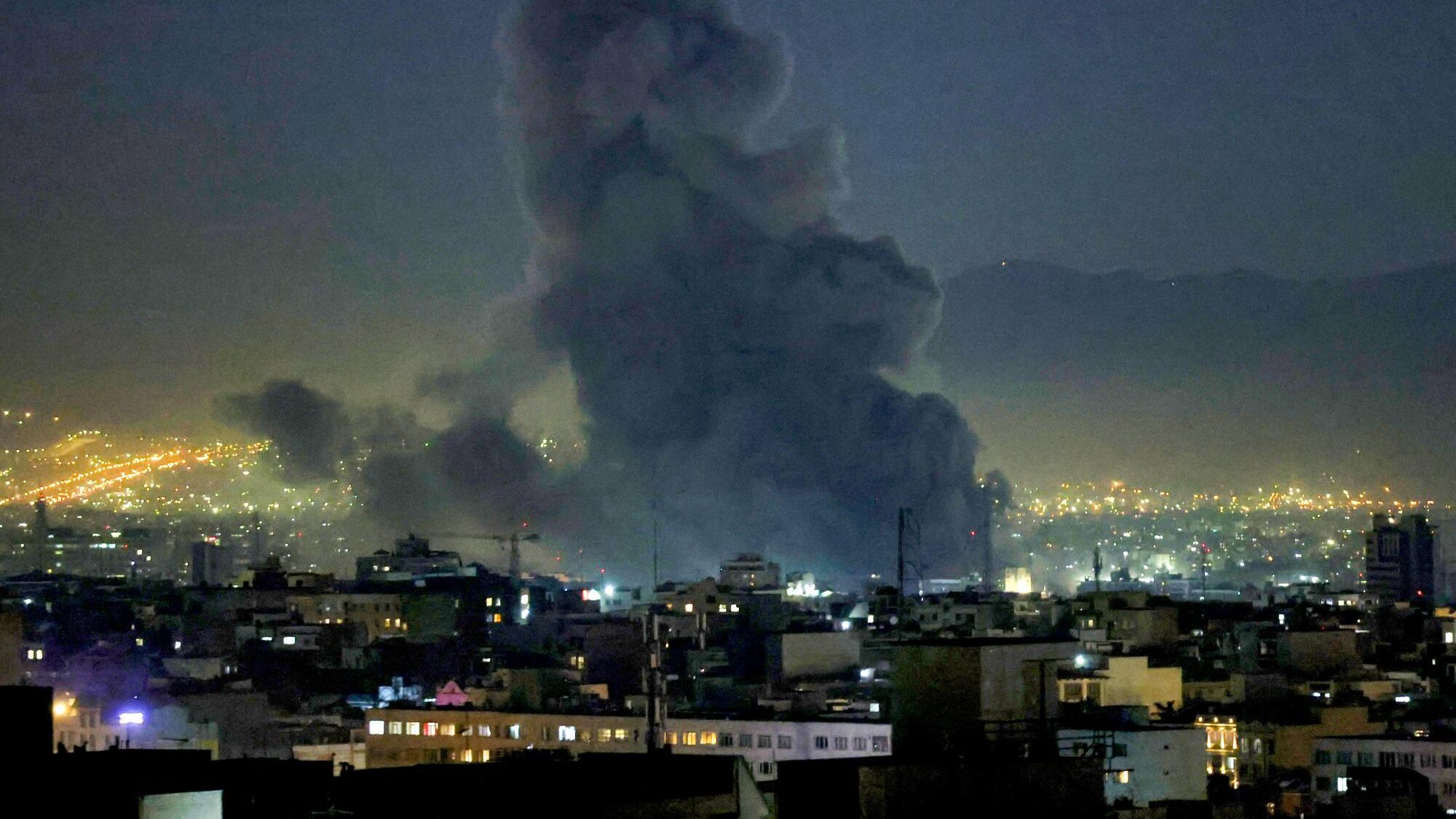
Iran under fire from the United States and Israel
Is the half-century-old war between the Islamic Republic of Iran and the United States of America experiencing a new episode or its final chapter? Since the 1979 Revolution and the humiliating hostage-taking at the American embassy in Tehran, the ayatollah regime has constantly challenged American power, which it described as the “Great Satan”. By carrying out terrorist attacks against Western interests, by supporting armed groups, from Palestinian Hamas to the Houthis of Yemen, or even by clandestinely supporting its nuclear program.
This February 28, the President of the United States, Donald Trump, launched the largest response ever planned by Washington against the regime and its revolutionary messianism in five decades. From his residence in Florida, the “commander in chief”, without worrying about international law or the theoretically obligatory vote of the American Congress, gave the order to launch a large-scale air attack combined with the Israeli ally, called “Epic Fury”.
Why now?
The failure of negotiations in Geneva on Iranian nuclear power was the immediate trigger. Even though the Iranian side spoke of “notable progress,” American diplomats encountered Iran’s refusal to give up the uranium enrichment program. Donald Trump convinced himself that Tehran’s emissaries wanted to “buy time” and were “playing” him.
The White House host had, it is true, set the bar high by demanding the abandonment of the program, the dismantling of missile production sites, and an end to support for terrorist groups. Pressed by the Israeli Prime Minister to put an end to “this existential threat” in the words of Benjamin Netanyahu, who had met him a few days earlier in Washington, Trump decided to take action. It is also an opportunity to open a diversion on the affair of the emails of the sexual predator, and former acquaintance of the president, Jeffrey Epstein, which is making headlines across the Atlantic.
For a head of state falling in the polls, contested by public opinion for his economic policy, censored by the Supreme Court on the legality of the customs duties he imposed on the rest of the world, it was urgent to “move on to something else”, as he responded to a request for total transparency on the Epstein file.
A regime more weakened than ever
The Iranian regime is also weakened like never before. Its allies in Lebanon and Gaza, once a nuisance force, have been beheaded; Syria, an old ally until the fall of Bashar el Assad in December 2024, has changed leaders; the Israeli and American strikes last June permanently degraded Iranian air defense. Above all, the Iranian people took to the streets last December and January to scream their anger against the power in place.
The terrible repression only reinforced his anger. The scenes of jubilation in certain streets of Tehran at the announcement of the death of Supreme Guide Ali Khamenei, killed with the Minister of Defense and other senior officials on the first day of the American bombings, are proof of this.
Will this popular pressure be capable of bringing down a regime whose command centers are likely, in the coming days, to be seriously dismantled by strikes, logically, lasting? This is the hope of the American president. In his February 28 address, he called on “the proud people of Iran,” when the time comes, “to seize the government”: “this is probably (your) only chance for generations.”
There are many obstacles to overcome before seeing the wind of freedom rise. Not the least of which is the fickleness of an American “commander in chief” who prefers to obey his instincts than follow a plan, even a plan of attack.