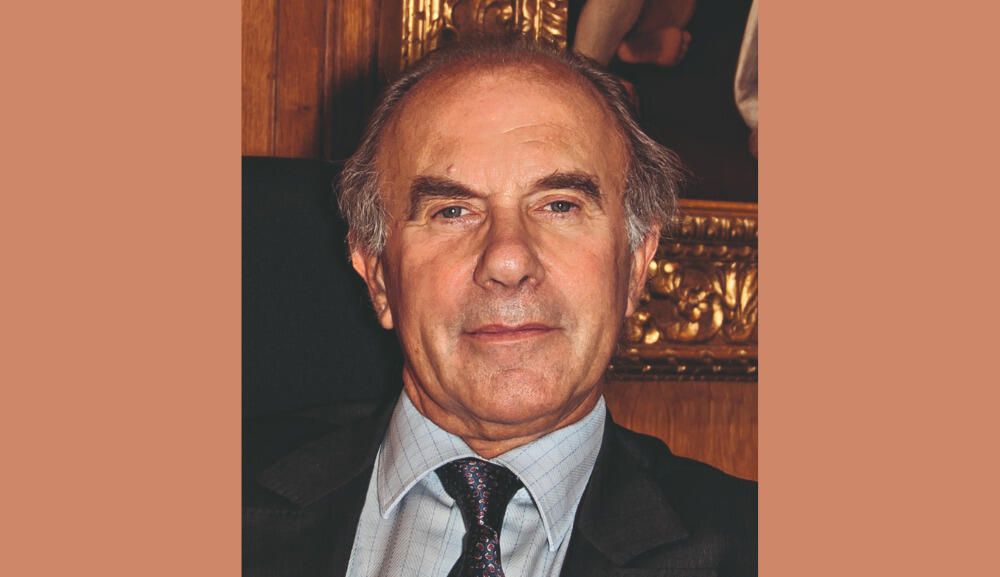
G. Sarti in Paris An art courier from Italy
From the entrance to the G. Sarti gallery, nestled in a private mansion, at 137, rue du Faubourg-Saint-Honoré, in the chic neighborhoods of the Parisian right bank, the exhibition Between heaven and earth takes on the appearance of a confidence. A Virgin and Child from the 13th century, attributed to Duccio di Buoninsegna, opens the route.
Echoing, a century later, The Virgin breastfeeding the Child, four angels and the crucified Christ of Nola’s Master reveals a fragile humanity.
As for the Crucifixion by the Master of the Saint-Blaise chapel, at the turn of the 14th and 15th centuries, it sets the space ablaze with “the liveliness of its varied colors, notably the red and orange lacquers of the draperies, which accentuate the expressiveness of the characters”, underlines the catalogue*.
The 12 works exhibited until April 3, 2026 reveal Italian artists who have often remained in the shadows.
They also tell a story: that of Giovanni Sarti, and his ability to recognize, understand and defend painters to the point of including them in the most prestigious private and museum collections.
“The five of us lived in a room measuring 3 by 3 meters”
The story begins far from Paris. Giovanni was born in Belforte all’Isauro, in Marche, a land of hills and rural churches to the east of the Boot, between the Apennines and the Adriatic Sea. Throughout his life, in a soft, singing voice, he recalled this poor childhood with almost painful precision: “The five of us lived, my parents, my two brothers and me, in a room measuring 3 by 3 meters.”
Icy water, winters without shoes, hours spent in the fields from the age of 6 or 7. And then the churches, doors open, paintings accessible. In these modest sanctuaries, beauty was offered. Maybe it all starts there.
A good student, he entered the Jesuit seminary, which he left at 15 due to lack of a call… and because he confided to his mother “that he likes women”. The hotel school, free, allowed him to continue his studies, but his father died at 47, broken by work.
In 1964, at age 21, Giovanni became the breadwinner of his mother and brothers. Switzerland, France, Germany, then England: he worked in various hotel establishments. Vocation is born by chance. In Britain, Italian antique dealers are looking for a driver and an interpreter to travel the countryside in search of furniture. Giovanni observes, listens, learns. He discovered antiques with this patient and incisive attention that would never leave him.
“You just have to look”
At the age of 40, in 1975 he opened his first gallery in London, near Portobello, the flea market district. The premises are tiny. He travels to auctions, buys, cleans, studies. Without academic training, he became an expert in Italian furniture, before specializing in primitives, a field then little explored. In twenty years, it has established itself as an international reference, praised by specialist magazines. A feat in such a short time!
The meeting with Claire seals his life. Daughter of the painter Gérard Vulliamy and granddaughter of Paul Éluard and Gala, she immediately recognized in Giovanni an instinctive intelligence of the gaze. “He didn’t theorize. He said: “All you have to do is look.” »
Between the daughter from a background of artists and the son from a poor Italian family, a life together of forty-two years begins, nourished by work and shared intuition. Claire follows Giovanni in his passion for little-known artists from the 13th to the 17th century, revealing painters such as the Master of Nola, active in Campania, or Bartolomeo Cavarozzi, Caravaggesque painter from Viterbo (Lazio), present in the exhibition with David and the head of Goliath.
The Legacy Gallery
Today, after Giovanni’s death in 2024, the transmission continues. David Boaretto-Sarti, Claire’s son, grew up in this demanding world. “The gallery is my family history. The exhibition is a tribute to my father-in-law, to the thirty years of the Parisian gallery, to the fifty years of his career as an art dealer,” he explains.
He remembers in particular the Pietà Artaria by Bramantino, now considered one of the most fascinating and atypical works of the Lombard Renaissance. It sat imposingly in Giovanni’s office: “Every day, he took pleasure in rediscovering this painting. As a child, he would never have imagined owning such a work. He came from a world where we had nothing.” The exhibition now allows the public to admire it.
The continuity of a family gallery is difficult, but the values remain: honesty, passion, perspective, loyalty to a taste. “These are the ones I want to pass on to my children,” confides David.
And Between heaven and earth ? “The title comes from a conversation between my mother and my daughter, then 9 years old. When my father-in-law died on September 18, 2024, she said: “Giovanni is in purgatory.” For her, that meant that he hadn’t left, that he was still there, around us, between heaven and earth. I found this image moving and accurate. The title stood out,” says David.
His daughter likes coming to the gallery, “sometimes a little less than me at her age,” he slips. But I know that these moments mark her. Being surrounded by these works leaves a lasting imprint. It’s a seed that sprouts.” His son, younger, sometimes prefers to go inside and play: “It’s normal. What matters is that this world permeates them, as it permeated me.” David also forged his own path before returning.
“I studied law, finance, worked in law firms, in investment banking, in cinema. Life made me follow other roads. And then my mother’s illness brought me back here. I came back to where I grew up. As I often say, all seeds sown in childhood will grow one day. » With his mother, David is today the guardian of a unique collection of Italian primitives. Although sales remain an important activity, the essential lies elsewhere. “A gallery only has meaning if the works are seen,” insists Claire.
And when asked what this legacy built over half a century represents, she answers bluntly: “It’s continuing what my husband started. Continue to get his name out there. Otherwise, everything closes, everything turns off. »
Throughout his life, Giovanni Sarti repeated that beauty had saved him. In front of these works, we can still hear the voice of the poor child who became an art broker, acquiring international fame through passion, hard work and intuition. A legacy that he passes on to us today, and that his family, in turn, carries with the same fidelity of gaze and the same demands of the heart.