The Montparnasse Tower in sight
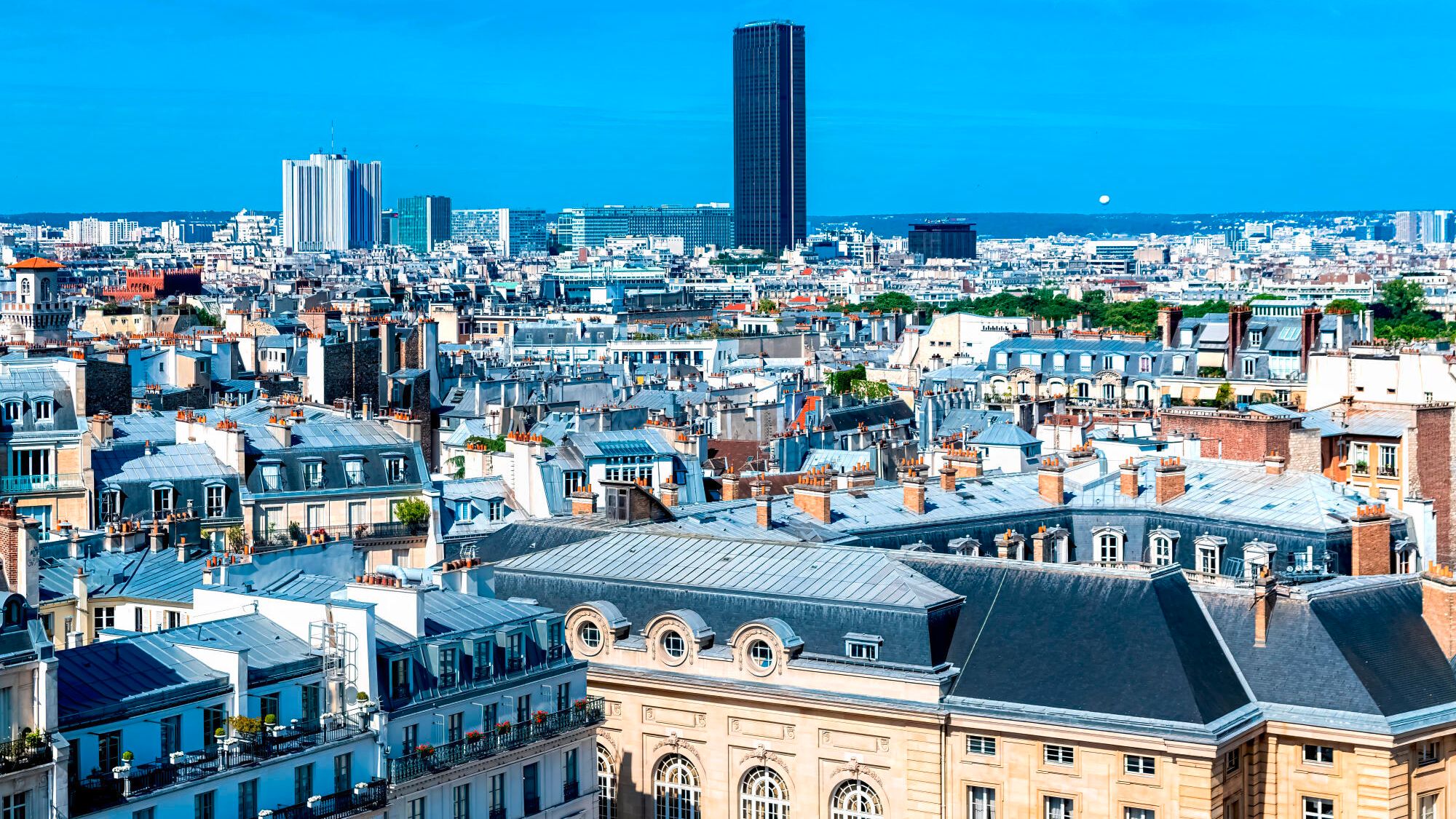
On March 31, the Montparnasse tower will close. More than half a century after its inauguration, the only skyscraper in inner Paris (until the delivery, planned for this summer, of the Triangle tower) will be the subject of a titanic project planned until the end of 2030 and estimated at more than 650 million euros. Objective: save the building marked by time and offer it a new destiny. Will this be enough to change the way we view this much-criticized tower?
A decision from above
At the turn of the 1950s and 1960s, the overhaul of the Maine-Montparnasse district envisaged for around twenty years took shape. Many streets marked by time, where artists from the Belle Époque and the Roaring Twenties met, are razed.
André Malraux, then Minister of Culture, said: “Paris can rejoice! The Chaillot hill has the Trocadéro; the Place de l’Etoile, the Arc de Triomphe; the Montmartre hill, the Sacré-Cœur; the Sainte-Geneviève mountain, the Pantheon; Montparnasse will have its belfry! » Even if the planned tower is an entirely private project, it responds to a new vision of the capital. It will dominate a shopping center and a concrete slab emblematic of this decade, which also saw the La Défense district emerge from the ground.
The movie The unknown of the Grande Arche (2025), which returns to the project decided by François Mitterrand in 1983, clearly illustrates the desire of politicians to leave their mark on town planning.
Modern monolith
For Georges Pompidou, Prime Minister during the genesis of the project: “The great modern city comes down to the tower. » The context is competition between Western metropolises. On April 4, 1973, the twin towers of the World Trade Center were inaugurated in New York, new totems of triumphant capitalism.
On June 18 of the same year, the All-Paris political and economic community welcomed on the 59th floor the completion of the tallest office skyscraper in Europe (210 m). It will remain so for almost twenty years.
“The building certainly arrives twelve months late, but nothing starts the celebration, not even the first oil shock which promises to be a bad omen. The fact remains that it is too late to backpedal,” note Michèle Leloup and Sylvie Andreu in The Montparnasse Tower 1973-2013.I love you… me neither (Ed. La Martinière, 192 p.; out of print).
“Urban heresy”
“The most beautiful view of Paris is at its summit: it’s the only place where you can’t see it!” » The formula of the writer Tristan Bernard (1866-1947) about the Eiffel Tower (before it conquered the hearts of the French) has been applied for more than fifty years to the Montparnasse Tower. In 1973, its construction led to the creation of the SOS Paris association. Its current president, Christine Nedelec, believes that “the tower has broken the urban balance and dynamited the atmosphere of the neighborhood”.
In response, in 1977 the Paris Council limited the height of office buildings to 37 m. A ceiling raised in 2006, which made possible the construction of the Triangle tower (180 m) at the Porte de Versailles (pictured below). But this should remain the last Parisian skyscraper, the municipality having reestablished the limit of 37 m. A horizon that SOS Paris intends to defend, refusing to allow verticality to impose its law.
Seven projects for the 21st century
In 2017, the seven finalist projects for the transformation of the tower were presented at the Pavillon de l’Arsenal in Paris. Everyone aimed to make the building an architectural and environmental reference for the 21st century. That of the Nouvelle AOM collective (created in June 2016 to respond to the competition, it is made up of three agencies: Franklin Azzi, ChartierDalix and Hardel Le Bihan architects) convinced the co-owners of the building with “a modern vision, bringing a new dynamic for the neighborhood”.
Only the central concrete structure will be preserved. A clear, bioclimatic glass facade will replace the original dark and opaque envelope. The first 14 floors will be widened. The tower will accommodate different uses: offices, tourist site still with the observatory on the 56th floor and its terrace at the top… supplemented by an agricultural greenhouse. Another new feature: a panoramic hotel located between the 42nd and 45th floors.