the challenges of an inevitable transition
The order landed like a thump on the table. Wednesday April 1, 2026, within the walls of the Council of Ministers room, the Prime Minister, Sébastien Lecornu, posted his resolution. He “instructed” his ministers to immediately identify priority actions to electrify the economy. “The national interest” is at stake, he warned in a letter relayed by the media Context. The tone is almost martial. All ministers are mobilized, administrations ordered to formulate, before April 8, proposals to electrify transport, housing and industry.
Ambition is not new. The government was already due to present, before the end of the month, a plan to accelerate the exit from oil. But the bombings in the Middle East have rushed the schedule. With the blockage of the Strait of Hormuz, fuel prices soared, followed by prices at the pump, which reached 2.24 euros per liter at the beginning of April. And the queues at the cheapest gas stations are a reminder of how French society remains dependent on oil.
Even today, 60% of the energy consumed comes from hydrocarbons: gas for heating, oil for transportation and to run part of the industry. These imports weigh heavily: in 2024, households and businesses will have spent 64 billion euros according to the Electricity Transmission Network (RTE). An addition that could almost double this year. So, this outbreak acts like a detonator. “Who can still accept that the decisions of foreign powers set the level of French energy bills? » was moved by government spokesperson Maud Bregeon in The Echoes from April 1.
A change of times
Like a majority of European countries, France is at a turning point. After the war in Ukraine, the loss of Russian gas and, today, the blockage of the Strait of Hormuz, electricity is essential to move away from fossil fuels. A course already taken by China. The country led by Xi Jinping has invested heavily in photovoltaics and now represents a third of global electricity demand. Under his leadership, global consumption is expected to increase by 19% by 2030 (according to the International Energy Agency). A change of times.
The French government knows that it cannot miss this turn. And if China is accelerating on solar power, France has nuclear power, a rare asset in Europe. Its fleet continues to provide a large part of its electricity (65% in 2024). After long contradictory signals, Emmanuel Macron relaunched in 2022 the construction of six EPR2 reactors by 2035. This base, supplemented by the rise in power of renewables, could give the country a head start on electricity. But we still have to find the right rhythm, raises Marc Petit, specialist in electrical networks, who reminds us that “these productive tools must be managed”. The difficulty is to anticipate this transition so that it happens at the right pace. Generalizing all-electric too quickly, without adapting the infrastructure, would risk saturation or even a collapse of the network.
100 billion euros. This is the amount that France must commit between now and 2040 to modernize its infrastructure.
Source: RTE
Robust networks
In fact, electricity is difficult to store, says the specialist: it must be produced and transported in real time, or almost. This requires robust and well-sized networks. Although France has the best performers in Europe, it is only at the beginning of the road. According to the electricity transmission manager, RTE, 100 billion euros will have to be committed by 2040 to modernize infrastructure and connect renewable energies that are still often far from consumers.
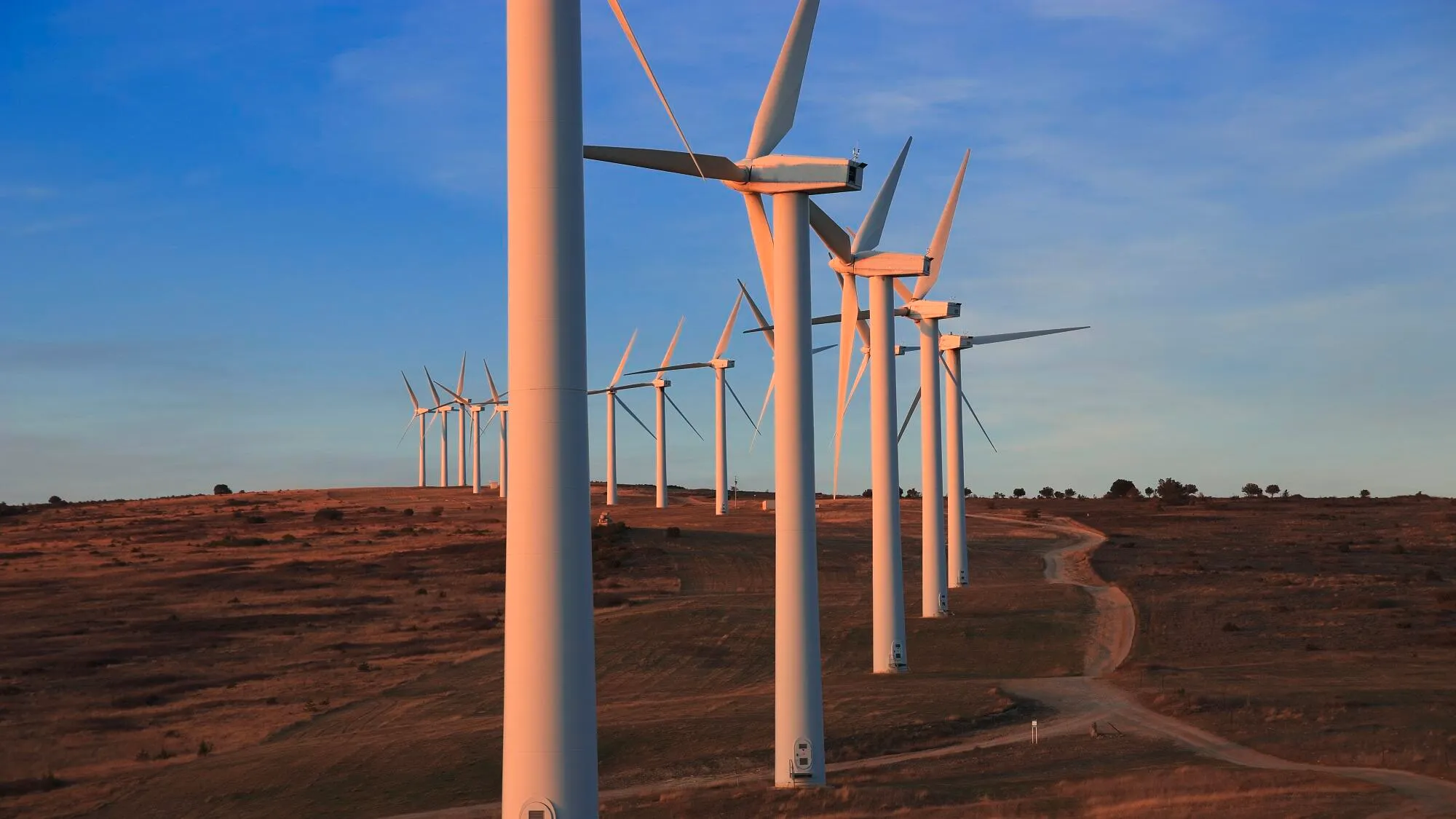
And these investments are essential: electrification is also a territorial issue. We are already observing imbalances: certain areas produce a lot without consuming locally. This is the case of Picardy, a windy region, where the development of wind power requires strengthening the lines to transport the energy elsewhere. Conversely, certain areas remain less well served, such as Landes or Larzac.
With its new plan, the government wants to accelerate the transition to electric cars and replace gas and oil heating with heat pumps. But constrained by the budgetary situation, it is moving forward slowly: a rental offer for professionals dependent on cars and new financial arrangements permitted by the banks. However, the challenge is broader: profoundly transforming habits without weakening daily life. The energy shift is not only playing out in power plants, but in the homes, businesses and ordinary actions of the French.