
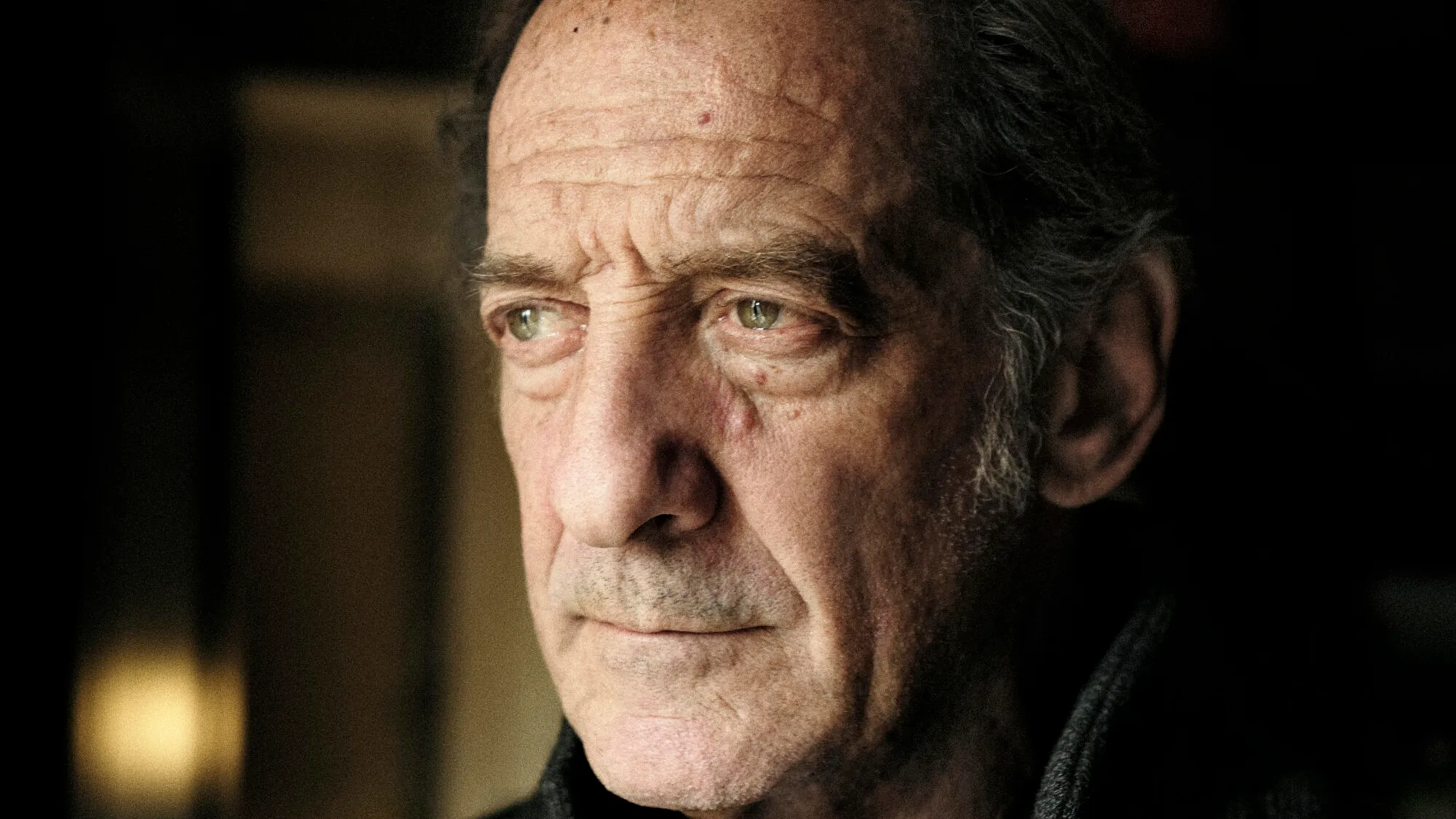
Vincent Lindon, starring in “Les Misérables”
Why does seeing you play Jean Valjean seem obvious to us? It seems like it happens naturally…
I acted in a lot of films that slowly led me towards this character. Those of Stéphane Brizé, like At war Or The law of the market, but also Welcome, Father, Titanium. You could say that I worked my way up to this role which represents, like Alceste, Lorenzaccio or Cyrano, a sort of holy grail for an actor. It’s like driving a Ferrari for a race car driver. If you haven’t played that kind of role in your career, there’s something missing.
How did you work to “become” Jean Valjean?
As always, without thinking too much. I live my roles organically, instinctively, for fear of losing a form of carefreeness. In the cinema, the outfit makes the monk. When he puts on his costume, the actor has already done most of the work.
Then there is the face, the body… Ten years earlier, I would not have been able to play Valjean, but I have aged, I have become hunched, I have wrinkles… All this happens naturally, independently of will.
Afterwards, only fifteen percent of the actual game remains, to get closer to Victor Hugo’s fantasy. Valjean remained in prison for nineteen years. It shaped him. Speak little, with a deep voice, fix your gaze on things for a long time, grab objects with both hands… I tried to be him through these types of gestures.
Some actors play, others compose, and others embody. These are three different ways of letting the character enter into oneself: through the body, the brain or the heart. I belong more to the third category. When a role enters through the heart before going to the brain, we sometimes make big mistakes but we can also have very nice surprises.
In what way does this adaptation of Miserable does it echo our times?
The miserable, it is a 2,000 page novel, written over one hundred and sixty years ago, and extremely modern in many ways. Valjean, for example, loves Cosette as his daughter, even though he is not her father. There is the idea that blood ties are necessary, but not sufficient. Hugo was also in his time one of the precursors of equality between men and women. All of this resonates today.
Fred Cavayé’s film puts at the center the question of the word given. In our society, people who keep their promises are not commonplace. So much so that we’re amazed when someone does it. At the time of Miserable, it was the opposite. Anyone who did not keep his word was shocking. I see it as a form of weakening of the contemporary world.
The scene at the end also magnifies the radical goodness of Jean Valjean…
At the same time as he leaves the world, Jean Valjean lets Cosette fly away, to whom he has given everything, without asking for anything in exchange. It’s revolutionary, close in my eyes to a definition of generosity. This ending appears as a response to the famous candlestick scene, where the young convict is returned by the kindness of Abbot Myriel.
This incredible moment, which resembles a biblical story, is a transfer of power, that of doing good. Someone who waits to take a hit and who is given a caress… It’s sublime.
One who does not believe in this goodness is Javert…
Javert embodies the law in its merciless aspects. Whatever your reason, your excuse or your social level, this law falls like a blade. For Javert, even if Valjean has paid his debt – and even much more: nineteen years in prison for stealing a loaf of bread – he will remain a convict whom he will do everything to catch again. But what happened in Javert’s life to get him there?
In The miserable, there are people even worse than him, they are the Thénardiers. They are “that” (he shows a millimeter between his fingers) to be irrecoverable.
“In our country, there are many heroes who are not highlighted enough. »
Vincent Lindon
You say “that”, as if to give them a chance…
I have a big belief: take the worst criminal, put him in a room alone – truly alone, out of sight of others. And show him The kid, by Charlie Chaplin. He will be in tears, I’m sure! Those considered lost can be touched by kindness. Everyone has the right to opportunity and everyone has the right to forgiveness. I want to believe it, otherwise I’m screwed.
And you, where do you get your desire to do good?
I only believe in education in this area. For my parents, doing good was an obligation. Gestures, even invisible ones, of generosity were all that mattered to them. My father was very demanding about this. With him, I was in a good school. He ran a small car radio company with seven employees. All were released from prison. No one has ever stolen a trombone. My father was Valjean! Even today, I often do things as if my parents were watching me. I wish they could have seen this film.
Do you want to be a hero?
I don’t know many people who wouldn’t want to be. But we must agree on what heroism is. In our country, there are many heroes who unfortunately are not highlighted enough. Men and women we never talk about, who dare to act of kindness.
Perhaps right now, while we are talking, a baker is breaking the law by giving fifty unsold baguettes to people who need them; that a passerby helps an accident victim on the road; that another defends a stranger in a fight. There are also those who lend money or house a homeless person.
These unsung heroes and heroines don’t have the spotlight on them. I would like, in the morning newspapers, on the radio, a minute to be devoted, every day, to an anonymous person who has made a gesture for others.
There are individual acts of kindness. But there are also systems which oppress individuals, maintain or increase inequalities, and damage nature. Do you have hope that this will change?
Do you know Albert Camus’ speech when he received the Nobel Prize for Literature in 1957? I haven’t read anything stronger: “Each generation, no doubt, believes itself destined to remake the world. Mine knows, however, that she won’t do it again. But his task is perhaps greater. It consists of preventing the world from falling apart. » That’s exactly what I think. I don’t have the power to change things.
No one claims to be able to rebuild a glacier or reduce the temperature from 40°C to 23°C. But we must already try to ensure that it does not exceed 40°C, and that the glaciers do not melt any further. Progress is not about doing better, but about stopping doing things badly.
I think of Oscar Schindler, in Steven Spielberg’s film (Schindler’s List, released in 1993, editor’s note) . He starts out as a Nazi, ends up saving 1,200 Jews and being recognized as “Righteous”; he is buried in Jerusalem. It’s beautiful, human beings who change. This is progress, one of the words I love most in the world.
“Repair is a word that I really like. Repair a situation, a relationship. Know how to ask for forgiveness. »
Vincent Lindon
What are the others?
Recently I starred in the series Of money and blood, by Xavier Giannoli. Initially, the title was to be “Tikkoun”, which comes from the expression tikkun olam “repair the world” in Hebrew, like a broken vase whose pieces are patiently put back together. “Repair” is therefore a word that I really like. Repair a situation, a relationship. Know how to ask for forgiveness.
And then the word “sorrow”. When I cried as a child, my mother often told me: “Take time to be sad. » I find it very beautiful. When we are happy, we say to ourselves: “Ah, if I had known, I would have benefited more from my sadness. » (Smile.) Lots of sad things happen. We have horrible and wonderful thoughts. You have to take the time to experience what you are experiencing, the joy as well as the sorrow.
Are you in the transmission with the younger generation?
What I like best during a shoot is the exchanges with the young actors and actresses. I always try to put them at ease. I loved working with Megan Northam, who plays Cosette. In twenty weeks, between takes, we have time to tell each other a lot of things, about our lives and our job. She is a bit like my cinema girl.
I draw on the visions of today’s youth to understand our world. And they can benefit from the experience of elders, to avoid pitfalls. It’s great. I am neither defeatist nor nostalgic. Even if I have to ask them a hundred times to put down their cell phones, these young people give me hope. I hope they do everything to make the world unravel as slowly as possible. They are the ones who hold the reins now.
The biography of Vincent Lindon
- July 15, 1959. Born in Boulogne-Billancourt (Hauts-de-Seine).
- 1981. Machinist on the Coluche tour.
- 1992. The Crisis, by Coline Serreau.
- 1999. My small business, by Pierre Jolivet.
- 2009. Welcome, by Philippe Lioret.
- 2011. Pater, by Alain Cavalier.
- 2015. The law of the market, by Stéphane Brizé (male performance award at Cannes and César for best actor).
- 2021. Titanium, by Julia Ducournau (Palme d’Or at the Cannes Film Festival).
- 2025. Play with fire, by Delphine and Muriel Coulin (Male Actor Prize at the Venice Film Festival).


