safety is essential in the face of ecology
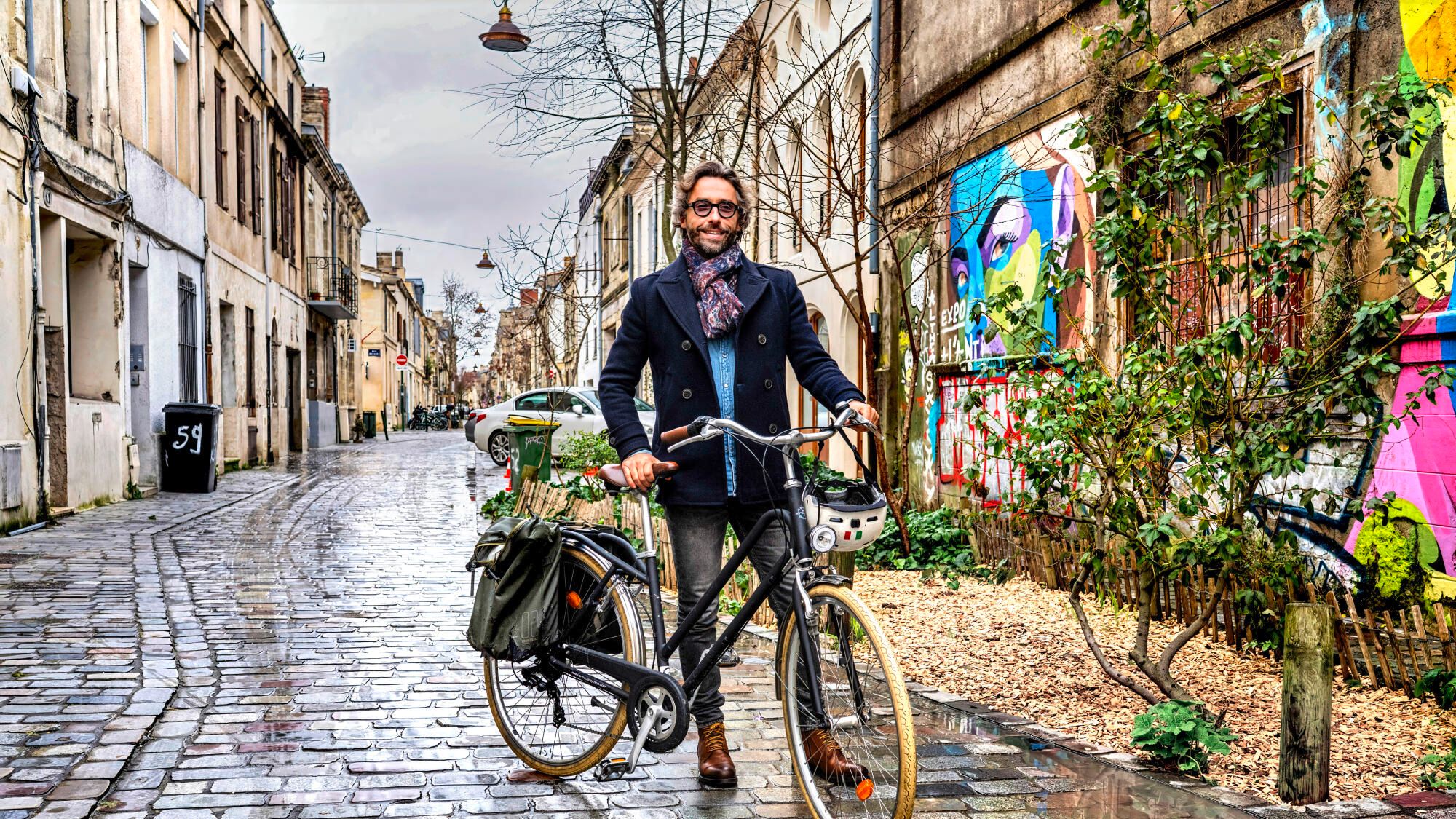
Quai des Chartrons, Bordeaux. Under a timid sun, the bikes spin along the Garonne. In October, 900 m of cycle path were installed by the city, extending the previous path to the Jacques-Chaban-Delmas bridge. “I have been going to work by bike for seven years, these facilities are fantastic,” enthuses Frédéric, sales manager. Vegetation, pedestrianization, limitation of cars: on an urban level, the observation is widely shared.
Pierre Hurmic, their environmentalist mayor elected in 2020, transformed the city. Six years earlier, he had promised to “break with an outdated urban model”, putting an end to seventy-three years of right-wing rule. However, Frédéric hesitates. “I’m not sure I’ll vote for him again. There is more insecurity now.” A frequent seesaw motif in the collected speeches.
Security is now the first concern of the French as the municipal elections approach (1). Waitress in a café on the very commercial rue Sainte-Catherine, Lou, 20, testifies: “A man was stabbed to death right in front of the establishment, on the evening of the opening.” She will not vote for Pierre Hurmic either. “What’s the point of developing the tramway if I have to take my car to feel safe?”
A national subject
The opposition is making this theme its campaign axis. Thomas Cazenave, Renaissance MP and head of the center-right list, affirms that the city is regularly on the podium for insecurity in France. Pierre Hurmic highlights a 4% decrease in delinquency since 2019. The drop mainly concerns non-violent thefts (-16%), while armed thefts have more than doubled. “This story of insecurity has come to a head,” retorts Harmonie Lecerf Meunier, deputy mayor responsible for access to rights. “The problem is national, the increase in poverty and precariousness leads to an increase in crime everywhere in France.”
At the end of 2024, the mayor finally decided to arm part of his municipal police, breaking with the historic position of his party on these issues. “I was pragmatic, not ideological,” he defends. Without weapons, recruiting police officers was difficult.”
Like Bordeaux, five other cities with more than 100,000 inhabitants (Lyon, Strasbourg, Grenoble, Annecy, Besançon) came under an environmental mandate in 2020. But the environmental theme has declined in the concerns of the French. “At the time of the Paris agreements and the climate marches, the mood and the media agenda were favorable to the Greens. This salience has significantly weakened, thanks to the return of economic and security concerns,” analyzes the Jean-Jaurès Foundation. Which weakens the outgoing mayors.
A dividing ecology
Purchasing power, international context, political distrust… So many realities which seem to relegate the climate to second place. Added to this is a growing polarization of public opinion around environmental issues.
Françoise, retired literature professor, voted for Pierre Hurmic in 2020. She has doubts today. “Ecology is essential, but certain positions of ideologists bother me, particularly with regard to farmers or motorists. And then there was this decision to remove the Christmas tree!”
In 2020, the mayor declared that he did not want to install a “dead tree” in the town square, preferring a glass structure. An episode that sticks to him, and feeds the perception of a divisive and ideological green policy. “I had a clumsy remark,” concedes Pierre Hurmic, “I’m attached to the Christmas tree, but it doesn’t have to be true. In fact, ours has been reproduced all the way to Los Angeles!”
A test for 2027
Municipal elections will serve as a national indicator. While Europe Écologie-Les Verts (EELV) reached 63% positive opinions among the French in 2019 (2), it has fallen back to 25% in 2025 (3). However, the Ecologists intend to weigh on the left in the 2027 presidential election: Marine Tondelier, leader of the party, has already applied. If the 2020 “green wave” erodes, the party’s credibility will be at stake.
In Bordeaux, Pierre Hurmic is still in the lead in the first round in the polls (32%) (4). The mayor says he is indifferent to the national issue: “I am proposing a Bordeaux-style ecology, which integrates the security issue. Voters want a mayor who does what he says.” The ballot will say whether, in the voting booth, the people of Bordeaux will judge their city to be greener… and sufficiently safe.
1) Ifop survey, November 2025.
2) Verian investigation (formerly public Kantar) for Le Figaro magazine, June 2019.
3) Verian investigation for Le Figaro magazine, December 2025.
4) OpinionWay survey, November 2025.
76%
76% of French voters consider the security of people and property “determining”.
Source: Ifop, Nov. 2025.