
“The Ground Tells the Truth”: A Cemetery Groundskeeper on Thirty Years of Flat Headstones
Ray has mowed the same memorial park for thirty-one years. He asked me not to use his last name or the cemetery’s – “the families don’t need me in their business” – but he agreed to talk because, in his words, nobody ever asks the guy who actually lives with the stones. We spoke on a bench near the maintenance shed, and what follows is his education in flat markers, lightly organized. Readers wanting the design-side view will find a thorough companion in this guide to flat headstones from the monument maker Remembrance Headstones; Ray provides the view from the grass.
On why his cemetery went flat-only in 1994:
“People think it was about looks, making everything uniform like a golf course. Partly. Mostly it was mowing. An upright section, you’re trimming around every stone by hand, and we had two guys. A flush section, the deck rides right over. I know families hate hearing their marker rule comes down to a mower, but I’ll say this for it – our flat sections are the best-kept ground we have, and thirty years on, the families in them get a lawn that always looks tended. There’s a dignity in that too. Different dignity, but real.”
On what separates a flat marker that lasts from one that doesn’t:
“The stone itself, granite’s granite – I’ve got flush markers from the fifties you could read across the road. What fails is everything around the stone. Markers set on dirt instead of a proper foundation sink and tilt inside ten years; then the mower catches an edge, and now there’s a chip that didn’t have to happen. Markers set low collect water, and up north that water freezes. The good installs sit flush and level on a concrete or granite foundation with drainage thought through, and they just… stay. When families ask me what to look for, I tell them: don’t ask about the stone, ask about the foundation. The ground tells the truth eventually.”
On lettering, from a man who reads stones for a living:
“Deep-cut letters. That’s my whole speech. The laser pictures on the black granite, I’ll admit they’re something – there’s a marker in section eight with a man’s fishing boat on it so real you can hear the outboard, and visitors walk over just to see it. But the laser work is surface-level by nature, and the deep sandblasted letters are the ones I can still read when a stone’s due for a cleaning. The smart ones do both: picture in laser, name and dates cut deep. And big. You read a flush marker standing over it, and the families always, always wish the letters were bigger. Nobody in thirty-one years ever wished them smaller.”
On the small things families never think to ask:
“Vases. A flat section looks bare to people used to uprights, and the flower situation is what fixes that – the flush vase that sits in a sleeve in the ground or in the marker’s own granite, comes up when you visit, goes down when you leave, mower rides over it. The markers ordered with a vase get visited different. I can’t prove that, but I’d bet the shed on it. Something about having a place to put the flowers makes the visit a thing you do instead of a thing you did.
Also: bring the cemetery’s spec sheet to whoever makes your stone. Ours runs to two pages – sizes, foundation requirements, bronze in one section, granite in the others. The monument companies that call us first, and the good ones always call first, their stones arrive right and go in the same week. The ones that don’t call, I’ve watched a widow stand here while we explained her marker was two inches over spec. Two inches. Nobody’s fault but the seller’s, and she’s the one crying in my cemetery.”
On cost, carefully:
“I don’t sell stones, so I can say what sellers can’t: flat markers are the honest bargain of this whole industry. Less granite, small foundation, simple install – that’s real cost, not just margin, so the price is genuinely lower, and nothing about lower means lesser. Some of the finest work in my park is flush. There’s a marker for a schoolteacher, black granite, one line of her handwriting laser-etched from a note she left, letters cut deep beneath. Total thing’s maybe two feet wide. People photograph it. Elegance was never about height.”
On what he’d choose himself:
Ray thought about this one longer than the others. “Flush marker, gray granite, my name deep, and a vase, because my wife will bring zinnias whether there’s a vase or not and I’d rather she had somewhere proper to put them. Maybe the mower etched small in the corner. The guys would like that.” He laughed, then didn’t. “You spend thirty years here, you stop being spooked by any of it. The stones are just the part of people that stays reachable. My job’s keeping the grass off them. There are worse jobs.”
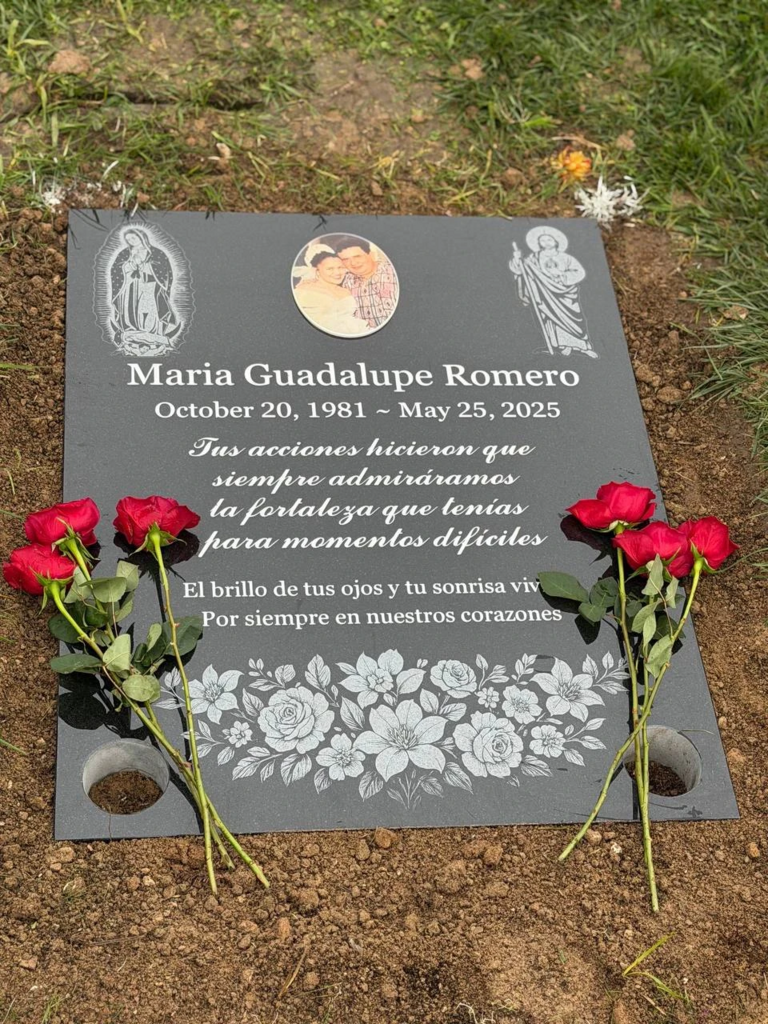
A few notes for readers turning Ray’s education into a purchase. His foundation point is the one the trade forums confirm most loudly; ask any monument company, in writing, what foundation is included and who sets it. His spec-sheet point is equally load-bearing – reputable makers verify your cemetery’s flat-marker regulations directly before cutting, and a seller who treats that as your problem is telling you something. Lettering depth, vase provision, and letter size are design-consultation questions, and they cost little to get right and a great deal to get wrong.
The flush marker’s reputation as the “basic” option deserves retirement. It is the format an entire generation of memorial parks was built around, it carries the full modern craft from deep sandblast to photographic laser work, and it holds one advantage no upright can claim: it belongs to the landscape rather than standing against it. For families who want the design side explored in the same depth Ray gave the ground side – materials, granite colors, personalization, and the pricing logic – the monument specialists at remembranceheadstones.com maintain detailed guides and design tools, and their consultation process starts with the same document Ray would hand you: the cemetery’s own rules.
The ground tells the truth eventually. It might as well be told a good stone.