
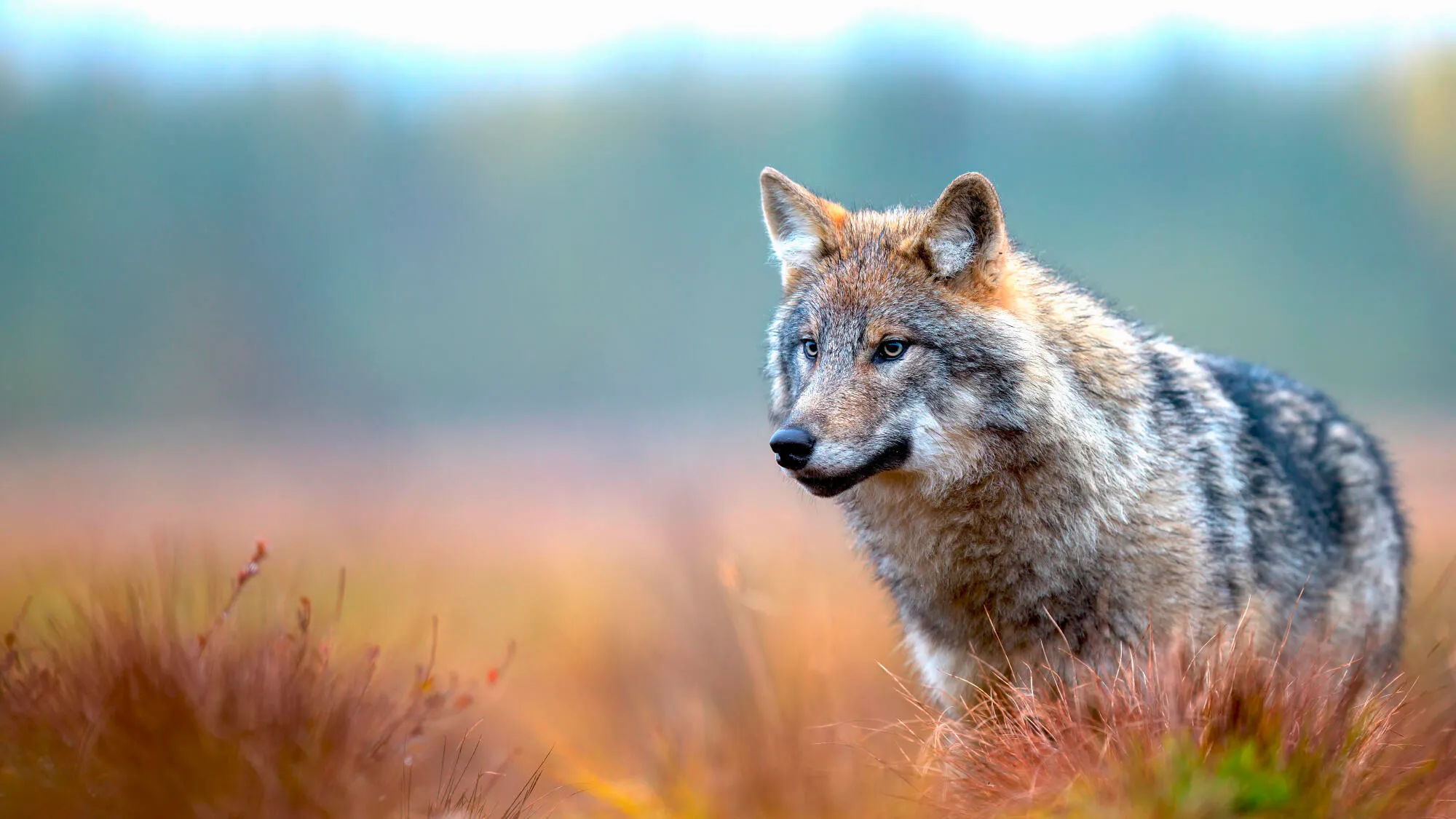
Understanding the return of the wolf to France
Wolf are you there? The answer is not always obvious, as the animal knows how to be discreet in the surrounding landscape. Only seasoned naturalists or alert hunters can recognize a typical dropping or capture, through photographic installations, the passage of the wild canid. Because for thirty-five years, the wolf has returned to territories from which it had been chased, leaving the field open to domestic animal breeders at the time.
Taking advantage of rural landscapes where human presence has greatly decreased in recent decades, it naturally expands its territory with each birth, especially since its build gives it a great aptitude for endurance running – up to 60 km in a single night – and for swimming across waterways.
A recent study carried out in Switzerland using the excrement of 250 different wolves provided a better understanding of its diet: it is largely dominated, at more than 88%, by wild animals – led by deer, roe deer and chamois. Domestic animals represent only 11.7% of prey consumed.
But before being a predator, the wolf is a very sociable and faithful creature, forming packs of around ten individuals from a long-term stable pair – or even many more! The pairs reproduce at the end of winter then the she-wolf, after 70 days of gestation, gives birth to between 5 and 7 young at the beginning of summer. The cubs then stay between one and five years with their parents, before attempting the wild adventure in their turn.


