
why more and more French cities adopt it
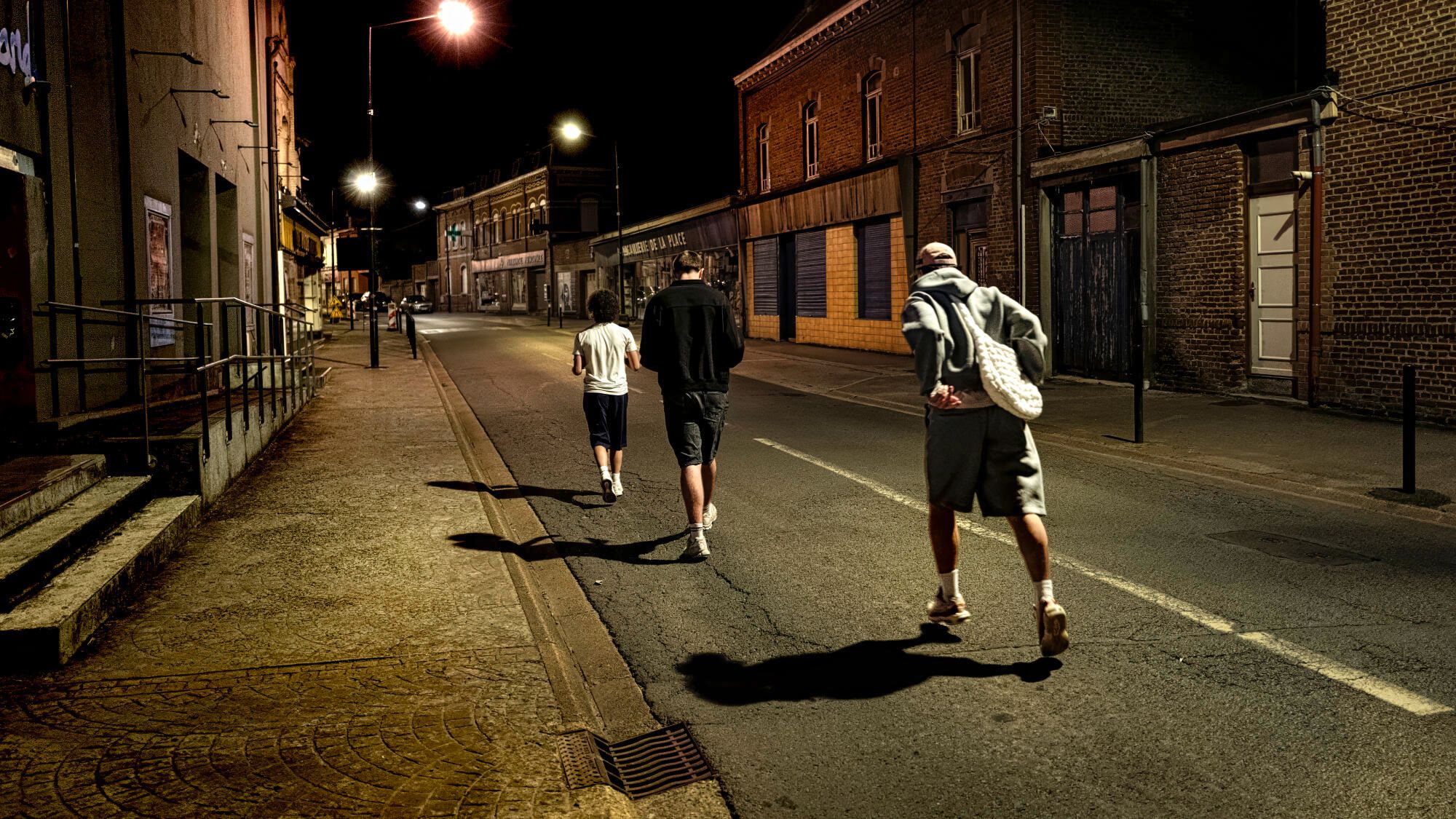
At midnight, the city falls asleep. Some reverbs suggest the contours of Bully-les-Mines red brick houses (Pas-de-Calais). In the park, silhouettes blend into the shadow of the trees. Honestly hidden under their cap or hood, young people have tried MMA, a legalized combat sport in France for a few years. Among them, adolescents who do not have the right to stay on the public highway beyond 11 p.m., like this high school student who enters the final baccalaureate in the next school year.
Since 2018, between June and September, the town hall prohibits minors from going out at night in the absence of an adult. In theory, the curfew concerns two sensitive districts and the municipal park. Over the years, at least a dozen cities have adopted this type of fire cover, validated by the prefectures. Mayors of all political color, from the south of France (Béziers or Nîmes), via the Île-de-France (Saint-Ouen, Triel-sur-Seine) or Limoges (Haute-Vienne). The objective? Fight against urban violence, noise pollution or drug trafficking problems.
Ordinary delinquency
A decision very often praised by the citizens, at a time when nine out of ten French people consider that the delinquency of minors has increased, with increasingly serious facts (1). The riots of the summer of 2023, triggered by the death of Nahel, killed by a police officer (2), are still in the spirits; Like the overflows of a jubilation night transformed into chaos, on May 31, 2025, after the PSG victory in the Champions League. These events have highlighted an ordinary delinquency that many elected officials now seek to contain. According to the latest figures, almost 35 % of the acts recorded on the public highway were committed by minors between 2016 and 2021 (3).
The question arises: what are young people doing this age in the street in the middle of the night? “These are the holidays! When I was a kid, in the 1980s, we had fun in the evening with the friends at the bottom of our home and we did not hurt anyone, ”replied Nico, 38, living in Sallaumines, a city a few kilometers away. This separate father readily recognizes letting his three children play in the dead end, 16, 13 and 7 years old, at nightfall; While keeping an eye on them from their windows. The manager of the bar next door says he is delighted with the curfew, his car having been burned in the middle of the night. “But it would have to be stricter for it to work,” he adds, circumspect.
Police officers can challenge minors, bring them back to their homes or the police station and inflict a fine of 38 euros maximum, to be paid by the parents. “Thanks to this decree, the municipal police have the right to practice identity checks without seeing an offense beforehand,” explains Frédéric Biedak, president of the National Union of Municipal Police. With random effectiveness according to the places, judging by the purpose of a young person from Bully-les-Mines: “One evening, the police asked for my identity papers because there had been a fire in the city. They noted my name, left and then here. »»
In the small neighboring town of Aix-Noulette, the deterrent impact is more pronounced. “There is much less degradation,” observes Patrice Cayet, city councilor. The city decided to imitate Bully-les-Mines in front of the increase in the number of signaling panels torn off and broken public buildings at night. Even the cables of the local brewer’s air conditioners were cut.
Absence of assessment
To date, no study or statistics nevertheless makes it possible to concretely assess the effects of this type of measure. It is therefore often the feeling of the inhabitants or actors on the premium. “I have never heard a colleague say that the curfews had lowered the activity of children’s judges,” comments Stéphanie Caprin, vice-president of the union union of magistrates. If it may include the decision to ban the circulation of minors at certain hours of the night, especially after a wave of violence, the magistrate remains skeptical about the results observed on delinquency, because the offenses are sometimes deported to private spaces. “Instead of having the dealers on the sidewalk, we have them in the building halls,” she says. The answer, in addition to the sanctions? Conduct a real public policy from early childhood, insist the specialists, to prevent some young people from paying in delinquency.
- ODOXA security barometer, June 2025.
- He will be tried for murder in 2026.
- Senate report “Prevent the delinquency of minors – avoid recurrence”, 2022.


