
how science tracks this invisible cloud
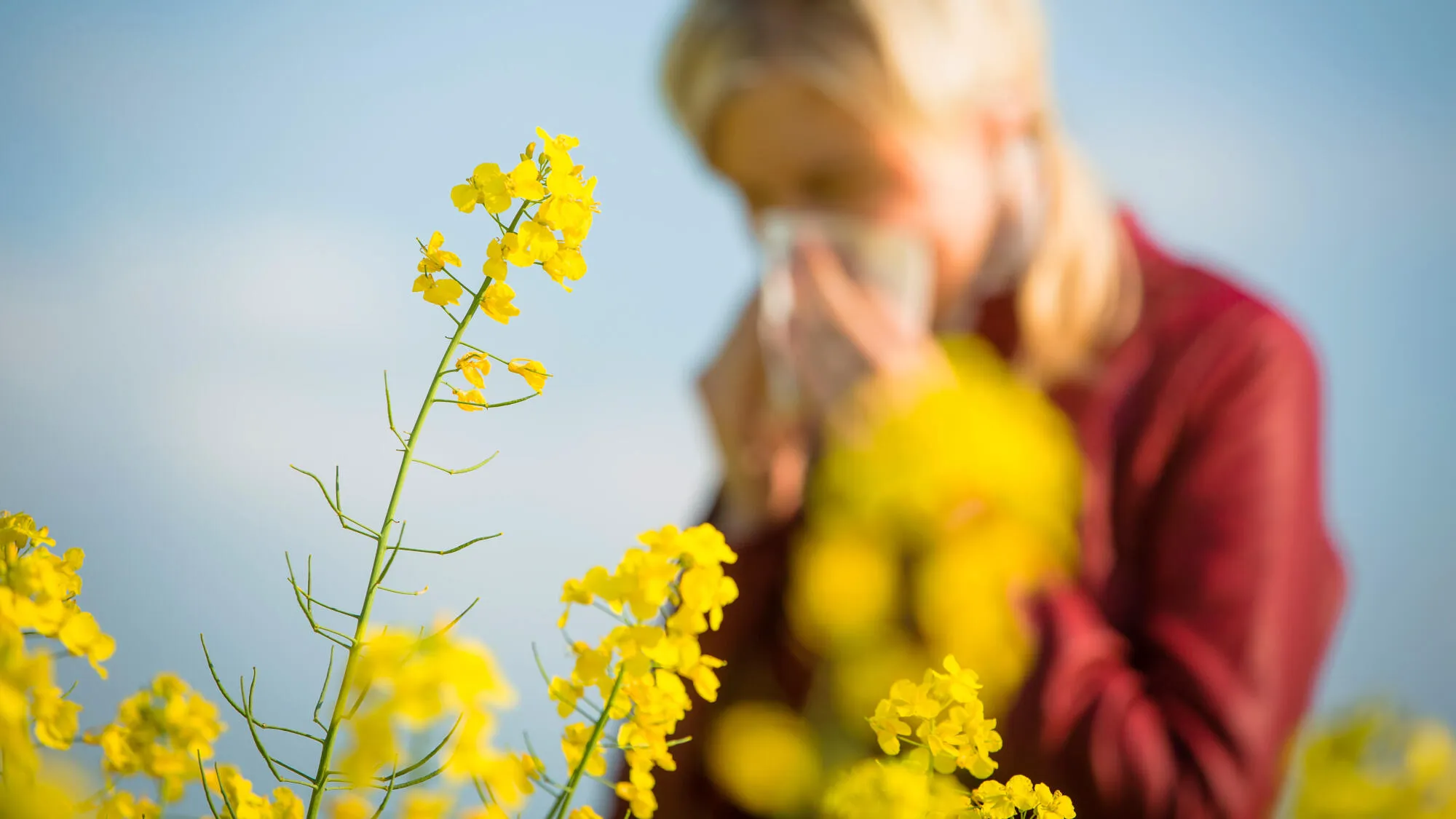
For twenty-six springs, Ombline, a doctoral student in literature in Paris, frolicked carefreely in parks and tree-lined streets. Until this year, when everything changed. “I’ve been having fits of coughing for weeks,” she says between two spasms. According to my doctor, I have a pollen allergy and even have asthma. Last year I had no symptoms! » Ombline is not alone. “Air pollution promotes the appearance of allergies and our mucous membranes are more sensitive because of toxic household products,” explains Nhân Pham Thi, allergist and associate researcher at the École Polytechnique. According to the National Agency for Food, Environmental and Occupational Health Safety (ANSES), hypersensitivity to these invisible particles today affects one in three French people. And could even affect half of the population by 2050.
So, public laboratories, monitoring networks and start-ups compete in ingenuity to anticipate pollen peaks. This spring of 2026 is a startling example. A mild winter followed by early heat accelerated flowering and triggered early pollination. Grasses, these spikes of roundabouts and fields, will wreak havoc in May and June. During peaks, the air can contain several hundred pollen grains per cubic meter. In addition to monitoring air pollution, the Atmo France association tracks pollen. It publishes on its online site a map of France with a “pollen index”*, commune by commune, to indicate whether the concentration is low, moderate, very high… Until 2024, the National Aerobiological Surveillance Network published weekly bulletins based on counting stations throughout France.
Plant dust sensors
But the system was obsolete and the more efficient Atmo France pollen index took over last year. It broadcasts its forecasts several days in advance, by cross-referencing millions of data points using artificial intelligence. Concretely, devices continuously suck in air (around ten liters per minute, like our breathing) and capture pollen grains. Researchers then collect them to identify their type and measure their quantity. All this information is then sent to computer models, which combine it with the weather to predict pollen dispersal. In order to publish a detailed map, the network relies on the European Copernicus program. In space, its constellation of satellites observes the atmosphere; and on Earth, sensors study the conditions that favor the circulation of pollen, such as winds, temperature or the state of vegetation. These data make it possible to estimate the air quality in Europe every day.
Today, Atmo France studies six types of pollen, such as alder and birch. She hopes to make public, from the summer of 2026, a more detailed map, with 15 to 19 additional plants. A boon for new victims of plants, who must learn to know the most irritating species and periods, in order to adapt their actions and no longer depend entirely on antihistamine medications.
The future also lies in plant dust sensors. Today, it is humans who analyze what the devices have captured. But private companies are developing automatic sensors with phenomenal analysis capabilities. These robots can transmit data to researchers almost instantly, but they are still rare in France because they are very expensive. A revolution is underway: we measure more precisely, we analyze faster, we plan earlier. Ultimately, like digital applications which today indicate rain or shine, we will be able to consult our pollen weather forecast online every day. The invisible grains will no longer hold any secrets for us.