
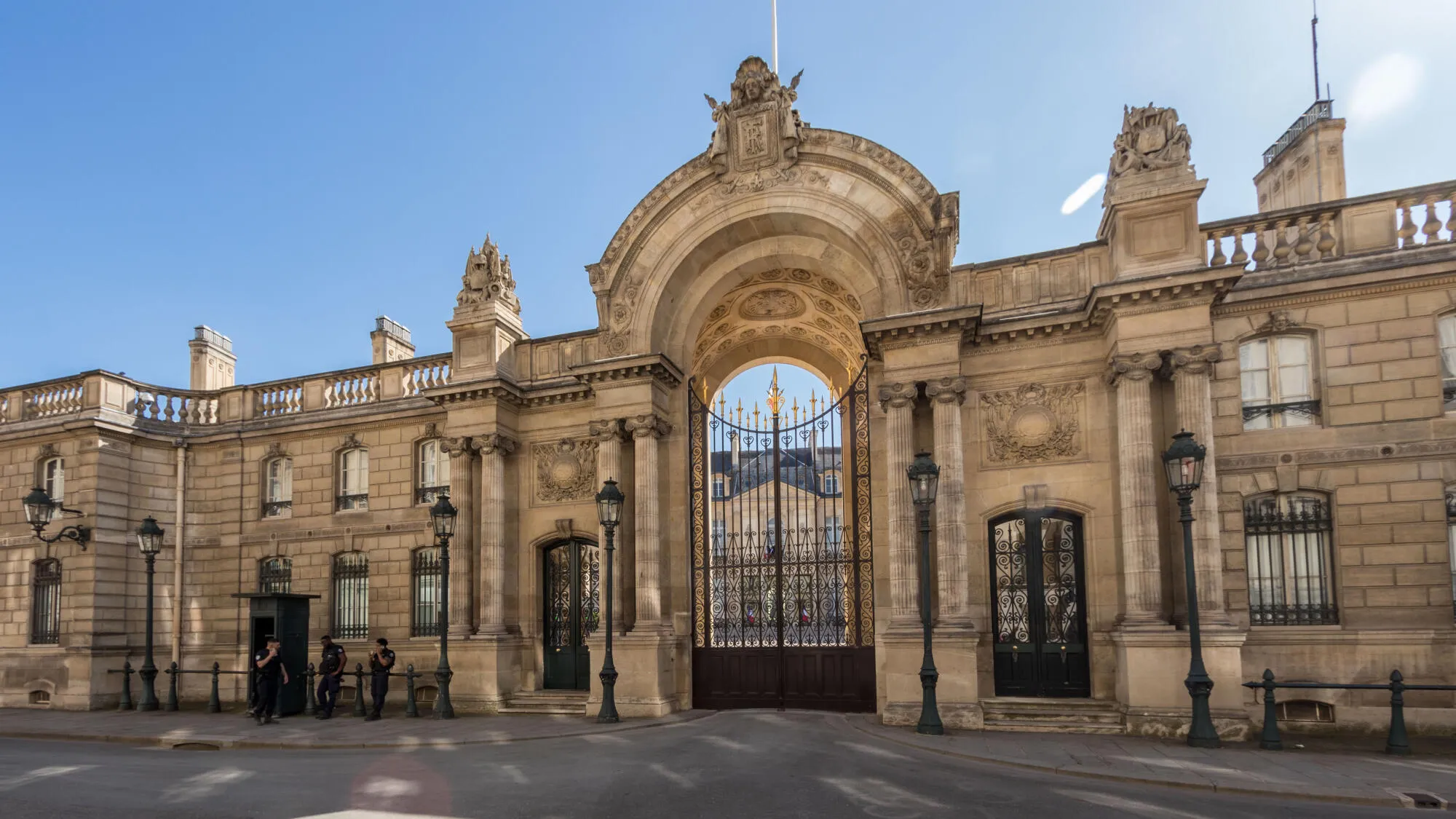
2027 presidential election: mayors and sponsorships
Thirty-two contenders on the starting line. And for everyone, an imperative: collect the 500 signatures of mayors and local elected officials, from at least 30 different departments, to officially become candidates.
Faced with this traffic jam, the campaign teams are already working. From the start of summer 2026, they set out in search of the precious sesame, even though the official period for collecting sponsorships will not open until January or February 2027. “It doesn’t stop,” laughs Jean-Paul Boulanger, mayor without label of La Houssière (Vosges). “We receive emails, letters. It’s pretty well done: there’s even a form to make the process easier. »
However, there is no question of rushing your choice: “It is not the priority. Before the signatures, the residents tell me about the electricity bills which are increasing or the clock in the bell tower which no longer works…”
If the contenders for the Élysée are active, it is also because the campaign will be long. Whatever their sensitivities, not all candidates will be able to survive until the first round. Everyone hoping to be the one around whom the others will eventually rally, it is better to have your sponsorships, even if it means taking the lead.
“It’s true that they start early,” remarks Christophe Bouillon, DVG mayor of Barentin (Seine-Maritime). It’s new that we are in demand in the summer. » Above all, the councilor sees another effect of this multiplication of candidates: the pressure it exerts on small municipalities.
A fragile local balance
In France, municipalities with fewer than 2,000 inhabitants represent 80% of municipalities, or nearly 30,000 potential signatures. “Mechanically, the candidates have made it their priority target,” supports Christophe Bouillon, also president of the Association of Small Towns in France. However, it is precisely in these small localities that mayors without labels are most numerous, far from the major ideological battles which agitate Parliament.
“Many city councilors build a fragile balance all year round around a consensus, based on good municipal management. And there, you cross your fingers: “Provided that this doesn’t set my municipal council on fire.” Among us, the mayors, some say to themselves: “We would have done without this deadline.” »
The irruption of this national sequence into local politics can thus become a headache. In Fréchède, a small green town of barely 50 souls in the Hautes-Pyrénées, Pascale Abadie has resolved the problem: no sponsorship will be granted for this 2027 vintage.
In the spring, she received two emissaries. One defended the colors of Nathalie Arthaud, Lutte Ouvrière candidate and a regular at the exercise since this is her fourth presidential campaign. As for the other, Pascale Abadie has already forgotten the name. “They politely introduced themselves in the name of their candidate, with a little form, and I received them. But I was clear: no national politics at home. I will not give my sponsorship. »
“Provided this doesn’t set my municipal council on fire.” »
The calendar doesn’t help. Elected in March 2026, the new municipal teams have just been formed. For some, we still need to learn to work together and, at the end of sometimes stormy campaigns, let tensions with the opposition subside. “Sponsorship risks plunging us back into political battles,” recognizes Pierre-Louis Brière, who has just won the town hall of Magny-les-Hameaux (Yvelines), at the head of a transpartisan list bringing together “people who have always voted on the left and others who have always voted on the right.”
He therefore chose to discuss it with his elected officials. “They will thus feel free not to be associated with my personal convictions,” he explains. But he will not deviate from his task, and intends to offer his support – perhaps in the fall – by deciding alone, as the law requires him to do.
A system to review?
One question remains: should this responsibility continue to rest on the shoulders of elected officials? Some voices have been calling for several years to reform the selection process. La France insoumise thus recommends putting part of the decision in the hands of citizens, with a system of popular sponsorship allowing 150,000 voters to qualify a candidate. A system that Jean-Luc Mélenchon’s team considers more democratic.
“But be careful,” says Boris Ravignon, DVD mayor of Charleville-Mézières (Ardennes). In his eyes, removing this power from mayors would amount to distancing national politics even further from its local relays, and in particular from those municipal officials who continue to escape the broad movement of distrust against the political class.
5 dates to remember
- March 12, 2027. Deadline for transmission of sponsorships to the Constitutional Council.
- March 16. Official publication of validated applications.
- April 5. Start of the official campaign.
- April 18. 1st round of the presidential election.
- May 2. 2nd round of the presidential election.


