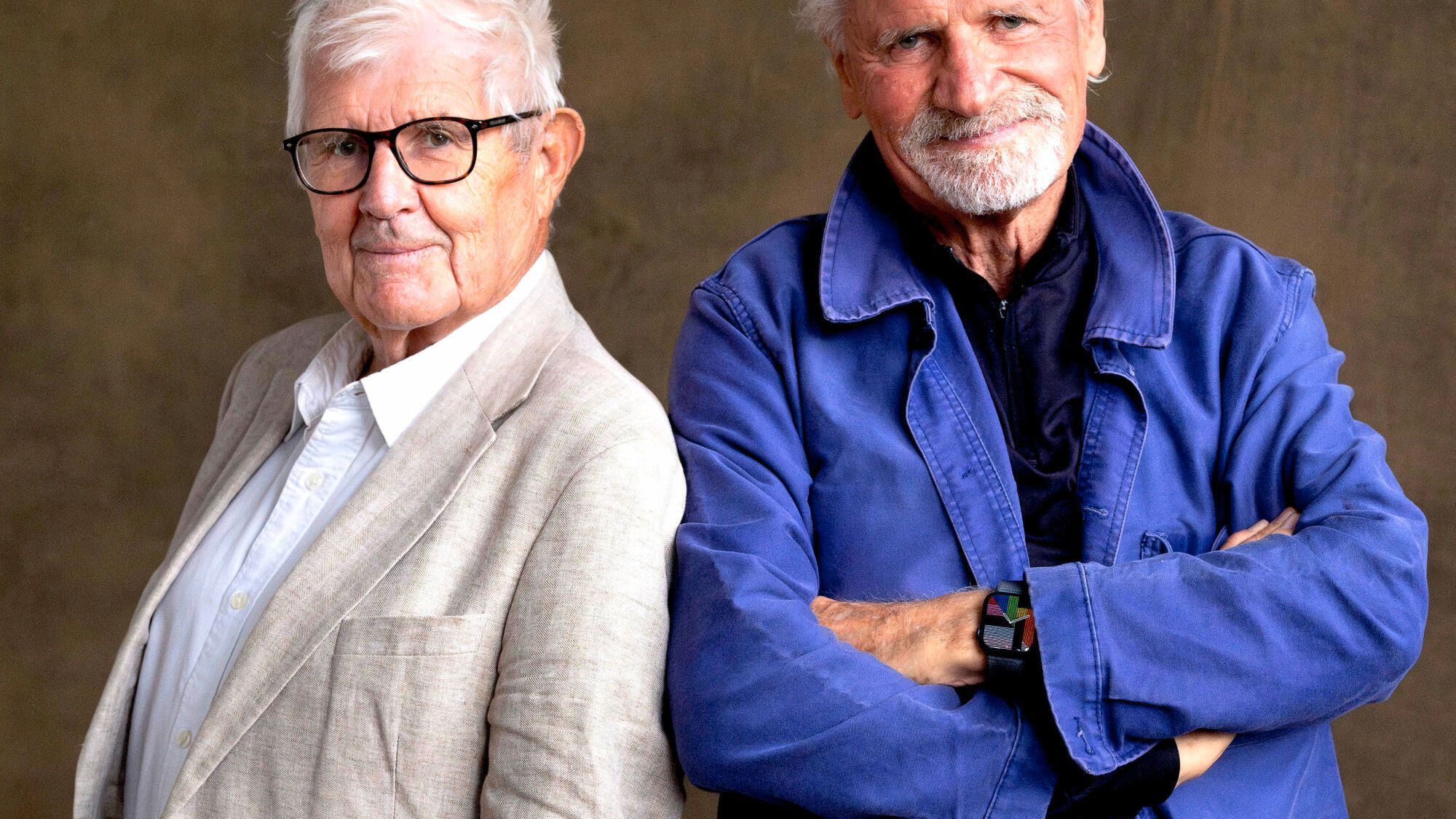
In “France, a family album”, Yann Arthus-Bertrand and Hervé Le Bras reveal the fraternity of the French
Today you are publishing a family album in France with 986 photos, mostly groups enriched with historical legends. What motivated this joint project?
Yann Arthus-Bertrand: This album was born from my passion for people. I wanted to see and photograph men and women who smile, live, work together, are happy with their activities, their commitment, who help each other, take care of the most fragile – precarious, disabled or migrants. I can no longer bear violence, political brutality, various facts. I want to focus on fraternity, which is also the reality of France today: 15 million people are volunteers, 5 million of which take care of others. This country is great! You have to show it. We left two years on the roads to enhance these people.
Hervé les arm: People are living in solidarity, as a family or in community, are part of associations, clubs … However, they have a negative and very critical vision of their country. The French live in private happiness – with family, with friends, everything is fine – and in public misfortune – in society, everything is bad. However, the vision of an individualistic France does not correspond to reality. For example, we have extraordinary social laws. Yann needed someone who masters scientific, demographic and historical data, and who shares his optimism on France.
How did you select the people and the places you photographed?
Ya-b. :: By the invitations of municipalities, companies, organizations … as I am known, word of mouth quickly worked. We tried to cover the whole territory, and if we were missing a region, we went there! We have published classified ads in the local press. With a mobile incorporated photo studio and five people on board, our truck traveled France for two years. One day was necessary to install everything and another to dismantle everything. For my part, I came to train, found the team and the locals in the studio: it was incredible, always full of people! People were very nice, they brought gifts, cheese, eggs. We set up sixty studios in sixty places and taken 30,000 photos. Françoise, my studio head, was keen to innovate in the way of having people pose. And she got there in record time each time.
What principles have guided your choices of people and groups?
HLB: We had a digital objective, which was to represent the great mass of the French, knowing that there would be gaps. I had the list of all the professions declared by INSEE. We invite everyone or sometimes specific people depending on the photos that were lacking: truckers, computer scientists, etc. Second principle: unlike statistics, which are individual and bring together people who do not know each other, we wanted to show the concrete ties between individuals. This is why many photos represent groups: age groups, members of a sports team, brotherhoods …
Ya-b.: We asked people to come with their work clothes and objects. We wanted to make living portraits. We have also made sure to show associations, especially mutual aid, to represent the suburban cities. We went to La Courneuve, to Saint-Ouen (Seine-Saint-Denis), in Corbeil-Essonnes (Essonne), where we photographed classes. And thanks to the children, we were able to approach the parents. We have distributed photos to everyone.
Exhaustiveness is impossible, representativeness a little less … You speak of a sensitive portrait. What does that mean?
HLB: The figures are arid while the photos give flesh – looks, clothing tastes … A baker wearing pastries suggests the scent of hot croissants. In fact, each group makes it possible to grasp the links, to illustrate the fraternity. But the photo has a special case in time and space. The legend is essential, it replaces this case in the general table.
“I have become much more forgiving in my way of talking about people”
Yann Arthus-Bertrand Photographer
Precisely, how did you conceive the legends?
HLB: The interest of these is to show the evolution over time of a trade, a sport or a hobby. I used my experience as a demographer, inspired by the many works that I published. Basic demographic data come from INSEE and is therefore reliable. Nevertheless, I had to go further than its figures, especially for associations, professional organizations … We did not want an imagery of traditional France, but from France now, with its graffiti artists, surfers, robotics clubs … So I had to look for other sources.
Didn’t your positive bias veiled certain difficult realities?
HLB: No, that did not prevent me from emphasizing what is wrong: unemployment, industry professions that have disappeared, the lack of doctors, the fear of breeders against Mercosur (the free trade treaty with South America, editor’s note), etc.
What do you remember from these two years of meetings with residents? What was surprised?
Ya-b. :: We are always surprised! By the lack of social diversity in certain districts, the dedication of people. Once, the mother of a boy with leukemia asked me if I could take the photo of all those who helped him: nursing staff, friends, pilot who had taken him by plane … The group was impressive ! Other mothers came with their autistic child. In a case, the mother called her son slowly for an hour, without losing patience, while he was screaming. In the other case, the little one came without worry. The photos are beautiful, the moms were happy.
In Marseille, a fully tattooed man was kind enough to pose naked. The young people have jostled me by their gaze on my photos and the texts: they are ultra -sensitive to the use of terms, no longer want them to be presented as “from immigration” – for those born in France. They find reducing to be characterized by their origin. They feel French and want us to define them by their first name and name, their activity, their commitment … Likewise, they no longer say “black” or “Arab” but “racialized”. Which may seem very strange for our generation. After making this book, I became much more aware and indulgent in my way of talking about people … It allowed me to move forward, not to remain an old schnock!
“The figures are arid while the photos give flesh”
Hervé his arm Demographer
What major developments in French society is this project in light?
HLB: First, the change in the structure of families, with the PACS, homosexual marriage, the decline in the age of marriage. With the 1968 rocking, we went from a family often authoritarian to a democratic and enlarged family. Then, the progress of women’s rights. Equality men-female is not perfect, but it is better that fifty years ago. Women have come into force in the world of work: for example, today, 80 % of doctors over 70 are men; And 70 % of medical students are women. The dechristianization and the disappearance of traditional professions illustrate other major changes. There were ten companies working earthenware, there are now only two left. Others are preserved thanks to a rise, for example haute couture. The working -class world has continued to weaken and new professions have developed.
Do you think your project can take place in a citizen or educational framework?
Ya-b. :: Of course ! A large exhibition will take place in the salons of the Paris City Hall during the All Saints holidays, from October 20 to November 2. And she will shoot in France. A documentary behind the scenes of the project Family photos is scheduled for this month on France 3. And on November 5, the cinema is released the documentary feature film France, a love story, that I made with Michael Pitiot. We went to meet people who help others or are helped: people from working -class neighborhoods, homeless people, migrants … As for the album, this is an ideal book for all guidance advisers: there are all the trades in it!
The biography of Yann Arthus-Bertrand
- March 13, 1946. Birth in Paris.
- 1976. Stay in Kenya. Discovery of aerial photo.
- 1981. Publication of his first book Lions .
- 1991. Altitude creation, aerial photography agency.
- 2009. Movie Home, On the state of the planet seen by 1 billion spectators.
- 2015. Realization of Human, film giving the floor to hundreds of people.
- 2019. Output Woman, Testimonials from women from the world.
The biography of Hervé Le Bras
- June 6, 1943. Birth in Paris.
- 1963-1965. Polytechnic school.
- 1980. Director of studies at EHESS, the School of Advanced Studies in Social Sciences.
- 1998. The demon of origins: demography and extreme right, Ed. dawn.
- 2005. Demography, Ed. Odile Jacob.
- 2015. The bet of the FN, Ed. Otherwise.
- 2018. Feel bad in a France that is fine, Ed. dawn.