in Nicaragua, Ortega’s new offensive against the Catholic Church
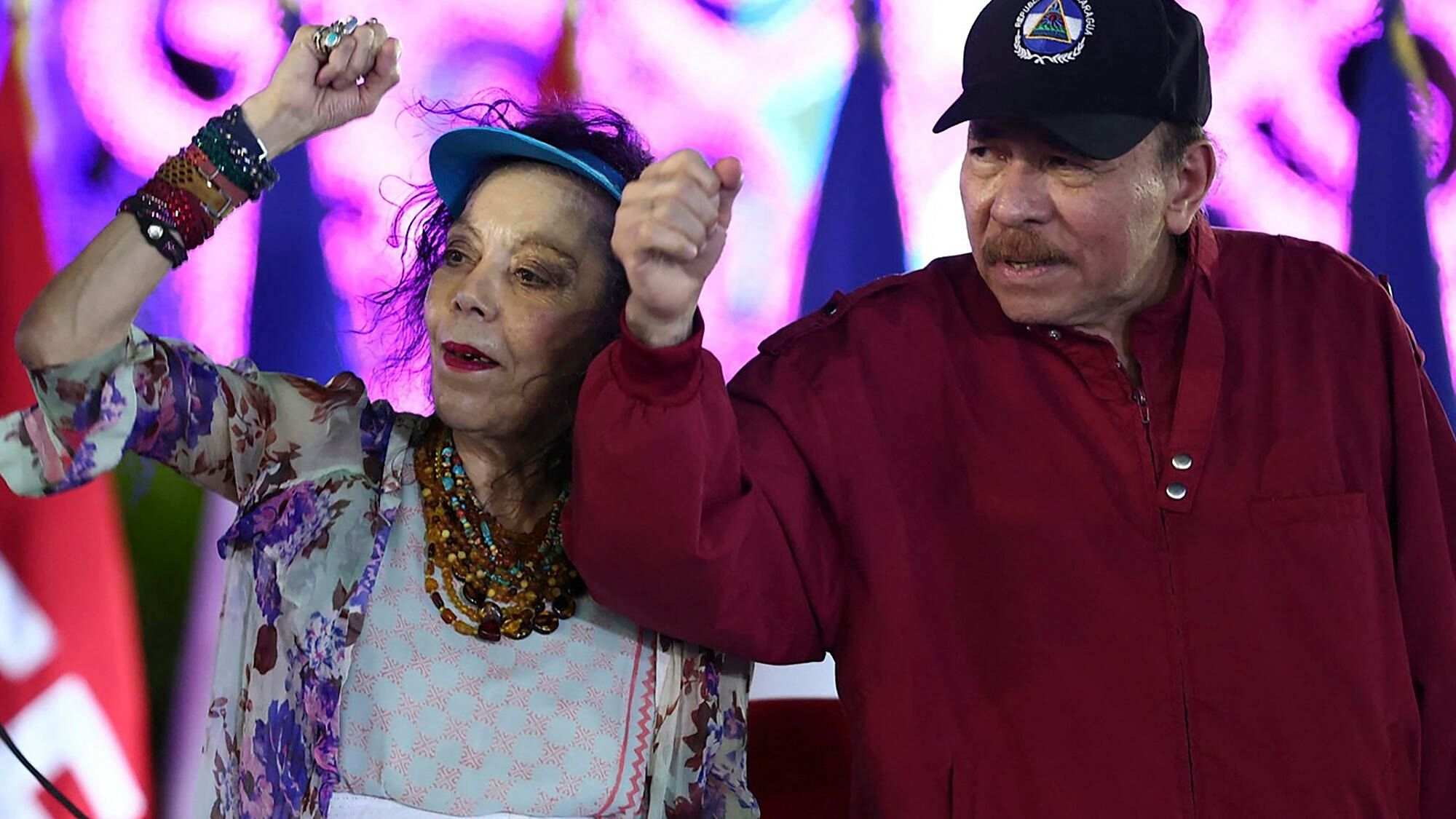
In their diocese of Siuna, candidates for the priesthood wonder if they will be able to become priests or deacons one day. Just like in Jinotega, Matagalpa or Esteli. At the beginning of March 2026, the authoritarian regime of President Daniel Ortega and his wife Rosario Murillo banned priestly ordinations in these four dioceses of Nicaragua deprived of bishops, leaving them in uncertainty. This decision is only another step in the escalation of the repression carried out by the government against the Catholic Church.
The report Nicaragua: a persecuted Church by the Nicaraguan lawyer and researcher in exile Martha Patricia Molina, reports 1,010 attacks between April 2018 and July 2025. Places desecrated, bishops imprisoned or expelled, masses monitored, processions banned, confiscation of property… Repressive measures have hit the country’s religious community since the decisive revolt of 2018.
Ambiguous relations with the Church
That year, thousands of Nicaraguans protested in the streets, first against a pension reform which would lead to a reduction in pensions; then called for the resignation of President Daniel Ortega when the government put down the revolt and left 355 dead. The Church is, initially, “not clearly opposed to the government, but rather a force which allows mediation between groups”, analyzes Maya Collombon, lecturer at Sciences Po Lyon.
But then she supports the protesters. The young people in the barricades come to find refuge in religious buildings to escape the police. Dialogue is broken off with Daniel Ortega, who accuses certain bishops of being putschists and Catholic leaders of premeditating a coup d’état. The Catholic Church, united behind the figure of Mgr Silvio José Baez, then frankly opposed the regime.
“Ortega fears the liveliness of the Church, that by ordaining new priests, it renews itself”
Maya Collombon
This open confrontation contrasts, however, with a more ambiguous period. In the 2000s, Daniel Ortega – a former guerrilla elected president in 1984 after the Sandinista revolution – sought to return to power, and established strategic ties with Cardinal Miguel Obando y Bravo, who leads part of the conservative Church. He even converted to Catholicism and married Rosario Murillo religiously. Once elected in 2006, he appointed Obando y Bravo to head the Commission for Peace and Reconciliation.
Systematically re-elected since then, Ortega has extended his control over the country’s institutions. In January 2025, Parliament validated the constitutional reform giving him full powers with his wife Rosario Murillo, who officially became co-president. Europe and the United States denounce an authoritarian regime; the press, an autocracy, even a dictatorship.
“The last institution capable of standing up to them”
For four years, the situation of the Church has worsened. The number of priests is dwindling and already more than 300 have had to go into exile in Costa Rica, Spain or the United States, leaving certain regions without celebration of the Eucharist. In 2022, Nicaragua severed diplomatic ties with the Vatican by expelling the apostolic nuncio. In 2023, Mgr Rolando José Alvarez Lagos, bishop of Matagalpa, was sentenced to twenty-six years in prison and went into exile in the Vatican a year later. The priests and faithful who remained in the country and the exiles, contacted by The Pilgrim, did not wish to speak out, for fear of reprisals. The goal is to suffocate the religious institution in order to reign better: “Ortega fears the vivacity of the Church, that by ordaining new priests, it renews itself,” explains Maya Collombon.
“The Ortega-Murillo couple is persecuting the last institution capable of standing up to them,” adds Gilles Bataillon, sociologist, director of studies at EHESS. Media outlets are closing, as are universities and Catholic charities. The Church becomes the ultimate bastion of opposition and hinders Ortega’s all-powerful ambitions. She is very influential in a country where more than 60% of the population is Catholic. For the government, “the entire religious network is more difficult to control than the parties,” adds Maya Collombon.
In its latest report on religious freedom in the world published in October 2025, Aid to the Church in Need (ACN) demoted the country to the state of “persecution”: “From the moment religious freedom is hunted down, all other freedoms are violated. We see how quickly the situation has evolved,” worries Amélie Berthelin, representative of the AED. Despite the repression, the Church maintains its positions without giving in to fear. And the Catholic community continues to pray and celebrate. A way of resisting in the shadows.