
Sansal, Monterlos, Kohler, Paris… The reasons for the latest hostage releases
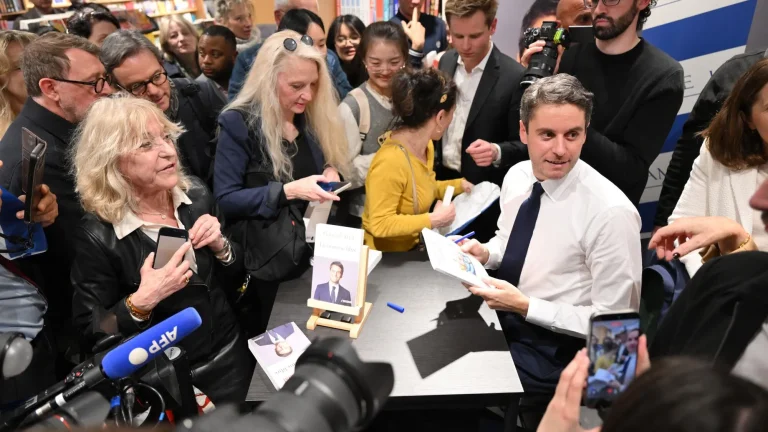
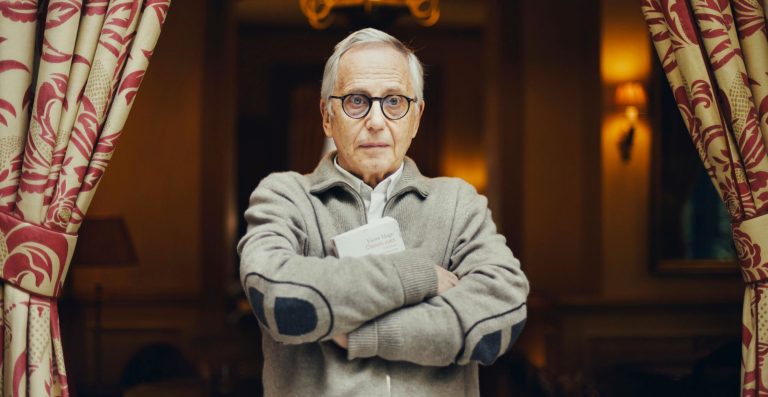
Boualem Sansal returned discreetly to France last week. After a year languishing in an Algerian jail, the 81-year-old Franco-Algerian writer was released and put on a plane to Germany on November 12. Six days later, on the 18th, he was received by Emmanuel Macron, on the sly, without photographers. Which did not prevent the President from giving in to self-congratulation. A press release from the Élysée thus judged that the release had been made “possible (…) by a method based on respect, calm and rigor”. `
Translation: it was not media pressure, public indignation or the zeal of former Interior Minister Bruno Retailleau that allowed the release, but the discreet work of French diplomacy. A questionable reading, as the intervention of Germany was essential. At the lowest point of his popularity in the polls, the head of state has in any case received too little success to act modest in the face of the rare good news.
Five releases in less than two months
In the last six weeks, five of our compatriots have been released from foreign prisons. Franco-German cyclist Lennart Monterlos was acquitted of espionage charges targeting him on October 8 and left Iran. Cécile Kohler and Jacques Paris were released from prison on November 4 after 1,277 days of detention for “endangering state security,” but remain confined at the French embassy in Tehran. Camilo Castro was welcomed at Orly by French Foreign Minister Jean-Noël Barrot on November 16: he was in a Venezuelan prison for “unfounded accusations,” according to the minister.
Are these sudden releases the effect of a fortunate combination of circumstances or the product of particular attention from Elysian diplomacy? The question is delicate in more than one way. Firstly because the convictions all stemmed from particular circumstances and of varying seriousness. Then because “to suggest that these concomitant returns would be the fruit of redoubled efforts by the Quai d’Orsay could lead one to believe, which would be unfortunate, that their fate was not a priority before,” underlines a diplomat wishing to remain anonymous.
Not necessarily more releases than before
“In France, unlike other Western countries, the cases of nationals detained abroad, when they are officially considered “state hostages”, become a sovereign issue,” explains Pierre Gastineau, author, with Antoine Izambard, of The President’s Spies (Albin Michel, 2025), an informed account of shadow diplomacy during the Macron years. These are files that are always managed closely by the President with the Quai d’Orsay, and, in the Iranian affair, the DGSE (General Directorate of External Security, editor’s note). »
In Iran, for example, the mullahs have made a specialty of hostage diplomacy. “The current objective is to use them as diplomatic leverage in the nuclear issue and the Israeli-Iranian military escalation in the Middle East,” underlines Clément Therme, researcher at the French Institute of International Relations. In the short term, the return to France of Cécile Kohler and Jacques Paris could be linked to the legal fate of the Iranian Mahdieh Esfandiari, who is awaiting trial in France for advocating terrorism on social networks.
Are there more releases today than yesterday? Not necessarily. After almost three years in prison, tourist Olivier Grondeau left Iran in the spring, at the same time as a compatriot placed under house arrest and who wishes to remain anonymous. At the same time, Théo Clerc (three years of detention for graffiti in the Baku metro) was pardoned by the Azerbaijani dictator.
Above all, many “state hostages” remain imprisoned on false grounds: researcher Laurent Vinatier accused of espionage in Russia, businessman Martin Ryan held in Azerbaijan on the same charge, journalist Christophe Gleizes whose appeal trial in Algiers has been set for December 3. The liberation of some does not make us forget the ordeal of others.