
why its return could transform our forests
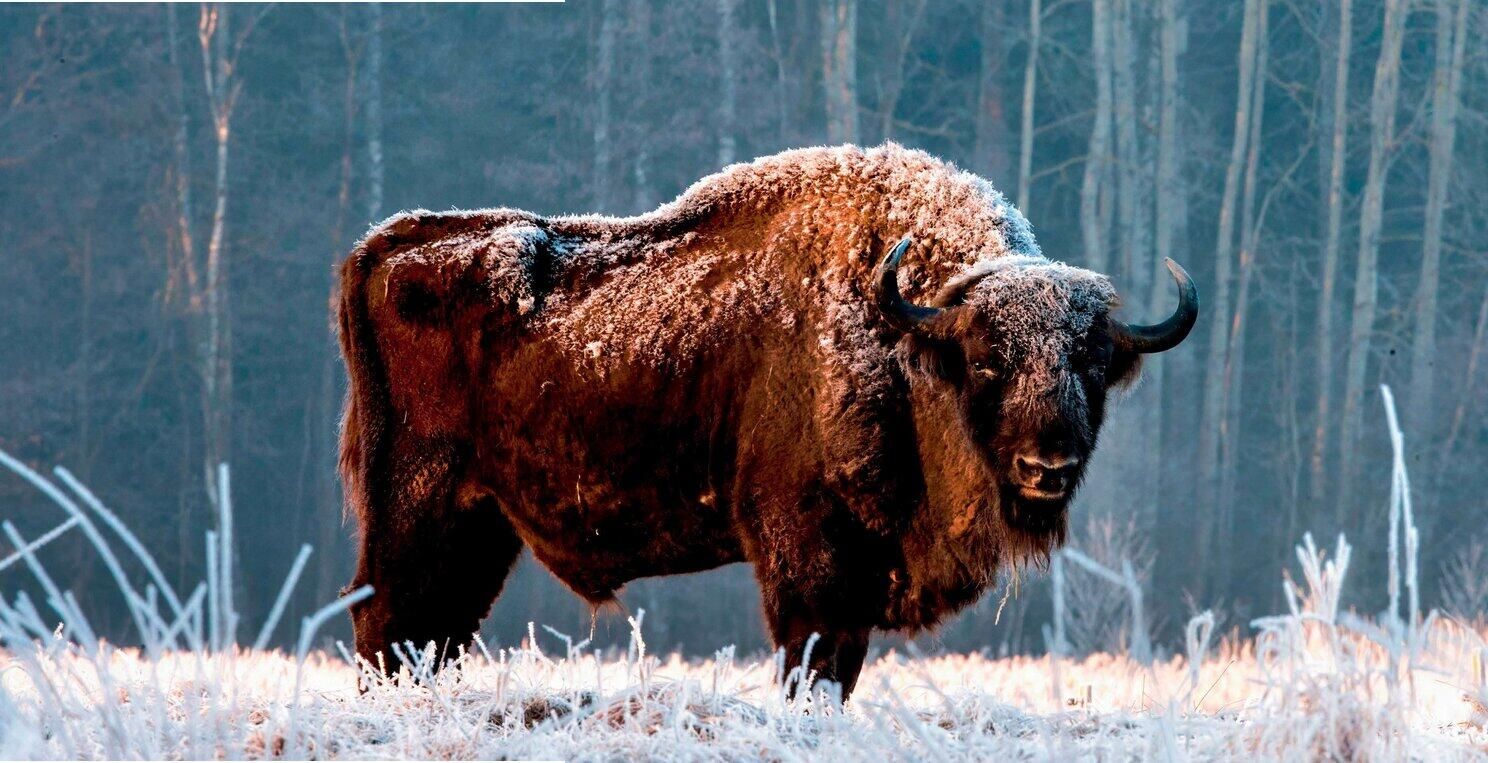
No natural forests in Europe without bison! The hypothesis may seem audacious for silvicultural managers already struggling with the overpopulation of deer and wild boar. So why imagine that the presence of this large wild bovine could positively change the situation? Perhaps because in terms of natural ecosystem regeneration, bison have hundreds of thousands of years of experience.
As their presence in the North American plains shows, their incessant movements, their way of grazing on grass which facilitates more vigorous regrowth and their dung, essential for enriching the soil, are all assets to the landscape. Especially since the animal moves in very social groups. The females play a decisive role, indicating with a movement of the head the direction to follow. When enough individuals acquiesce, then the entire herd follows.
But on the European continent, over the centuries, the wild animal had completely disappeared. By the end of the 1920s, there were only 54 left, all in captivity. Patiently, breeding programs were developed. A first population was reintroduced in the mid-20th century in the large primary forest of Bialowieza, in eastern Poland. There are only a few thousand wild bison on the continent today. But the movement is underway.
ID card
Species described by the Swedish naturalist Carl von Linné in 1758.
Common name: European bison (Bos bonasus).
Reign: animal.
Sub-branch: vertebrates.
Class : mammals.
Order: artiodactyls.
Family : bovids.
Gender : Boss.
Size : As an adult, the bovid can measure nearly 2 m high and 3 m long. Its weight is close to a ton.
Conservation : Almost threatened, the European species currently numbers around 6,800 individuals.