
Anti-obesity drugs: a miracle solution?
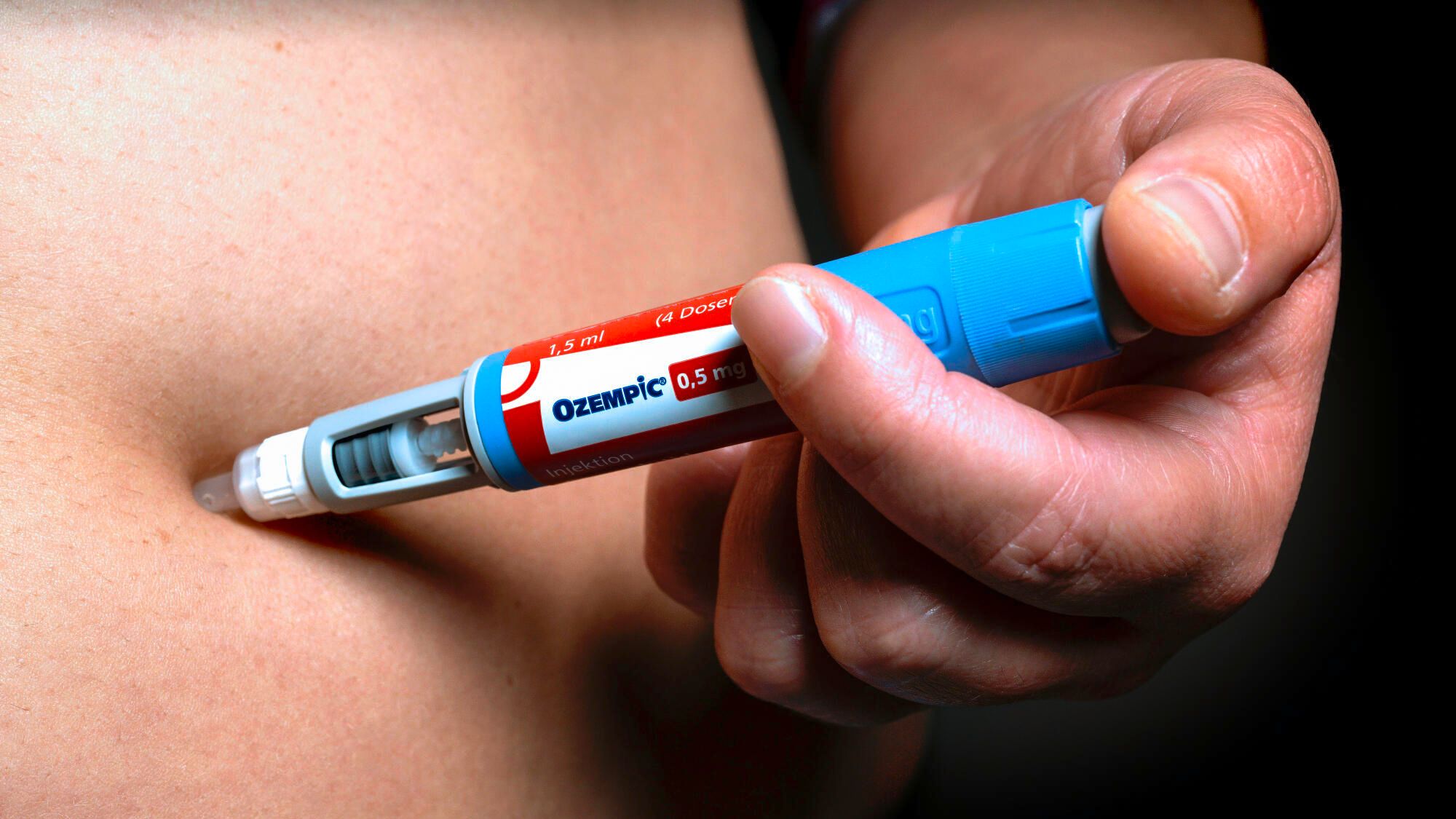
It’s my best summer! The face crossed with a large smile, shaking her still wet hair, Frédérique, 41, nursing assistant in the Rennes region (Ille-et-Vilaine), comes from an aquagym lesson. Achievement of a poorly balanced diabetes for several years, it has been injecting a dose of Ozempic every week for ten months. She who experienced a “thirty diets” during her life lost 22 kg, going below 100 kg. But for her, the reward is far beyond this impressive loss. “This medication delivered me from the permanent concern for my weight and what I had to eat,” she confides, hanging with cheerfulness her brand new swimsuit on a tutoring wire.
After decades of failure in the development of effective treatments, the arrival of drugs with a prodigious results – 15 to 20 % of loss of its weight on average – arouses lively enthusiasm and huge hopes with overweight or obesity. Popularized in the United States, where they are already part of the daily life of thousands of households, these treatments have invaded social networks, are displayed in advertising campaigns in the metro and agitate family conversations.
Very easy to use – the product is injecting once a week or per month in the belly or arm – they could represent an estimated market at $ 100 billion by 2030. In France, which has 47.3 % of overweight and 17 % in obesity, the place of these drugs has continued to grow in recent years.
First used by diabetics, they have been authorized since October 2024 for weight loss on prescription of a specialist. Last June, general practitioners also obtained the possibility of issuing orders. The National Medicines Safety Agency has issued recommendations: patients must be under the age of 65, be obese or close to obesity, and have not been able to solve their problem with conventional nutritional management. But practitioners remain the sole decision -makers.
A commercial vein
Last fall, the success was so dazzling that it generated shortages. Today, three brands dominate: the ozempic for diabetics, the Wegovy – of the Danish laboratory Novo Nordisk – and the Mounjaro – of the American Eli Lilly – for weight loss, more dosed. The factories of the two laboratories, located for the European market in Chartres (Eure-et-Loir) and Fegersheim (Bas-Rhin), run at full speed.
The price, from 250 to 350 euros per month, varies according to pharmacies. The product is only reimbursed in the case of diabetes, a long -term condition. “Thanks to the Ozempic, Novo Nordisk saw its value on the stock market multiplied by five in six years, to reach more than $ 600 billion in June 2024. Which makes it the first European company,” notes Fabrice Delaye, author of a captivating survey (Read the “Read” box at the end of the article). Last triumph: WHO has just written these substances on its list of essential drugs.
This success is explained above all by their real medical value. “They constitute an undeniable advance,” said Dr. Jacques Fricker, a nutritionist doctor (1), who compares it to the arrival of statins overwhelming the prevention of cardio vascular diseases in the early 1990s. “Apart from bariatric surgery (modification of the stomach and the intestine, editor’s note), Who is not indicated for everyone and can lead to multiple complications, no therapeutics has such impressive results, ”he said.
Like blood pressure or cholesterol, weight thus becomes a “controllable variable. Barely believable for obese patients, awaiting specialized consultations, tossed by multiple treatments or undermined by the reproachful gaze of society.
Captive buyers
The revolution started in the 1980s. Researchers then identified a peptide secreted by the intestine, stimulating insulin production – the hormone that regulates glucose (sugar) in the blood. They even succeed in increasing its lifespan so that it sends its message of satiety to the brain.
Scientists realize that this peptide, GLP-1, has another asset: it slows down gastric emptying, thus reducing appetite. Patients only eat in small quantities. “We have changed scale: from treatment for diabetes patients, we went to a marketable protocol to hundreds of thousands of people,” says Fabrice Delaye. Especially since buyers are captive: the first studies show that if the treatment is stopped, the pounds come back.
However, these products have side effects – nausea, vomiting, fatigue – or even, in the most severe, pancreatitis, intestinal obstruction, bile pathologies or gastropairies. “30 to 40 % of diabetics stop due to these effects, the long -term scope of which are unknown,” notes Dr. Antoine Épin, doctor at the specialized center of obesity in Nancy (Lorraine).
They also do not treat the multifactorial and complex causes of obesity, nor the food disorders that can accompany them and which require psychological accompaniment, adds the doctor. This is why he pleads to integrate them into an individual and global care. “It’s not a miracle pill,” explains Laurence, under Ozempic for two years. When you are stabilized and decrease or stop injections, strict food and physical hygiene is needed. »»
The fact remains that the active ingredients of these products could act in other fields: prevention of strokes, treatment of addictions or diseases of Parkinson and Alzheimer … In addition, overweight and obesity lead to around twenty chronic diseases and a reduction in life expectancy. A question therefore arises: should the public authorities reimburse drugs making it possible to prevent pathologies weighing on the accounts of health insurance?
In the United States, Congress has decided: he believes that the savings made would not compensate for the cost of taking care of these drugs. In France, the study referring to the cost of obesity for the community at 12.7 billion euros, “or 1,291 euros on average per individual concerned”. But it was funded by the Novo Nordisk laboratory.
The return of the cult of thinness
While waiting to see more clearly in the figures, the earthquake is already felt in many areas: appearance of specific food ranges for “under ozempic” consumers, bankruptcy of the mythical Weight Watchers company, breaking from challenges on social networks encouraging thinness …
We are far from the Body positive attitude (Acceptance of his body, in French) Timidly entry into manners in recent years. Anne-Sophie Joly, president and founder of the national collective of obese associations, fears that “the desperate quest for thinness will come back to gallop, sweeping all the efforts to encourage the diversity of all body cannons”.
In fact, these new treatments, supported by the persuasion force of networks, are likely to accentuate the societal injunction to model its silhouette to make it as desirable as possible, in accordance with very codified aesthetic values. They could also rekindle a prejudice that weighs on obese or overweight people: the overweight would be due to their lack of will.
“The Big Body is seen socially as that of the weak and passive,” points out the sociologist David Le Breton (2). Recall that the World Health Organization has recognized obesity as pathology since 1997 – which is not the case in France.
What social pressure will people refuse injection? Do we not substitute an addiction (to one medication) to another (for food)? Do we not give in to the ease of treatment which could make secondary, even superfluous in the minds of patients a psychological follow-up? And what if bulimic or anorexics divert these treatments?
This revolution raises multiple questions, but perhaps we have already passed through the “world after”. A laboratory has just developed a compressed version – which would replace injection. In 2026, the semaglutide patent – main component of the Ozempic – will fall into the public domain in several countries. Generic versions will then be able to appear. Be thin at the price of a few euros per month: a dream for many, unimaginable five years ago.
- Author of Eat intelligent (Ed. Odile Jacob).
- Author of Body sociology, Ed. What do I know?
Overweight and obesity: alarming figures for young people and seniors in France
- In France, excess weight affects 57.3 % of 65 years and over, And 23.2 % of 18-24 year olds. Since 1997, obesity among 18-24 year olds has been multiplied by four, and three among 25-34 year olds.
- At 15, Half of the teenage girls think they need a diet While only 10 % are overweight.
- In adults there is overweight When the body mass index (BMI, weight/size ratio on the square) is equal to or greater than 25 and obesity when it is equal to or greater than 30.
Source: Inserm survey and national league against obesity, February 2023.


