
Fires in France: criminal or accidental?
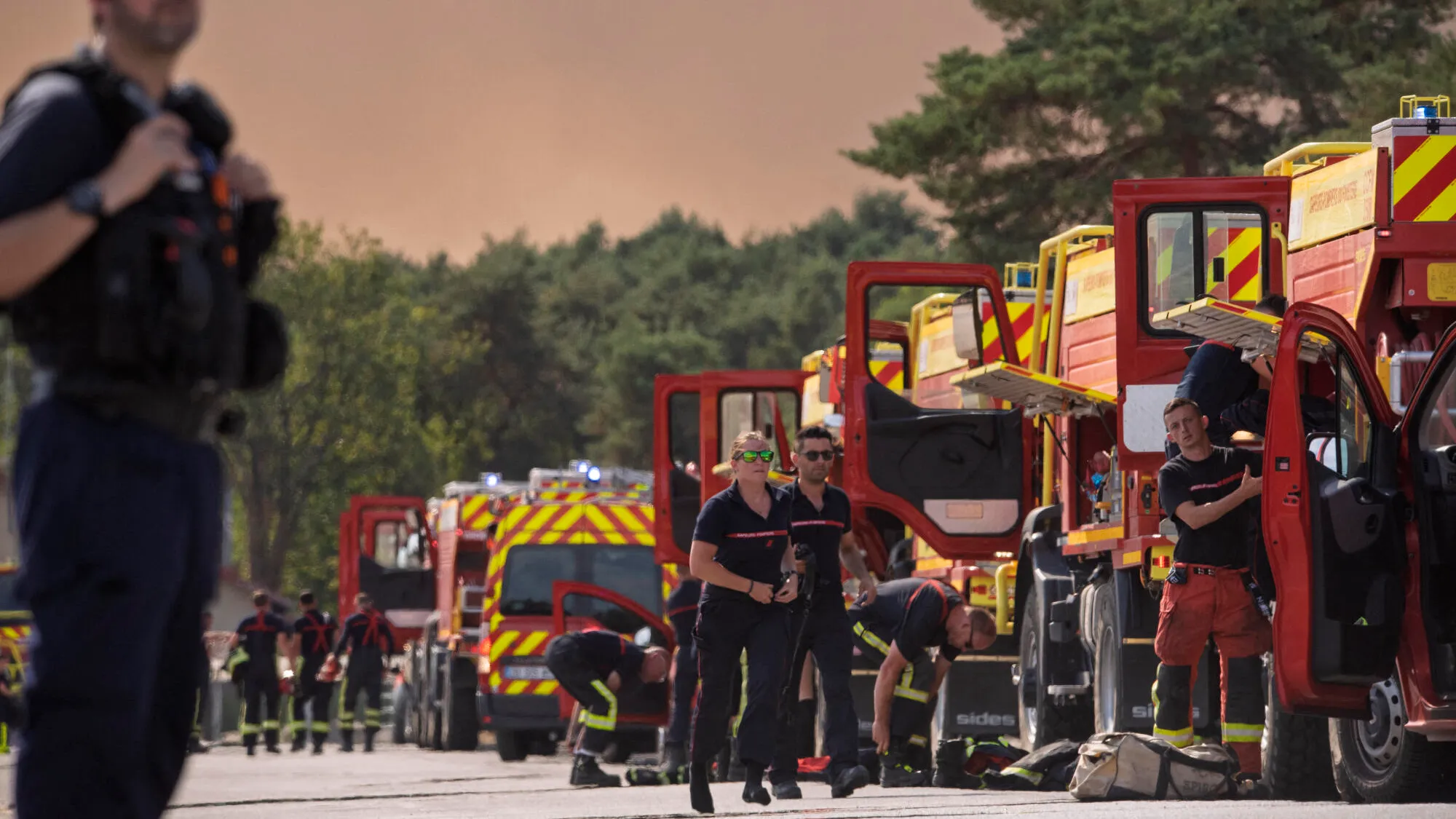
This summer, France is on fire. Fontainebleau forest, Restonica valley in Corsica, Justin massif in Drôme… In mid-July, the 35,000 hectares of vegetation burned since the start of 2026 already exceed those of the entire year 2025. “We are going to be intractable in the treatment and judicial follow-up, wherever there is negligence as well as criminals”, assured Emmanuel Macron during his trip to Fontainebleau on July 16, 2026.
On that date, 59 people had already been arrested in France. Two men were indicted in the Fontainebleau case, including a volunteer firefighter. Depending on the circumstances, penalties can range from three years in prison for involuntary arson to 15 years in prison when it is intentional and aggravated. But when the flames went out, after the canadairs and firefighters had gone to the ground, another investigation began to find the origin of the disaster.
Each time, the investigators arrive in a perimeter delimited by ribbons, the “freeze of the premises” in their jargon. “We must not let the slightest external imprint disrupt the research,” specifies Fabrice Gentili, group leader at SDIS 06 and legal expert at the Aix en Provence Court of Appeal.
The investigation unit Researching the causes and circumstances of fire (RCCI) generally brings together a gendarme, a forester from the National Forestry Office (ONF) and a firefighter. It is this type of team that was deployed on August 16, 2021 in the Maures massif (Var), when a gigantic fire broke out near the Sigues motorway area. Major Christophe Peigne, from the Collobrières gendarmerie, was dispatched to the scene. The police must first locate the start of the fire: is it on the highway side or on the other side of the fence?
Butts, stones, trees: clues that help identify the start of a fire
Then begins painstaking work in a 400 m search zone.2. In this landscape that has become lunar, he detects every clue left by the flames on the trees. At each track, he plants a small red flag. Meticulous work to reconstruct the trajectory of the fire. Over the hours, the sector is reduced to 20 m2. Then, you often have to kneel down to spot the passage of flames over stones, clumps of grass or snail shells… And when the yellow flag is out, the start of the fire is localized. Verdict: the highway area.
Then comes the turn of the white flags. Each material element – a cigarette butt, the remains of a match, a piece of paper – is immediately identified, then placed under seal. That day, he found around ten cigarette butts on site. It remains to be determined which one could have caused the fire. This is sometimes a matter of a few centimeters, depending on the weather, the heat or even the state of the vegetation where it was thrown. Then he sends the found elements to the laboratory for analysis. It is then necessary to cross-check the testimonies and the video surveillance images.
A year and a half after the start of the investigations, the person responsible for the start of the fire in the Massif des Maures was finally identified. It was an accidental act caused by a smoker. In the Var, carelessness represents the majority of human-caused fires: cigarette butts, barbecues or vehicle-related incidents. However, voluntary acts represent a significant part of fires.
But not all disasters reveal their secrets. When a fire appears suspicious, investigators look for other clues. In the field, Major Peigne uses all his senses, including his sense of smell. The smell of fuel or combustibles can change the course of an investigation. “In twenty years of career, I have discovered 25 different systems for lighting fires,” he says, without detailing these processes in order to avoid giving ideas to malicious people.
Certain devices can complicate searches by leaving few traces. According to our calculations based on the forest fire database (BDIFF), almost half of the causes of the 2,541 fire outbreaks last year have not yet been identified. A quarter of them were recognized as “malicious”.
If a few minutes are enough for a fire to break out and leave behind a landscape of desolation, it often takes months, even years of patience to find the perpetrators. Until the ashes, the trees, the stones or the snail shells deliver their testimony.