“Bach’s work heals the wounds of the soul”
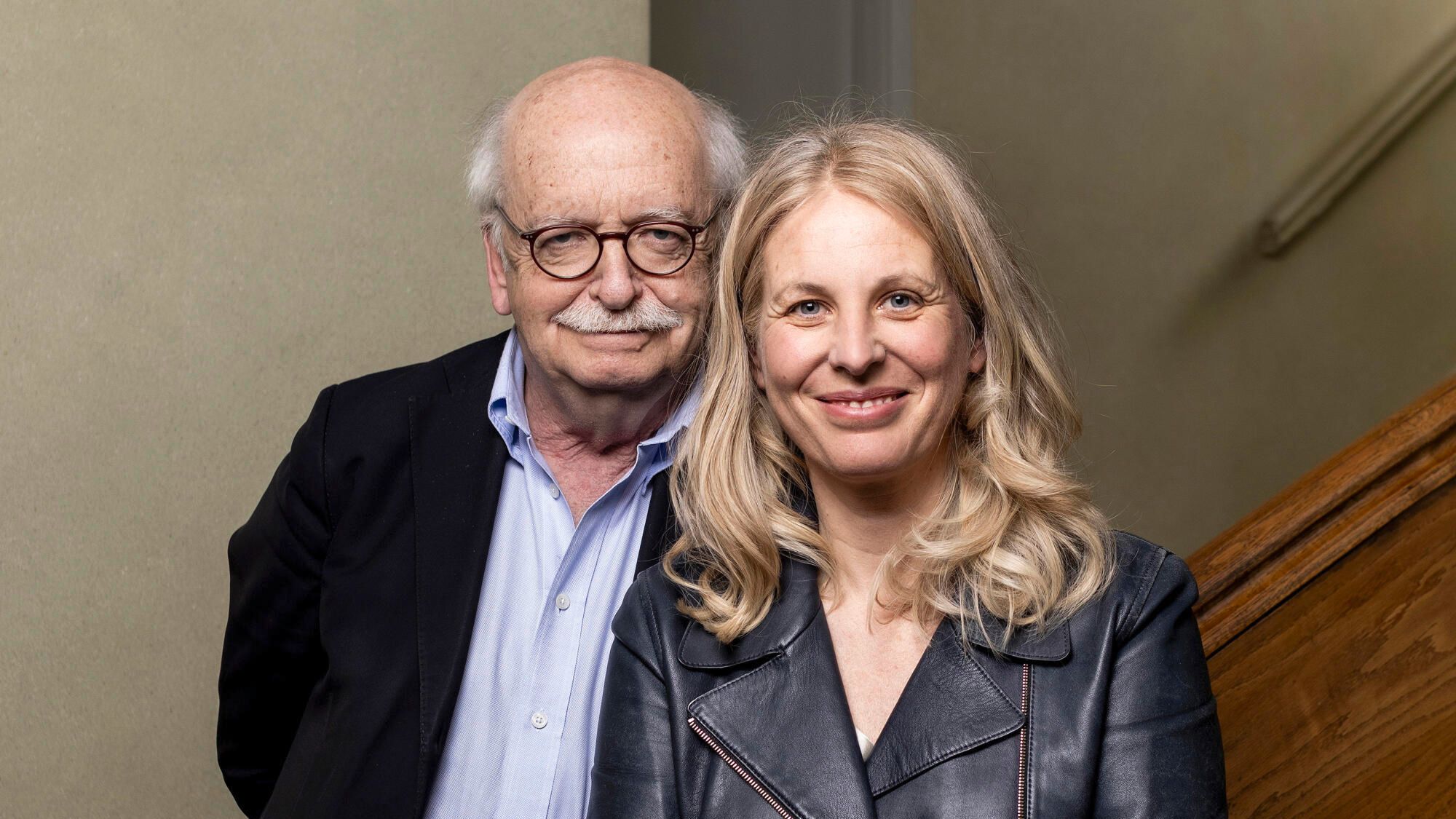
A writer and a pianist who compose a book with four hands is not common. How was this idea born?
Claire-Marie Le Guay: We met on the set of the show The big bookstore, in 2021. I played the piano there…
Erik Orsenna: …and I was won over by his talent, his sensitivity. I was already accompanying musicians on stage, as a storyteller, passing on stories. Claire-Marie opened the doors of her world to me, and we started giving concerts. On themes chosen together, I read, she played.
C.-MLG: After a duo performance during the La Roque-d’Anthéron piano festival (Bouches-du-Rhône), around the loves of Jean-Sébastien Bach (1685-1750), aficionados suggested that we write a work together.
Erik Orsenna, you have already written about Beethoven. Why Bach now?
EO: As a child, I often fainted during mass! Then one day, at the age of 7, in the cathedral of Quimper (Finistère), music grabbed me. It was Jesus, may my joy remain . Since then, my life has changed. Bach remained in me in an underground way.
For years, I didn’t dare touch it, because in my family, the musician was my brother, who played the guitar. By writing about Beethoven* in 2021, I was already talking about life. With Bach, I have the opportunity to discuss history, geography, economics – disciplines that fascinate me – through his biography and his times.
Ten years ago, at age 68, you started playing the piano…
EO: I made it a personal challenge. Since then, I have been taking a weekly class and practicing for an hour daily. I play with the association Les Concerts de Pocket, which performs in hospitals, prisons… I am living proof that nothing can stop us from realizing our childhood dreams.
Have you ever played in front of Claire-Marie Le Guay?
E.O.: I will never dare! (Laughs.)
Claire-Marie Le Guay, after a first album dedicated to Bach** in 2015, why are you coming back to it?
C.-M. L.G.: Because he is the father of Western music. Bach enlightens us, elevates us, heals our wounds. His music does us good. He made musical writing evolve, with polyphonic complexity and the art of counterpoint.
He opened a musical field that we continue to explore today. He inspired jazzmen, like Jacques Loussier or Keith Jarrett, pianists like Alexandre Tharaud, contemporary music like that of Henri Dutilleux. I play a piece from the latter in the album I recorded to accompany the book.
You are also passionate about man. What is so endearing about him?
C.-M. L.G.: Bach has an incredibly rich life, work, family, love. He had two wives, twenty children, and was not spared from grief – he notably lost several of his children. His music transcends his deep sorrow, as it lifts us up.
Bach was a Lutheran in a Germany marked by the Reformation. He not only composed the music, but wrote the lyrics. He was inspired by the poems of Luther, local poets. Bach wanted to create beauty to carry faith. He composed 200 cantatas, a mass, oratorios, two Passions…
E.O.: In Leipzig, he lived in a 70 m2 dovecote, three rooms, two bedrooms, open to the four winds, his students passing by all the time… In the midst of this hustle and bustle, he managed to improvise, to create. Bach is like mathematics: absolute abstraction and also life in all its most everyday aspects.
Anna Magdalena, his second wife, gave up her singing career to support her husband…
E.O.: She was a star at 19. But it was impossible for him to continue his career at the time. She married Jean-Sébastien who had just lost his first wife, took care of her children and put herself in the service of her husband.
She was the one who transcribed his scores. Without Anna Magdalena, we would perhaps have lost a quarter of his work. Unfortunately, she died in poverty.
C.-M. L.G.: He hears her singing and falls in love. In addition to having children, she fully supported her husband’s work.
“Without his second wife, we would perhaps have lost a quarter of Bach’s work. »
Erik Orsenna
How did this work finally come to us?
C.-MLG: Bach was recognized during his lifetime. But in the years following his death, in 1750, Romanticism was at its peak and Baroque was no longer fashionable. Fortunately, the musician Felix Mendelssohn (1809-1847) rediscovered the Passion according to Saint Matthew in 1829, three quarters of a century later.
The Passion according to Saint John And The Passion according to Saint Matthew are two monuments composed by Bach for Easter. How do you approach these works?
C.-MLG: Johann Sebastian Bach was a very great theologian – it was obligatory to be a scholar to be a cantor, a professor, in his time. The Passion, the sufferings and the torture of Jesus on the Cross precede Easter and the resurrection of Christ, the heart of faith.
What touches me most in his two Passions are the voices of men who rise to God, these suffering, guilty, sad voices; these are also the links formed between all these men.
EO: The Passion is Good Friday, the Crucifixion, the great meeting… Bach represents openness to all possibilities.
What links with your spirituality?
EO: I’m agnostic, but, having been raised in Catholic culture, I could call myself a… horizontal Christian.
C.-MLG: I feel an inner presence, and I want to make it shine. But believing also means doubting. I love that Bach seeks to lead us to God through his music. All his music uplifts me. My relationship with Bach passes through my keyboard, particularly during pieces written for solo instrument.
EO: Johann Sebastian Bach shouts in the night, no one answers! But that doesn’t stop…
“My relationship with Bach comes through my keyboard, particularly during pieces written for solo instrument. »
Claire-Marie Le Guay
The title of your book, Let the joy remain, covers a famous chorale by Bach. Erik Orsenna, you write: “Before joy remains, is it illusory to believe that it could return? » Has joy deserted our society?
EO: Perhaps it was not joy that animated society, but a sort of cheerfulness, of casualness. When I was 20, after two world wars, people said: “Never again.” » Now, today, war is everywhere, in Gaza, in Iran, in Lebanon…
When we see the cellist’s video (Mahdi Al-Sahili, editor’s note) playing on March 18 among the rubble in the south of Beirut (Lebanon), we cannot help but think of Rostropovich at the foot of the Berlin Wall (Germany) in 1989. Is it the destiny of a cello – whose sound comes closest to the human voice – to be played on a field of ruins?
C.-MLG: The worse it gets, the more I need to play…
EO: Let’s multiply the opportunities for joy, let’s play, let’s listen!
You are both teachers. What is Bach’s legacy to pass on to future generations?
C.-MLG: The work force! Freedom! His music was born to do good: let’s play and listen! Peace is here, let’s go.
EO: The organ pipes are our body, our lungs, our arteries. When we no longer know where we are, we play or listen to our music. A psychiatrist friend told me that Bach’s works could be an antidote for mental disorders.
On this Easter Eve, what do you recommend we listen to?
EO: Jesus, may my joy remain!
C.-MLG: Selfishly, my last album (smile) and the Passions, of course.
*There passion for fraternity: Beethoven (Ed. Stock)
**Bach. Piano pieces (Mirare Productions)
The biography of Erik Orsenna and Claire-Marie Le Guay
Claire-Marie Le Guay
- June 13, 1974. Born in Paris.
- 1978. Start playing the piano.
- 1988. Enters the Paris Conservatory.
- 1989. Begins his concert career.
- 2013. Launches the educational project “Educational Concerts” to transmit classical music to a wide audience.
- 2018. Publish Life is more beautiful in music (Ed. Flammarion).
Erik Orsenna
- March 22, 1947. Birth in Paris of Éric Arnoult, his real name.
- 1968. Graduated from Sciences Po Paris.
- 1983-1984. Cultural advisor at the Élysée to François Mitterrand.
- 1988. Goncourt Prize with The colonial exhibition (Ed. Seuil).
- May 28, 1998. Elected to the French Academy.
- 2000. State Councilor.