in Scotland, MPs reject the bill
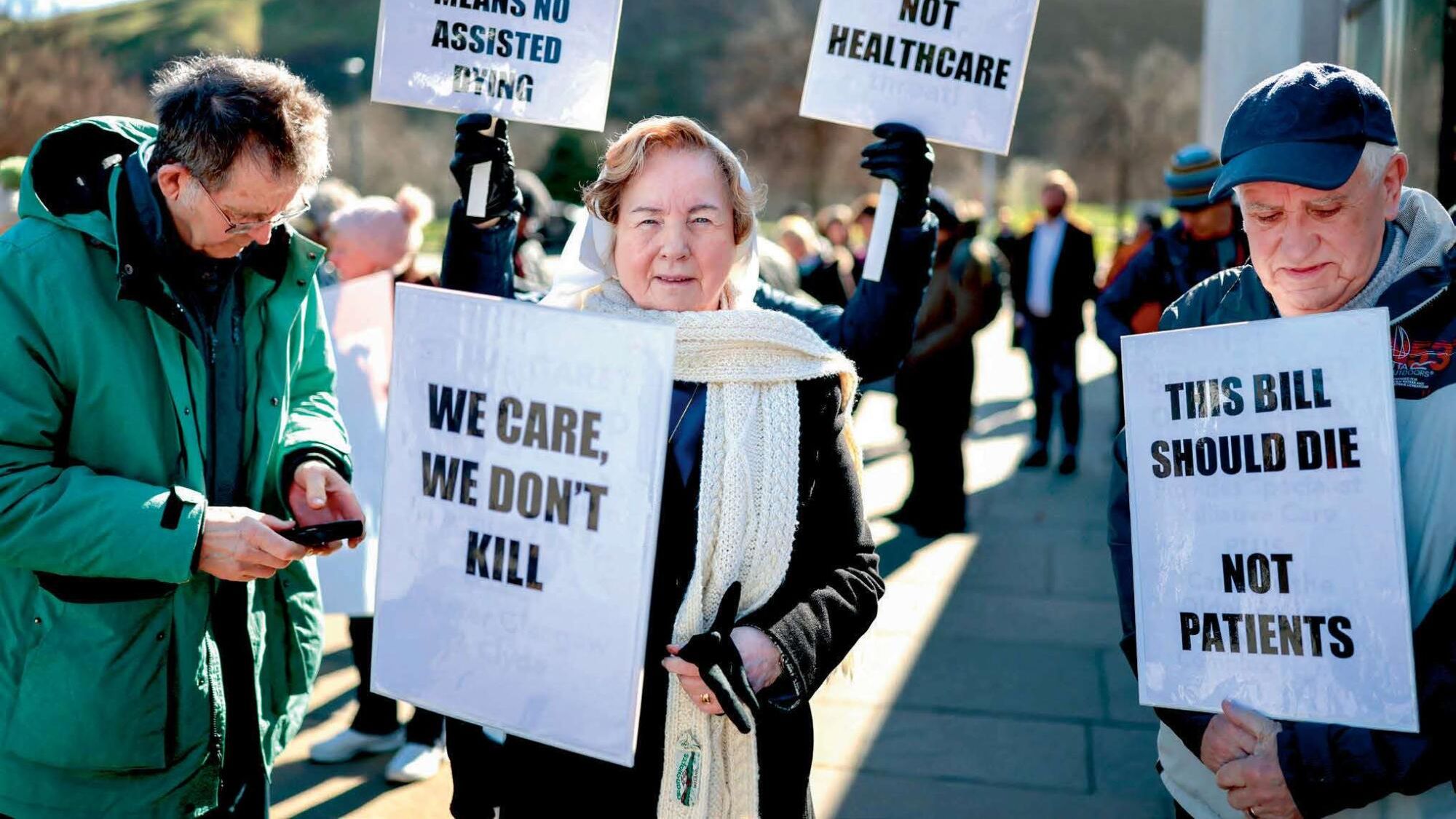
Sixty-nine votes against, fifty-seven for. On March 17, in the Scottish Parliament in Edinburgh, after a two-year legislative process, MPs rejected the end-of-life bill. No voting instructions having been given by the parties, each deputy expressed their choice freely.
The supporters of this text – quite similar to the French project on assisted dying – were nevertheless hopeful of achieving their goals since, for the first time, the three legislative stages necessary to initiate this vote had been completed.
This is the third time in sixteen years that a project in favor of the legalization of euthanasia has failed. In 2010, independent MP Margo MacDonald, who had suffered from Parkinson’s disease for thirteen years, was the first to launch the initiative. The text of this colorful character will be rejected at the first stage, by 85 votes to 16.
In 2015, it was the turn of Green MP Patrick Harvie to do it again. His bill was also rejected outright by 82 votes to 36. Finally, in March 2024, Liberal Democrat MP Liam McArthur, whose brother was paraplegic following a rugby accident, returned to the charge.
His political positioning, more consensual, allows him to advance his text while taking into account the amendments advocated by his adversaries. One example among others: the legal age for access to assisted dying, raised from 16 to 18 years.
This time, what turned the debates over? Among the deputies who spoke, several left an impression on the audience. The testimony of Ruth Maguire, for example, herself suffering from cancer. Gently, she recalled that using the vocabulary of dignity to defend active assistance in dying was a strange argument, “as if wanting to continue living, but with help, was undignified, burdensome and unfair to those who love me”.
“Unacceptable risks for vulnerable people”
But it is undoubtedly the deputy Jeremy Balfour, a Baptist Protestant, born with a disability, whose influence was the most significant. “MPs rejected this bill because they admitted that it involved unacceptable risks for vulnerable people, and that it eroded the relationship of trust between doctor and patient,” he analyzes. And to cite the “intense discomfort” created, at the time of the last stage, by the withdrawal of the conscience clause granted to doctors.
Did his Christian faith play a role? “It’s true, it illuminates my conviction that every human life is profoundly worthy. But the arguments that I gave throughout the mobilization were firstly based on the reality of health care. This was not to defend an ideology, but to protect patients who would otherwise have found themselves directly threatened. »
The rest of the United Kingdom is, for its part, in the middle: in England and Wales, a bill adopted in 2025 remains, for the moment, blocked in the House of Lords. The one adopted by the representatives of the Isle of Man and Jersey is still awaiting royal validation.
As for Scotland, it is a safe bet that MPs in favor of euthanasia will try to reopen the debate. At least if, like their colleagues, they manage to renew their mandate in the legislative elections on May 7.