
“Macronism undergoes a triple collapse”
What can we learn from the current political sequence, with a middle solution between support and abstention in the Assembly to vote on budgetary texts?
For the first time under the Fifth Republic, a project as sensitive as the financing of Social Security (PLFSS) is about to be adopted* without a majority, neither governmental nor parliamentary. Some want to see it as an unsatisfactory text, which is neither that of the government, nor that of the “central bloc”, nor that of the opposition. In reality, it is a compromise budget in a country which does not have the culture. Prime Minister Sébastien Lecornu signs a victory by winning his bet to succeed in negotiating with Parliament. This success is only a first step in a still long process before the vote on the final budget, scheduled for around December 23, but it brings a semblance of political stability to the country and shows that we can still emerge from a crisis through deliberation.
If the Prime Minister comes out stronger, what about the President?
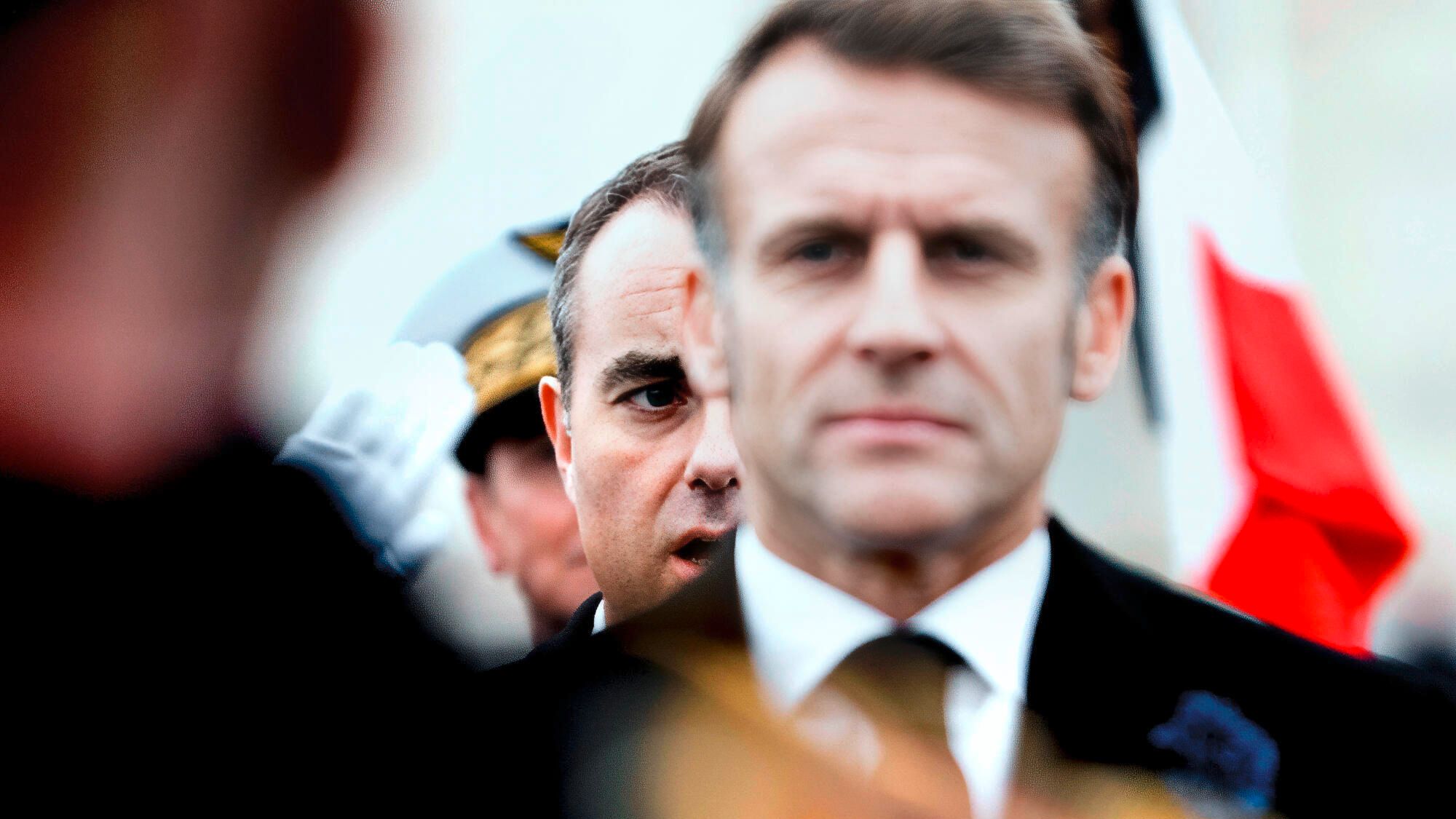
It is a zero-sum game for Emmanuel Macron, whose words and role on the domestic scene have been demonetized since the dissolution of 2024. Macronism is undergoing a triple collapse: as an enterprise to overcome the right-left divide, as a political organization seeking to supplant the old parties, and as a practice of power. The current sequence confirms the President’s disappearance from the domestic scene, despite his attempts to regain control. The budgets no longer have anything “Macronian”, its emblematic reforms such as that of pensions are sacrificed. If the end of a second five-year term is always a long torture for the president who cannot run again, the singularity for Emmanuel Macron is that this period extends over three long years.
Is this relative stability for the benefit of the country?
The current situation has its drawbacks: the parties cannot carry out their programs, public opinion is exasperated by the feeling of disorder in political life, major reforms are impossible. That said, we need to look more broadly. On the international scene, the stakes are serious: the confrontation between Russia and Europe via the war in Ukraine, the reversal of the United States’ alliance, the strategic and economic competition with China… To maintain its rank and its role, France needs stability. The economic world also needs it, as does the state machine.
Parliamentary debates don’t really give the impression of being up to the challenge…
In my opinion, this is not so much the consequence of political instability, as of the abandonment of international issues by Parliament which considers them to be the “reserved domain” of the President of the Republic and the executive.
While the traditional French position – alliance with the United States, dialogue with Russia and the countries of the South and support for European construction – is called into question by a transformation of the global situation, we lack parliamentary expertise. And it is impossible to have a parliament mastering these complex subjects overnight. Very few elected officials are experienced in defense policies, unlike neighboring parliaments, where competence is greater on these issues.
How to envisage 2026, the last full year for Emmanuel Macron?
Unless a crisis arises at Christmas or just after – and I believe that enough political actors are keen to avoid this scenario – a dissolution seems unlikely. Under these conditions, 2026 will not be a year of reforms, the end of a presidential term rarely is. As unsatisfactory as it may be, this relative stability seems preferable to me to further turbulence in such a troubled context, if only to properly organize the upcoming democratic meeting in 2027. The worst would be if the presidential election did not allow the tensions in society to be purged, leaving the country in indecision, without clear direction, as 2022 may have been with a debate swallowed up by Russia’s entry into war against Ukraine.
Before that, the municipal elections will be a direct test of opinion, particularly in large and medium-sized cities. If the National Rally and its allies win in cities like Marseille or Nice, this would be a favorable signal for this party a year before the next presidential election. Conversely, the game will become more open again.
* Interview carried out on December 16, the date of the last reading of the PLFSS in the Assembly.


