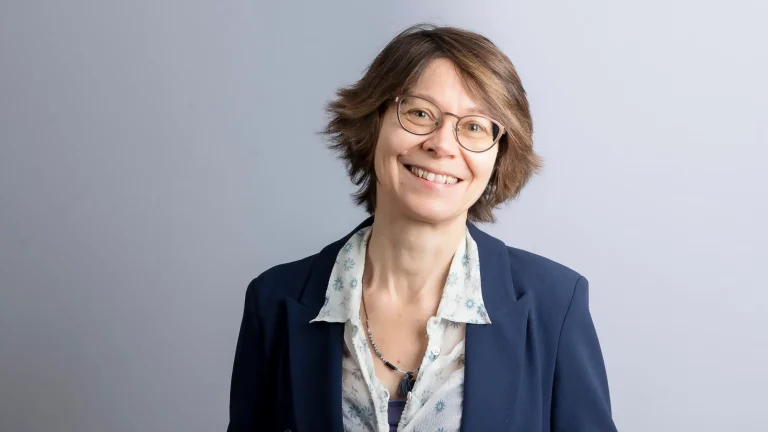

Marie-Laure de Decker at the European Maison de la Photography: Retrupesctive of a committed photographer
War horrors, Marie-Laure de Decker has not shown anything. Photoreporter, however, she saw them. Especially in Vietnam, Yemen, Chad, Chile, and particularly in Bosnia, in 1993. To the point, following this trip, to cease to cover conflicts. For more than forty years of career, she did not deviate from the rule that she had set for 2 years: “Never of dying people, never naked women. She pressed that such pictures would be published at the expense of others, less sensationalist, but telling just as much what the beings taken in the clashes live.
This conviction, she expressed it in a sentence, which can be read on the walls of the European House of Photography (MEP), in Paris, which devotes a great retrospective to it: “There is so much things next to it that describe war. What interests Marie-Laure de Decker? Human, everywhere, always, and in all their dignity. “She knew how to capture the grace of people in the midst of wars and social and political uprisings, she had the distinction of still seeing humanity in horror,” summarizes the eldest of her two sons, Pablo Saavedra de Decker.
It was he who sorted the 20,000 archives kept in cardboard boxes in the Maison du Tarn, in Rabastens, where his mother withdrew in 1995. With her first, until her death in 2023, then with the MEP exhibition commissioner, Victoria Aresheva. Together, they selected the 290 images of this Parisian exhibition. The route begins with the Viet Nâm, ends with portraits of personalities from the cultural world, and highlights the convictions, the intimate revolts and the commitments that guided Marie-Laure to decker in her professional and personal life.
A tall shy
Born in Algeria in 1947, Marie-Laure grew up in Côte d’Ivoire, before arriving in France. Very young woman, she earns her life as a model for the sandstone house. But she is looking for herself, obsessed with the desire to show her father, who would have so much wanted to have a son, that “a girl can be the equal of a boy” 1. In the spring of 1967, at 20, she met at the Café de Flore the artist Roland Topor, who presents her friends. She immortalizes Man Ray, Marcel Duchamp, Luis Buñuel… not without embarrassment. “I had a lot of difficulty being in front of people, taking pictures of them. I found it terrible, so brutal, ”recognized this tall shy1.
Arrived May 1968. The young woman discovered the work of Gilles Caron who co -founded the gamma photoeporters agency two years earlier. “I told myself that as a girl, I was never going to be able to enter this agency. (…) I had to do something boy. I told myself that at Viet Nâm there was surely to do. (2) “She put her bag there in the spring of 1971, after several months of solo travel through Asia, and, thanks to the photos she reports of a second stay, joined the agency.
It is in a certain adversity that she refines her style. Discredited by certain colleagues, she is often sent to cover in France or abroad “what nobody wants to do” (1.) She fulfills her missions with professionalism, but never photographs in an expected way. And sometimes agreed or complex subjects, she draws memorable shots. An image like that of Valéry Giscard d’Estaing, alone at his home, looking at himself on television on the evening of his election in 1974, finally offered him the recognition of his peers and notoriety.
From Soweto to New York
Free, independent, guided by her commitments (anti -racist, anti -colonialist, feminist), she lets herself upset by her meetings. Thus, in Chad, where, from 1975, she reported on the abduction of the ethnologist Françoise Claustre and covers the civil war, marrying the cause of the rebels of which she admires bravery. For other several months, she will share their daily lives and that of the nomadic people Wodaabe.
It is through these images of which often emanates a form of sweetness that the exhibition of the MEP retraces the life of Marie-Laure de Decker, from meetings in theaters of operations. Chad therefore, but also apartheid at the heart of the South African Township of Soweto, personalities like Nelson Mandela or Catherine Deneuve, as well as rare, even unpublished, color clichés, sometimes in color: seen from the streets of New York, landscapes of Jordan or Yemen, portraits of workers, autoportraits…
“Photography is my life, my voice, my memory,” said Marie-Laure de Decker in 1980. All three are to be discovered at MEP. Before you can read them in his autobiography? Written, she patients in a closet. Hopefully she will also be exposed to light soon.
(1) Marie-Laure de Decker: photographer with a clear look, 5×30 minutes, on radiofrance.fr
(2) Quote extracted from the autobiographical memories of Marie-Laure de Decker, unpublished.