Was mass better before?
Dare to dialogue in the Church
“They changed the mass for us!” In 1970, when the new so-called Paul VI missal was published, many faithful admitted to being disconcerted. Others are enthusiastic. Because liturgical renewal was one of the major projects of Vatican II, completed on December 8, 1965.
Sixty years later, faithful of all ages are demanding the return of the “Latin” mass. Other decisive contributions of the council, such as the importance given to the role of the laity or to inter-religious dialogue, no longer mobilize much, or are even undermined.
Regression? Call to hear? While these tensions run deep through Christian communities, The Pilgrim wanted to offer a meeting space for Catholics of different sensibilities. Starting by returning to the source: a shared reading of the Gospel.
Mutual listening, we have experienced, gains a singular density. Because, before debating, it is first a question of recognizing ourselves as brothers in Christ. A synodal exercise, basically, to be discovered in our pages throughout Advent.
Context: 60 years ago, the breath of Vatican II
2,381 bishops and 106 “observers” from other Christian churches: opened on October 11, 1962 by John XXIII and closed three years later by Paul VI, the Second Vatican Council was a world event. Six decades later, why choose the entry into Advent to remember it?
First, the coincidence of the calendars: the various autumn sessions of the council all ended at the start of Advent.
Then, the deep meaning of the two meetings: Advent is “a time of pious and joyful expectation”; Vatican II was the culmination of expectations matured in the first half of the 20th century through “movements”: ecumenism, biblical and liturgical renewal, the role of the laity, theology of the Church, etc.
Advent, finally, places the faithful in a History definitively marked by the coming of God into our humanity.
The council, in turn, resolutely places the Church at the heart of this History: a Church serving the love of God for men.
Régis Grosperrin
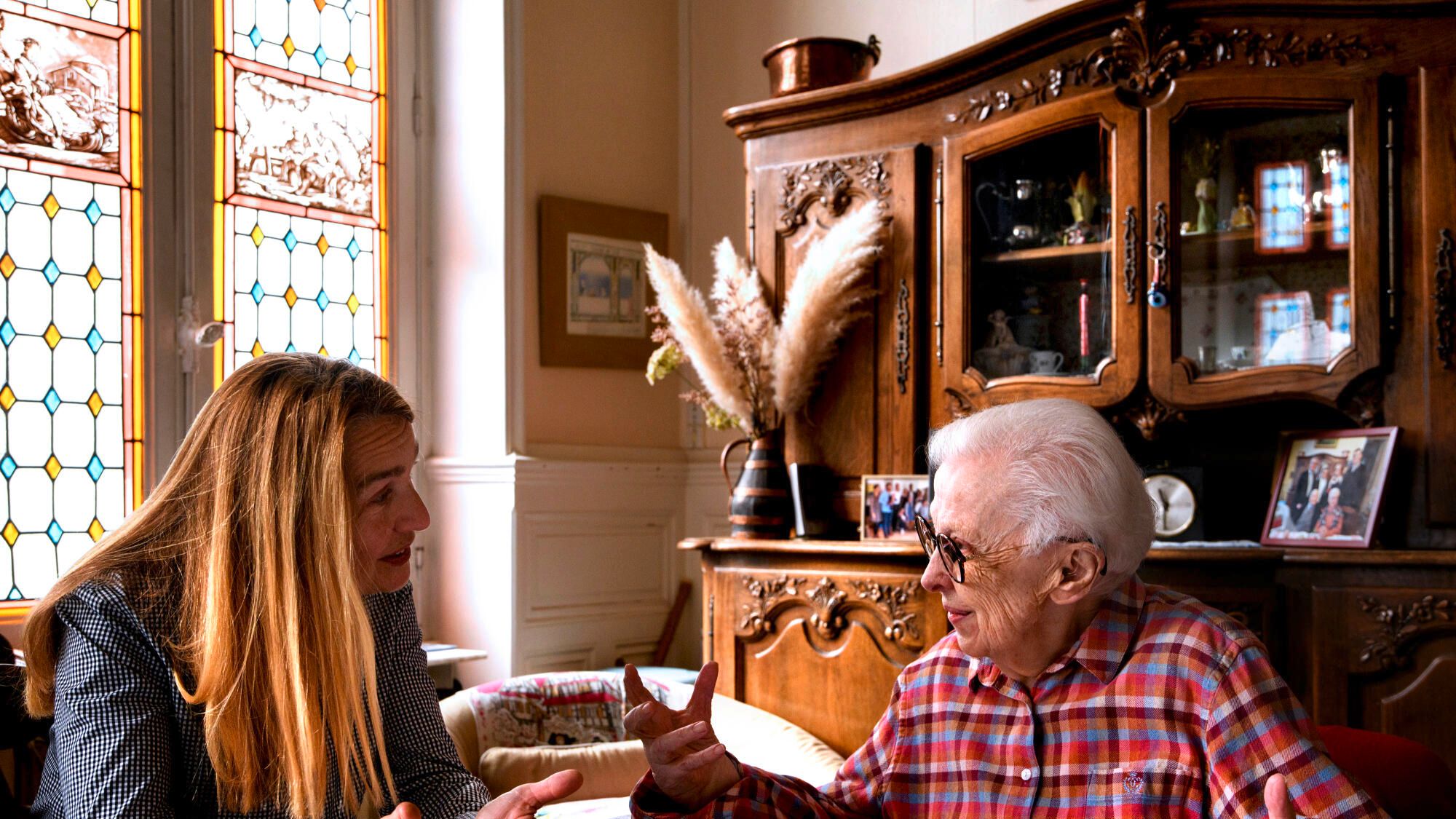
Nearly four decades separate them. One, Maria Theresa, experienced with joy the liturgical reforms initiated by Vatican II. The other, Beata, now prefers mass “in Latin” to nourish her faith. And the two have a lot to talk about.
Marie-Thérèse : The “mass before”, I remember it very well. I was a young girl in the 1940s. At the time, we rarely received communion during Sunday mass. The heart of the mass, communion, was taken away from us! Even as a child, I found this incredible. I don’t regret the Church of yesterday. In today’s, I feel free. Happy and free.
Beata : The Tridentine Mass (celebrated according to the rite of Saint Pius V, editor’s note) is a recent discovery for me. I am from the John Paul II generation. I grew up with the new liturgy, but in a slightly different context, in Poland. Religious traditions were very present there. For example, I went to catechism twice a week.
Marie-Thérèse : Poland is a very fervent Catholic country…
Beata : It was! This is no longer the case. But I was educated in the faith there. I arrived in France in 2002, my four children grew up here. And I understood little by little that they learned almost nothing in catechism.
We do not talk about the dogmas of the faith. Later, at the chaplaincy, the topics revolved around solidarity and mutual aid. Friendly, but not very constructed. Today, my youngest, 7 years old, goes to catechism in a so-called traditional parish. I wanted her to have solid preparation for the first communion
Marie-Thérèse : Ah, this first communion! When I was a little girl, our parents forbade us to stick out our tongues. But in church, you had to stick out your tongue to take communion. This gesture has always cost me. We got down on our knees, with an altar boy holding a small tray…
After the council, being able to reach out was a relief. I found it very beautiful: “Lord, we need you. We are poor and extend our hand to you.” Since then, I have learned that the Christians of the first centuries also extended their hands, a little curled up. They made it a throne, they said, to welcome their king. Today, when communion is brought to my home, I enjoy extending my hand like this.
Beata : Yes, I know this image of the throne. But still… If we think about the use of the hand, it does many good things, but it also touches impurities.
Marie-Thérèse : The tongue can also be impure!
Beata : Look at the crowds of tourists in Rome, St. Peter’s Square. Sometimes, some go to Communion and slip the host into a book, as if it were a memory. I think that receiving communion in the mouth is the only way to preserve Our Lord from the outrages done to him. Because his presence in the host is truly real. We witness a miracle every Sunday.
Marie-Thérèse : Absolutely. The greatest miracle of all.
Beata : The Eucharist is the most important thing that happens to us in life. So, if we visit Our Lord, we do not come dressed in any random way. We prepare ourselves physically and we prepare our hearts. This is why it would be unworthy for me not to fast before communion, for example. Formerly, the Church had fixed the start of the Eucharistic fast at midnight. Then it was three hours before mass. And now, just an hour.
Marie-Thérèse : I was so accustomed to fasting as a child that even today, I fast for a full hour before receiving communion. But I don’t make it absolute. All this is a question of understanding faith. If you have the understanding of faith, you can judge what is good. Communicate on an empty stomach or not, in the mouth or not, standing or kneeling… We must let evangelical freedom inspire us, as Pope Francis said.
Beata : But imagine, Marie-Thérèse, if Christ appeared to us now, here, would we remain seated at the table looking at him? We would fall to the ground, like Saint Paul. Or on our knees, to prostrate ourselves. When you were a young woman, everyone knelt at mass at the same time. It is a question of coherence between body and soul. This gesture of respect puts us in our place in the order of Creation and in the order of Salvation.
Marie-Thérèse : I don’t completely agree with you. The kneeling posture, in my opinion, is for times of worship. At the time of communion, I go to look for Christ, I welcome him standing. That doesn’t stop me from loving it. Every midday, I turn on my television to join in the prayer of adoration of the nuns of the Sacré-Cœur of Montmartre.
Beata : In my life of faith today, it is the “always mass” that suits me. The traditional liturgy is the one that sanctifies me the most. It is also a benefit for the family transmission of the faith. On Sundays, our parish is overflowing with young people. You would see this incredible silence when the priest shows the consecrated host… Everyone looks and is silent. In a modern mass, we also remain silent at the time of the offertory, but it is much too fast.
Marie-Thérèse : Personally, I do not regret the Latin mass. In major ceremonies, sing a Hello Regina all together, yes, it’s superb! But I still remember the mass book I had as a child. I didn’t understand anything about it. I prefer to understand.
Beata : For me, it’s the opposite. Latin allows me to understand the mass all over the world. If I attend a Tridentine rite mass in Madrid, the gestures are the same. I recognize the codes right away. Why should the liturgy necessarily be creative? I am a chorister in my parish. When I sing a Gregorian chant from five centuries ago, I feel connected to an eternally young Church.
Marie-Thérèse : Recently there was a mass in the pre-Vatican II form in St. Peter’s Basilica. The Pope undoubtedly wanted to show that the Church today respects everyone’s choice. But that’s not what matters most to me.
Beata : What really matters to you?
Marie-Thérèse : Testify that the mass nourishes everything. All ! Our personal relationship with God, like the service of brothers. I can tell you that with certainty, given my great age. It is the chance of a long life where, every day, I have been able to walk with Christ.
One council, one word: Tradition
Did the Second Vatican Council break with Tradition?
This is what those nostalgic for “the mass of all time” say. But what do we mean by Tradition? A frozen and untouchable legacy? Or the faithful deposit of a faith that matures over the centuries?
The Mass is not outside of time, emphasize the Council Fathers; she has no “golden age”; it celebrates the Lord who accompanies the Church throughout History. Revising the rites “with prudence, in the spirit of a healthy tradition”, allows them to be given “new vigor”*.
With the assistance of the Holy Spirit, the Church meditates on what she has received, “in accordance with the circumstances and needs of today.” This is how it shows itself faithful to its Tradition, of which the council is the authorized interpreter.
*Constitution on the Holy Liturgy, December 4, 1963.


