
Why the peace negotiations between Trump, Putin and Zelensky bother
1. A diplomatic ballet to take seriously?
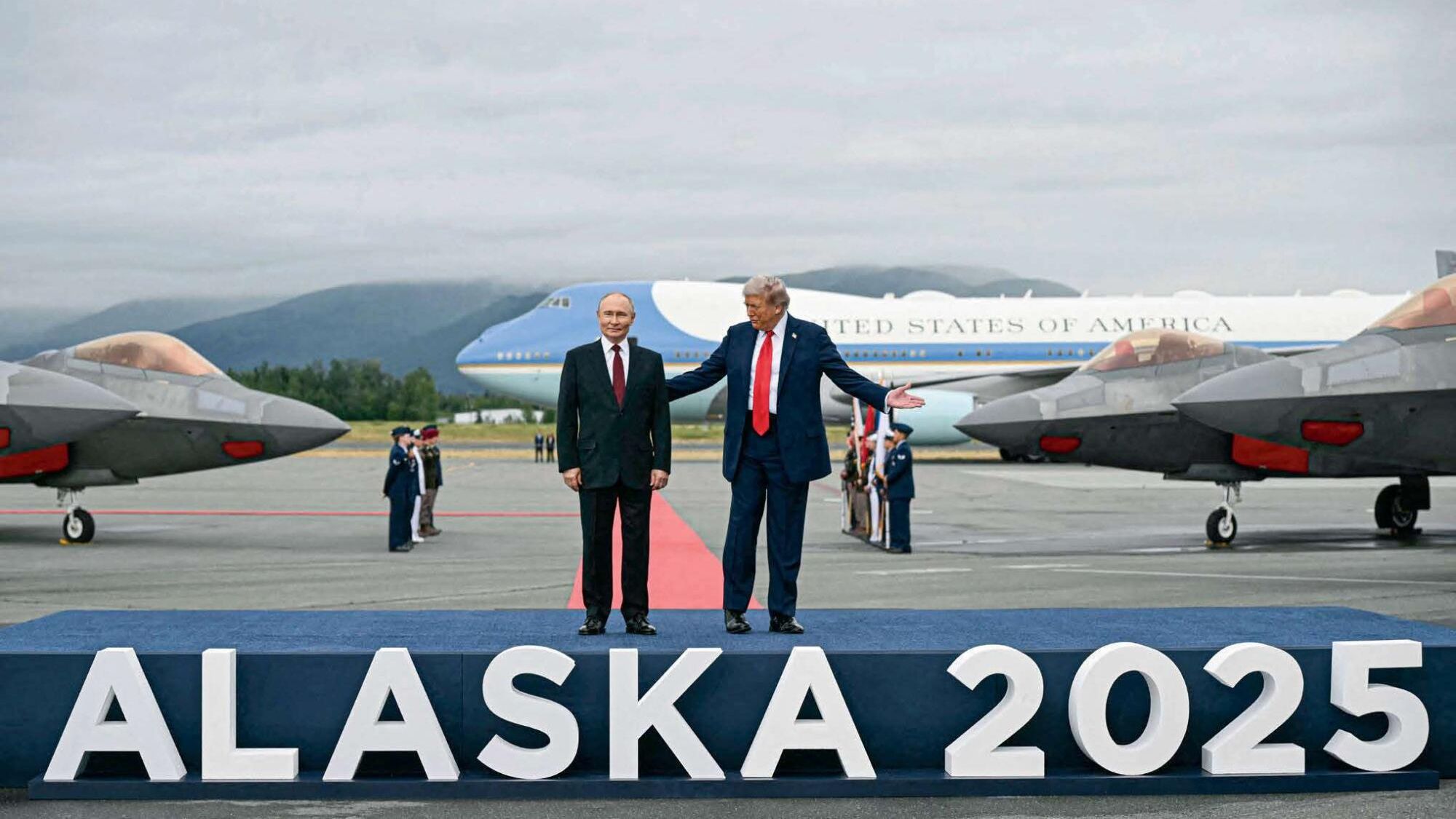
A lightning head between Donald Trump and Vladimir Putin on a military base in Alaska (United States) on August 15, Volodymyr Zelensky accompanied by the French president, the German Chancellor, the British and Italian Prime Ministers, in the White House three days later … These spectacular sequences in front of the cameras of the world are not enough to do good diplomacy. On the social network X, the ex-ambassador of France in the United States, Gérard Araud, becomes critical: “diplomacy without preparatory meetings, without specific questions to be resolved, without approved press release, without decisions, most often leads to a vain chatter source of all misunderstandings.”
For the time being, everything happens as if the main world leaders wanted to change, flatter and convince with their good faith an American president more narcissistic than ever who, after having caressed the hope of a peaceboker, now admits betting on his efforts to put an end to the Russian-Ukrainian conflict in order to “go to paradise if possible” … Since these meetings at the top, largely improvised. Because Moscow continues to claim a disarmed Ukraine. Europeans are concerned about a peace too favorable to Russia (territorial gains), which would constitute a bonus to the aggressor and an encouragement to future wars of conquest. Donald Trump annoys not seeing others comply with his will and threatens to withdraw from the process. And the Ukrainians are asking Westerners insurance for their future security.
2. What is the “security guarantees” for Ukraine?
As part of a future peace plan, kyiv requests guarantees. Ideally, it would be a membership of NATO, the Western military alliance. But Trump is opposed: it would be a “provocation” for Moscow. Three types of insurance could be given to Ukraine: first a strengthening of its army in equipment and ammunition, then an American involvement which remains to be specified in airspace (surveillance and intelligence), finally the sending of soldiers from European countries which would be stationed in Ukraine, more symbolic than dissuasive.
Because, to be effective, warned Colonel André Wüstner, a German officer, the three great Europeans would have to be (France, United Kingdom, Germany) can deploy 10,000 men each. Almost impossible in the current state of the troops, in sub-employment and under-equipment. Trump excluded any American presence on the ground. For its part, Moscow puts its veto to any Western military presence in Ukraine, of which it continues to demand demilitarization.
3. Poutine wants peace today?
Last week, his Minister of Foreign Affairs, Sergei Lavrov, recalled the red lines of the Kremlin: there will be no “long -term agreement” without compliance with “Russian security interests” and “full respect for the rights of Russian -speaking people who live in Ukraine”. Conditions quite vague to justify any blockage. Above all, Putin’s Russia which has legitimized its war against Ukraine, “little Russia” as they say in Moscow, by denying its right to existence as an independent nation, has not, according to Europeans, changed its ultimate objective: the vassalization of its neighbor.
Putin is “a predator, an ogre at our doors” who “needs to continue eating” for “his own survival”, judged Emmanuel Macron after the Washington summit. For Finnish President Alexander Stubb, “Putin is rarely worthy of confidence”. Behind the apparent diplomatic opening, the Russian leader would remain more interested “to divide the West than to find an agreement,” said Nate Reynolds, expert on Russia at Carnegie Endowment for International Peace. The goal would be to obtain a withdrawal from America from the Ukrainian file, failing agreement with its European allies.
5. Can Volodymyr Zelensky hold?
In power for six years, the Ukrainian president seems to be exhausted, nervously and physically, as evidenced by his tics, his jerky flow and his drawn features. The sacred union against the invader he knew how to embody always holds.
But that does not prevent disputes, as shown by the mobilization of Ukrainians last month against his decision to restrict the fight against the anti-corruption, nor the criticisms on his conduct of military affairs, as those heard last year when the Head of State dismissed his functions at the head of the army the very popular general Valeri Zaloujny, now ambassador to London (United Kingdom).
4. Can Donald Trump still succeed in his peace bet?
In the complicated files whose details bother him, the American president, who promised during his electoral campaign “Peace in twenty-four hours”, relies on a personal and instinctive approach. He convinced himself, as he entrusted to Emmanuel Macron, that Putin seriously wants to find an agreement “for, so crazy that it seems, to please)”. The future will say if this cocktail of credulity, optimism and naivety can prevail over skepticism, especially European. Admittedly, rational arguments campaign for a fighting of fighting in Ukraine: the number of victims is frightening (250,000 Russian soldiers who died, fifteen times more than during the decade of war in Afghanistan between 1979 and 1989, 700,000 injured, according to British estimates); The Russian economy has put itself at the service of war with a colossal cost; The Kremlin who had promised that his tanks would scroll to kyiv after three days of fighting came up against an underestimated Ukrainian patriotism.
Ukraine, for its part, knows that it does not have the military means of reconquering the lost territories and that its only realistic horizon is to hold the front line, although at the cost of considerable losses (60,000 to 100,000 dead soldiers). But, on the eve of the Russian invasion of February 2022, the experts also storm of logic in order to explain that Putin would never embark on such a crazy adventure. “I do not think possible a peace agreement in the near future,” evaluates John Bolton, who was a security advisor to Trump during his first mandate. Only certainty, it is the master of the Kremlin who will decide in his time when to put an end to the war.
6. Europeans, partners or simple extras?
The photo hurts. This August 18, behind his desk at the White House, the American president overlooks European leaders aligned opposite in their headquarters like bad students reprimanded by a principal of college. We were far from “Europe power” promised by Emmanuel Macron since his election. Terrified at the idea that Washington cuts any military supply in kyiv or imposes on him by blackmail a Léonin peace plan, Europeans multiply the concessions to Donald Trump. They ratified, at the NATO summit in June, in June, the increase in their military budgets (claimed by Washington), then agreed to the taxation of American customs duties by 15 %. To get what? The vague indication that the United States “would coordinate” with them to ensure the protection of Ukraine.
But Donald Trump was clear: finished the time for free deliveries of American weapons to Ukraine, “NATO will pay” the bill, that is to say, the old continent wide. In reality, “this summit revealed flaws in the transatlantic consensus and asks a deeper question, believes Chris Kremidas-Courtney, researcher at the European Policy Center: the international order until then based on rules will be reformatted by coercion or reaffirmed with clarity and courage?” It is not certain that Europeans can still defend a model governed by law and compromise in the face of America and Russia who are not afraid to impose their views by, on various degrees, the brutal force of the law of the strongest.
7. And during this time, on the forehead …
A few hours before the Washington summit, the Ukrainian cities of Kharkiv, Zaporijjia and Soumy were targeted by the Russian army; Strikes against civilians deemed “demonstrative and cynical” by Zelensky. Moscow intends to recall its firepower and its ability to sow terror to weigh.
Three days later, it was the cities in the west of Ukraine, far from the fighting, to be bombed by 574 drones and 40 missiles. Last month, Russia launched more than 6000 drones and 198 missiles on its neighbor. On the front, the Russian snack continues but the Ukrainian fortified lines in the west of the Donetsk around the cities of Sloviansk, Kramatorsk and Kostiiantynivka hold. kyiv warns that a major Russian offensive is in preparation in the south.


